- GAC Capital, Haitong Capital back Zhejiang startup targeting EVs and robotics
- Zhejiang company says it has achieved large-scale production of amorphous stator cores
Lyncwell Innovation (领伟创新), a Chinese developer of next-generation motor components for electric vehicles, has raised nearly 100 million yuan ($14.75 million) in a Series A+ funding round.
Led by the venture arms of automaker GAC and Haitong Securities, the round comes as the startup has been scaling production of amorphous stator cores designed to improve electric vehicle efficiency.
The Taizhou-based company said the new funding, announced on May 25, will be used to expand manufacturing capacity, upgrade production processes and broaden applications into areas including intelligent robotics and electric vertical takeoff and landing aircraft, or eVTOLs.
Next-gen motor component
The latest financing marks Lyncwell’s third funding round within a year, following a Pre-Series A investment from angel investor Dongke Chuangxing and a Series A round backed by equity financier Zhongqi Capital.
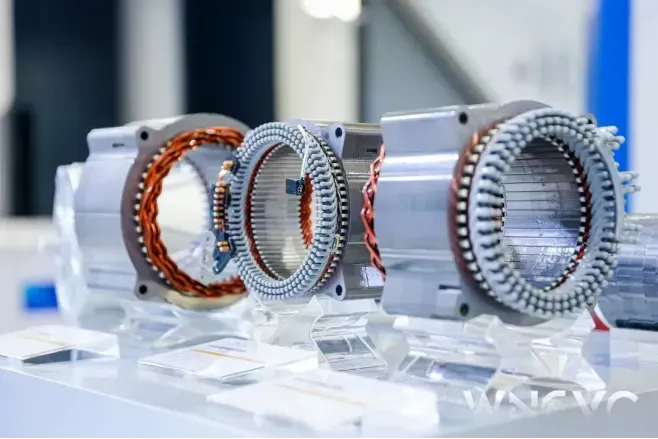
Lyncwell specializes in amorphous stator cores, a next-generation motor component designed to reduce energy loss compared with conventional silicon steel-based motors.
In traditional electric motors, stators are built from layers of silicon steel, which can generate substantial heat and energy loss at high rotational speeds.
Lifting efficiency to about 99%
Amorphous alloys — sometimes referred to in China as “hand-tear steel” because of their ultra-thin structure — can reduce iron loss by more than 50% and lift peak motor efficiency to about 99%, according to the company.
For electric vehicles, that could translate into an additional driving range of 30 to 50 kilometers using the same battery pack.
Despite the efficiency gains, however, large-scale production has remained difficult because amorphous alloy strips are only about 0.025 millimeters thick — roughly one-third the width of a human hair — while also being highly brittle and difficult to stamp using conventional manufacturing equipment.
Lyncwell said it spent four years developing proprietary machinery and bonding techniques to overcome those challenges, enabling mass production of amorphous stator cores at commercial scale.

The company has already become the exclusive supplier of amorphous stator cores for GAC Aion.
Its products were first deployed in GAC’s Hyper-branded vehicles in 2024, while the newly launched Aion N60 is expected to become the world’s first mass-produced new-energy vehicle equipped with large-scale amorphous motors.
‘Orders booked through year-end’
Founder and chief executive Yan Guozhu said the company’s products have already entered mass production across multiple vehicle models and that orders are booked through the end of the year, with additional talks underway with several major automakers.
As vehicles using the company’s amorphous motor technology enter large-scale production, the underlying material system — developed domestically in China — is beginning to move from laboratory development into broader commercial deployment in EV drivetrains.