- Hengrui licenses obesity drug to Novo Nordisk in deal worth up to $2.6B
This transaction comes as the Danish drugmaker expands its pipeline of next-generation weight-loss treatments.
- Today’s Yangtze funding roundup: medtech, wafer, fusion, eye drug, AIGC…
The funding will support clinical development, reactor design, medical commercialization and AI platform expansion.
- MiniMax launches M3.1-Flash-Preview with 1 million-token context
MiniMax positions it as an end-to-end coding model that can take a software task from diagnosis through delivery.
- Zhejiang targets $45 billion marine clean-energy industry by 2030
This policy push comes as the coastal province seeks to shift from a major power consumer to a growing source of clean electricity.
- Zelos wins Europe’s first Y test plate for robovan operation in Belgium
The Belgian approval gives Zelos a foothold in Europe, while the port center provides a real-world testing ground.
- Sharpa expands beyond robotic hands with three new products
Sharpa demonstrated the three products at IROS through tasks including baton passing, cocktail mixing and catching toys.
- Unitree conference in October to spotlight physical AI, ecosystem
More than 3,000 guests are expected to attend, including industry executives and technology experts from around the world.
- AgiBot deploys 100 humanoids across cookware retailer’s stores
The partnership marks what AgiBot describes as the first 100-store-scale deployment of an embodied AI system in retail.
- Today’s Yangtze funding roundup: biopharma, spacecraft, photonics…
The funding will support clinical development, spacecraft prototypes and commercialization of next-generation optical technologies.
- Qwen-Audio-3.1 tops global voice leaderboard as prices plunge
Alibaba has reduced prices across its Qwen-Audio voice models by as much as 95%, including a roughly 70% cut for text-to-speech services.
- China Life insurers commit $600M to Shanghai’s three key industries
China Life has increasingly used both S transactions and fund investments to gain exposure to technology assets.
- Unitree founder defends $581,000 rideable robot despite zero sale at event
The roughly 3-meter-tall robot weighs about 500 kilograms with a rider and can switch between bipedal and quadrupedal modes.
- Momenta, Stellantis-backed unit to develop ADAS for Peugeot, Jeep
For Momenta, the partnership also provides a route for its driving technology to reach overseas markets through Stellantis’ global brands.
- Nio, Geely deepen battery-swapping tie-up with cross-investment
Nio and Geely began working together on battery swapping in November 2023, when Geely joined Nio’s battery-swapping alliance.
- DeepSeek raises $7.5 billion as annualized revenue tops $1 billion — report
CXMT founder and memory titan GigaDevice’s venture arm reportedly behind the AI champion with a 5 billion yuan bet.
- Today’s Yangtze funding roundup: commercial space, AIDD, energy AI, silicon…
The funding will support rocket development, clinical programs, AI platforms, production expansion and advanced packaging.
- AgiBot delivers 20,000th robot as 300 units enter theme park
The deployment puts hundreds of robots into a public environment with large visitor volumes and unpredictable human interactions.
- Alibaba names Liu Dayiheng as new head of Qwen LLM project
He has been involved in the development of Qwen’s core language models as well as Qwen-Coder and multimodal models.
- QwenWork launches AI education program with 100-plus schools
Many teachers and students are already using AI agents for lesson preparation, research and learning, but mostly on an individual basis.
- Maniformer launches crowdsourced physical-AI data platform
The company said that during a one-month trial, the platform registered 20,000 users and collected 13,000 task submissions.
- China’s ‘SpaceX for AI’ project launches space-computing initiative
The move marks a shift from developing the Xingshu Project itself toward building a broader industrial ecosystem around space-based computing.
- Lumos Robotics stages world’s first humanoid theater in Shenzhen
In the theater, individual robotic skills can be combined into complete performances and executed by multiple robots.
- Today’s Yangtze funding roundup: space tech, semicon, SAF, medtech…
Companies in satellite communications, power semiconductors, sustainable aviation fuel and medical devices raised fresh capital.
- AI takes center stage as Hangzhou hosts China’s digital trade expo
AI is increasingly moving out of software and into machines that drive, fly, work and interact with the physical world.
- Zhejiang lab unveils tethered drone platform for high-rise rescues
A tether supplies continuous power from the ground, overcoming the flight-time limitations of onboard batteries.
- Zhejiang tops China’s 2026 private-company rankings with 104 firms
The 104 Zhejiang companies making the list span internet services, automotive, chemicals, advanced materials and smart manufacturing.
- Alibaba CEO says machines could do 1,000x more ‘thinking’ than humans
Its Qwen team plans to train a new model with 5 trillion to 10 trillion parameters as it moves toward artificial superintelligence, or ASI.
- Alibaba upgrades Qwen AI platform to bring agents into production
The platform’s customer base had grown sixfold over the past year as AI agents began moving into core business processes.
- Alibaba launches QwenNote A2 AI hardware for QwenWork
Users can activate QwenWork with a single voice command and have the AI turn conversations into tasks, notes and follow-ups.
- Today’s Yangtze funding roundup: BCI, physical AI, brain-inspired computing
New capital injections will support clinical research, robot foundation models and Physical AI commercialization.
- Alibaba unveils Zhenwu V900 with 3x AI computing performance
The V900 is scheduled to enter mass production in the first quarter of 2027 and will be deployed across Alibaba Cloud data centers.
- Alibaba targets over 20GW of global data-center capacity by 2032
This move comes as the Hangzhou-based tech giant ramps up AI infrastructure investment to meet surging demand for computing power.
- Ant Group creates new Alipay business affiliate to push ‘agentic commerce’
The restructuring comes four days after Ant adopted Alibaba’s QwenWork as its AI workplace platform for all employees.
- Ace Robotics deploys humanoids to PetroChina gas station stores
The common thread is a shift from robots performing demonstrations to robots becoming part of daily store operations.
- Unitree launches Dex5-S dexterous hand with 22 degrees of freedom
The new model increases the number of degrees of freedom while reducing the overall size and improving drive precision, according to Unitree.
- Today’s Yangtze funding roundup: semiconductors, fusion, AI4S…
Yangtze River Delta startups in semiconductor, fusion and AI-for-science spaces continue to draw fresh capital.
- CXMT puts fifth-generation DRAM process into production
CXMT said the G5 yield ramp-up will take time and that new products must go through customer testing and certification before broader adoption.
- AI infra titan Sugon expands liquid cooling footprint in eastern China
As AI computing drives server power densities toward the megawatt range, conventional air cooling is becoming increasingly impractical.
- Tesla audits Zhejiang suppliers as Optimus production moves closer
Tesla’s reported supplier strategy highlights the role of China’s existing automotive manufacturing base in its robotics push.
- StepFun’s Step 5 Preview ranks among top three open-source models globally
Step 5 Preview uses a sparse mixture-of-experts architecture with 600 billion total parameters but activates only 27 billion at a time.
- Hangzhou offers startup hubs AI tokens to cut costs for young founders
Instead of only subsidizing rent or providing cash, cities could increasingly help startups by covering part of their AI usage costs.
- AgiBot to deploy 300-plus robots at world’s ‘first’ robotics theme park
The scale of the project reflects a shift in how humanoid robots are being tested in commercial environments.
- PrimeBot partners Tencent to bring AI skills into physical world
The tie-up signals a shift from robots executing fixed commands to AI agents that can reason, call external skills and act in the physical world.
- PrimeBot tests the waters with personal droids starting at nearly $3,000
At 19,999 yuan, its robots sit closer to the price range of high-end consumer electronics than traditional industrial robots.
- Today’s Yangtze funding roundup: metal 3D printer, robotics, chips…
Yangtze River Delta startups in metal 3D printer, tactile robotics, photonic chips and aerospace automation raised fresh funding.
- QwenWork builds telescope simulator for Chinese astronomers in 3 days
Qwen said the simulation data will also be used to train vision-language-action models for telescope control.
- Lumos Robotics launches NexCore to cut robot skill development to days
The idea is to shift robot deployment from one-off engineering projects toward a more repeatable process for producing and improving skills.
- Today’s Yangtze funding roundup: AIDD, surgical robotics, AI4S…
New capital will support R&D, clinical trials, commercialization and the deployment of AI-driven scientific research platforms.
- Zelos builds world’s ‘first’ 10,000-chip cluster for L4 autonomous driving
Fleet size, real-world operating data and access to large-scale computing are becoming increasingly intertwined.
- Unitree shares jump 6% as market value tops $29 billion again
The rebound reversed a monthlong slide that had taken the stock below the 500-yuan mark for the first time on September 10.
- AgiBot robots take on jobs in shops, hotels and car dealerships
The latest deployments give potential customers a more concrete reference point as the company seeks to expand beyond China.
- MiniMax brings three AI tools into Singapore’s national AI skills program
For Chinese AI companies expanding overseas, the partnership marks a shift in how their products can reach foreign consumers.
- Shanghai builds a full-cycle capital ecosystem to back biotech companies
The initiative reflects an effort to move from investing in individual biotech projects to building an ecosystem around them.
- Huawei unveils Ascend 960 supernode to power million-chip AI clusters
A supernode essentially connects thousands of computing cards through high-speed links so they can work together as a single computing system.
- Qwen teaches seniors to become AI creators at Hangzhou community schools
The Hangzhou experiment takes a different approach, positioning seniors as AI users, creators and contributors.
- Qwen upgrades minors mode as China tightens AI companion rules
The app then limits access to four learning functions: photo-based Q&A, AI writing, translation and deep research.
- Today’s Yangtze funding roundup: AIDD, robotaxi, mining truck, AI chip…
Shanghai AI drugmaker Anew Labs raised $290 million in its first standalone funding round, valuing the company at $1.5 billion.
- Qwen expands health capabilities with medical and nutrition databases
The latest additions broaden that effort from drug and product information to medical knowledge and nutrition data.
- Leapmotor unveils new architecture as it enters plug-in hybrids, robotics
Through its partnership with Stellantis, Leapmotor International now has more than 1,000 sales and service outlets across 45 markets.
- DeepSeek engineer’s viral essay lays bare the AI replacement paradox
The essay offers an unusual glimpse into how AI automation is being perceived by engineers at the cutting edge of China’s AI industry.
- Geely and Renault roll out first locally made EV at Brazil plant
The first vehicle rolling off the line less than a year after the partnership was signed highlights the speed of the approach.
- Today’s Yangtze funding roundup: AIDD, robotics, semicon, superconductor…
New capital infusion will support drug development, chip production, global expansion and next-generation industrial technologies.
- Qwen becomes Hugging Face’s most-liked open-source model
Reuters, Airbnb and Pinterest have also adopted Qwen models as companies seek to reduce their reliance on proprietary AI systems.
- PrimeBot bets on personal robots as humanoids target consumers
The strategy sets PrimeBot apart from most humanoid-robot companies focusing on factories, logistics and other applications.
- Huawei unveils ‘world’s first’ 3D data center at Anhui conference
Huawei says the 3D architecture can halve the time required for mechanical, electrical and plumbing delivery.
- Today’s Yangtze funding roundup: robotics, semicon, fusion…
New capital injections will support product R&D, manufacturing expansion, equipment upgrades and overseas growth.
- World AI open-source competition brings 70 finalists to Hangzhou
The decision to hold the finals in Hangzhou comes as the global AI open-source ecosystem becomes increasingly fragmented.
- Pudong builds silicon-photonics chain as monetization gains traction
The push comes as the global silicon-photonics industry shifts from technology validation to manufacturing, testing, deployment and scaling.
- DeepSeek said to hire venture firm partner as CFO ahead of IPO
The appointment would mark one of DeepSeek’s most significant senior hires outside its core tech team since the firm was founded.
- Unitree launches global startup program to build embodied-AI ecosystem
The strategy also marks a potential shift for China’s leading robotics companies from exporting products to exporting ecosystems.
- Lei Jun visits Unitree as Xiaomi deepens ties with humanoid robots
Whether Lei’s latest visit was simply a high-profile show of support or a sign of deeper industrial cooperation remains unclear.
- Unitree launches G1+ at $14,000, giving its robot a more human touch
The original G1 was launched in 2024 at 85,000 yuan and helped Unitree become the world’s top humanoid robot maker by shipments in 2025.
- Today’s Yangtze funding roundup: Embodied AI, photonics, quantum…
Yangtze River Delta startups in embodied AI, photonics, world models and quantum computing raised fresh funding.
- Zhejiang expands innovation vouchers to bridge lab-to-market gap
The concept originated in Europe, where countries including the Netherlands and Belgium introduced similar schemes in the 2000s.
- Ant Group CEO says agentic commerce has reached its ‘ChatGPT moment’
Han said this could change the starting point of commerce from standardized products and fixed app pages to user intent.
- DeepSeek quietly tests two-way voice chat in first push into voice AI
For developers, the bigger question is whether DeepSeek will bring its aggressive pricing strategy to voice AI.
- Today’s Yangtze funding roundup: Financial AI, fusion, special aircraft…
Shanghai and Anhui startups working on financial AI research, terahertz fusion technology and high-speed flight raised fresh funding.
- Alipay launches agent prize to unlock AI’s ‘eight hours beyond work’
AI agents could make services that once relied on scarce experts or were too costly to deliver at scale available to a much wider population.
- Enflame jumps 188% on debut as ‘GPU quartet’ reaches capital markets
With Enflame’s listing, all four have now entered China’s capital markets, marking a new phase for the country’s homegrown AI-chip industry.
- Unitree open-sources foundation model, says it tops 7 benchmarks
This move comes as the Chinese robotics maker seeks to push deeper into the underlying software stack for embodied AI.
- DEEP Robotics sends robot ranger into China’s Tengger Desert
The Tengger deployment shows how legged robots are moving beyond industrial inspection into environmental and conservation work.
- Ant Afu claims world’s largest health AI user base at 150 million
A new “Health” section has been added to Afu’s homepage, alongside its AI chat and medical-service entrances.
- DeepSeek launches V4.1 Flash with lower AI inference costs
As an official DeepSeek partner, Tencent’s WorkBuddy has fully integrated V4.1 Flash in China and is offering a two-week promotional discount.
- Today’s Yangtze funding roundup: Magnetic systems, gene editing, semicon…
Yangtze River Delta startups in magnetic-drive systems, gene editing, semiconductors and AI infrastructure raised fresh funding.
- DeepSeek said to prepare for Star Market IPO with CITIC Securities as tutor
The potential listing comes after China expanded the STAR Market’s so-called fifth listing standard in June to cover AI companies.
- Academic fraud buster sets up shop in Hangzhou despite controversy
The development has drawn attention partly because Geng does not fit the conventional profile of an academic or science communicator.
- Robbyant puts humanoid robot to work in Shanghai pharmacy
The system is powered by Robbyant’s LingBot-VLA 2.0 embodied-AI foundation model, which is designed to work across different robot bodies.
- Qwen could give college students a 3,000-hour time boost, guide finds
Rather than simply discussing AI in theory, the guide provides step-by-step instructions and ready-made prompts for each scenario.
- DEEP Robotics builds 110,000-sqm robot base in Hangzhou — media
The new base will help DEEP Robotics scale up production of robots already proven in business-oriented applications.
- Unitree CEO says humanoid robots are headed for self-evolution
He expects that “ChatGPT moment” in embodied intelligence to arrive in as little as two to three years, though it could take five to 10 years.
- Today’s Yangtze funding roundup: CIM chips, robotics, fusion, AI toys…
The delta’s startups working on next-gen AI chips, physical AI, robotics, fusion and AI toys raised fresh funding.
- Zhejiang leads China’s 2026 private-sector innovation rankings
The trend reflects a broader shift in Zhejiang from “follower” innovation toward technology-led competition.
- Geely founder Li Shufu warns against ‘shortcuts’ in China’s auto race
He also criticized what he called overly aggressive innovation, in which insufficiently tested designs are incorporated into vehicles.
- Excelland Robotics rockets 142% in Hong Kong as losses linger
Excelland’s listing offers a useful test of how far investor enthusiasm for robotics can outrun the underlying economics.
- CXMT rolls LPDDR6 memory tech into Xiaomi flagship phone and beyond
The company expects the technology eventually to expand beyond flagship smartphones into smart vehicles, edge servers and wearables.
- DeepSeek cuts Flash API prices by up to 60% as AI price war heats up
DeepSeek’s latest strategy combines aggressive pricing to win users and peak/off-peak rates to encourage better use of computing capacity.
- DeepSeek begins testing V4.1 Flash with native multimodal support
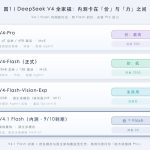
More revealingly, the company’s internal testing questionnaire asks users whether the model could fully replace the current DeepSeek V4 Pro online.
- Alibaba’s QoderWake 1.0 creates digital employees with a prompt
The launch reflects a shift in AI-agent development from helping individuals work faster toward assigning AI agents specific roles.
- Today’s Yangtze funding roundup: Optics, BCI, physical AI, machinery…
New capital injection will support product development, commercialization, global expansion and AI infrastructure.
- Stationery titan Deli enters consumer 3D printing with major hiring push
That puts Deli up against an increasingly concentrated market led by Shenzhen companies including Bambu Lab, Creality and Anycubic.


 This transaction comes as the Danish drugmaker expands its pipeline of next-generation weight-loss treatments.
 The funding will support clinical development, reactor design, medical commercialization and AI platform expansion.
 MiniMax positions it as an end-to-end coding model that can take a software task from diagnosis through delivery.
 This policy push comes as the coastal province seeks to shift from a major power consumer to a growing source of clean electricity.
 The Belgian approval gives Zelos a foothold in Europe, while the port center provides a real-world testing ground.
 Sharpa demonstrated the three products at IROS through tasks including baton passing, cocktail mixing and catching toys.
 More than 3,000 guests are expected to attend, including industry executives and technology experts from around the world.
 The partnership marks what AgiBot describes as the first 100-store-scale deployment of an embodied AI system in retail.
-150x150.jpg) Alibaba has reduced prices across its Qwen-Audio voice models by as much as 95%, including a roughly 70% cut for text-to-speech services.
Alibaba has reduced prices across its Qwen-Audio voice models by as much as 95%, including a roughly 70% cut for text-to-speech services. China Life has increasingly used both S transactions and fund investments to gain exposure to technology assets.
 The roughly 3-meter-tall robot weighs about 500 kilograms with a rider and can switch between bipedal and quadrupedal modes.
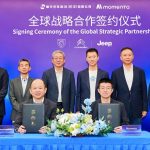 For Momenta, the partnership also provides a route for its driving technology to reach overseas markets through Stellantis’ global brands.
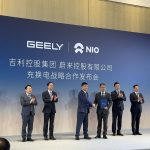 Nio and Geely began working together on battery swapping in November 2023, when Geely joined Nio’s battery-swapping alliance.
 CXMT founder and memory titan GigaDevice’s venture arm reportedly behind the AI champion with a 5 billion yuan bet.
 The deployment puts hundreds of robots into a public environment with large visitor volumes and unpredictable human interactions.
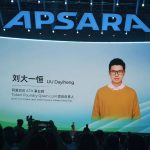 He has been involved in the development of Qwen’s core language models as well as Qwen-Coder and multimodal models.
 Many teachers and students are already using AI agents for lesson preparation, research and learning, but mostly on an individual basis.
 The company said that during a one-month trial, the platform registered 20,000 users and collected 13,000 task submissions.
 The move marks a shift from developing the Xingshu Project itself toward building a broader industrial ecosystem around space-based computing.
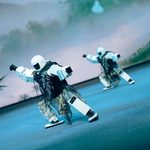 In the theater, individual robotic skills can be combined into complete performances and executed by multiple robots.
 AI is increasingly moving out of software and into machines that drive, fly, work and interact with the physical world.
 A tether supplies continuous power from the ground, overcoming the flight-time limitations of onboard batteries.
 The 104 Zhejiang companies making the list span internet services, automotive, chemicals, advanced materials and smart manufacturing.
-150x150.jpg) Its Qwen team plans to train a new model with 5 trillion to 10 trillion parameters as it moves toward artificial superintelligence, or ASI.
Its Qwen team plans to train a new model with 5 trillion to 10 trillion parameters as it moves toward artificial superintelligence, or ASI. The platform’s customer base had grown sixfold over the past year as AI agents began moving into core business processes.
 Users can activate QwenWork with a single voice command and have the AI turn conversations into tasks, notes and follow-ups.
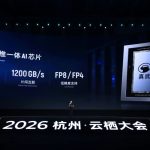 The V900 is scheduled to enter mass production in the first quarter of 2027 and will be deployed across Alibaba Cloud data centers.
 This move comes as the Hangzhou-based tech giant ramps up AI infrastructure investment to meet surging demand for computing power.
 The restructuring comes four days after Ant adopted Alibaba’s QwenWork as its AI workplace platform for all employees.
 The common thread is a shift from robots performing demonstrations to robots becoming part of daily store operations.
 The new model increases the number of degrees of freedom while reducing the overall size and improving drive precision, according to Unitree.
 CXMT said the G5 yield ramp-up will take time and that new products must go through customer testing and certification before broader adoption.
 As AI computing drives server power densities toward the megawatt range, conventional air cooling is becoming increasingly impractical.
 Tesla’s reported supplier strategy highlights the role of China’s existing automotive manufacturing base in its robotics push.
 Step 5 Preview uses a sparse mixture-of-experts architecture with 600 billion total parameters but activates only 27 billion at a time.
 Instead of only subsidizing rent or providing cash, cities could increasingly help startups by covering part of their AI usage costs.
与长隆集团-1-150x150.jpg) The scale of the project reflects a shift in how humanoid robots are being tested in commercial environments.
The scale of the project reflects a shift in how humanoid robots are being tested in commercial environments. The tie-up signals a shift from robots executing fixed commands to AI agents that can reason, call external skills and act in the physical world.
 At 19,999 yuan, its robots sit closer to the price range of high-end consumer electronics than traditional industrial robots.
 Qwen said the simulation data will also be used to train vision-language-action models for telescope control.
 The idea is to shift robot deployment from one-off engineering projects toward a more repeatable process for producing and improving skills.
 Fleet size, real-world operating data and access to large-scale computing are becoming increasingly intertwined.
 The rebound reversed a monthlong slide that had taken the stock below the 500-yuan mark for the first time on September 10.
 The latest deployments give potential customers a more concrete reference point as the company seeks to expand beyond China.
 For Chinese AI companies expanding overseas, the partnership marks a shift in how their products can reach foreign consumers.
 The initiative reflects an effort to move from investing in individual biotech projects to building an ecosystem around them.
 A supernode essentially connects thousands of computing cards through high-speed links so they can work together as a single computing system.
 The Hangzhou experiment takes a different approach, positioning seniors as AI users, creators and contributors.
 The app then limits access to four learning functions: photo-based Q&A, AI writing, translation and deep research.
 The latest additions broaden that effort from drug and product information to medical knowledge and nutrition data.
 Through its partnership with Stellantis, Leapmotor International now has more than 1,000 sales and service outlets across 45 markets.
 The essay offers an unusual glimpse into how AI automation is being perceived by engineers at the cutting edge of China’s AI industry.
-150x150.jpg) The first vehicle rolling off the line less than a year after the partnership was signed highlights the speed of the approach.
The first vehicle rolling off the line less than a year after the partnership was signed highlights the speed of the approach. Reuters, Airbnb and Pinterest have also adopted Qwen models as companies seek to reduce their reliance on proprietary AI systems.
 The strategy sets PrimeBot apart from most humanoid-robot companies focusing on factories, logistics and other applications.
-150x150.jpg) Huawei says the 3D architecture can halve the time required for mechanical, electrical and plumbing delivery.
Huawei says the 3D architecture can halve the time required for mechanical, electrical and plumbing delivery. The decision to hold the finals in Hangzhou comes as the global AI open-source ecosystem becomes increasingly fragmented.
 The push comes as the global silicon-photonics industry shifts from technology validation to manufacturing, testing, deployment and scaling.
 The appointment would mark one of DeepSeek’s most significant senior hires outside its core tech team since the firm was founded.
 The strategy also marks a potential shift for China’s leading robotics companies from exporting products to exporting ecosystems.
 Whether Lei’s latest visit was simply a high-profile show of support or a sign of deeper industrial cooperation remains unclear.
 The original G1 was launched in 2024 at 85,000 yuan and helped Unitree become the world’s top humanoid robot maker by shipments in 2025.
 The concept originated in Europe, where countries including the Netherlands and Belgium introduced similar schemes in the 2000s.
 Han said this could change the starting point of commerce from standardized products and fixed app pages to user intent.
 For developers, the bigger question is whether DeepSeek will bring its aggressive pricing strategy to voice AI.
 AI agents could make services that once relied on scarce experts or were too costly to deliver at scale available to a much wider population.
 With Enflame’s listing, all four have now entered China’s capital markets, marking a new phase for the country’s homegrown AI-chip industry.
 This move comes as the Chinese robotics maker seeks to push deeper into the underlying software stack for embodied AI.
 The Tengger deployment shows how legged robots are moving beyond industrial inspection into environmental and conservation work.
-150x150.jpg) A new “Health” section has been added to Afu’s homepage, alongside its AI chat and medical-service entrances.
A new “Health” section has been added to Afu’s homepage, alongside its AI chat and medical-service entrances. As an official DeepSeek partner, Tencent’s WorkBuddy has fully integrated V4.1 Flash in China and is offering a two-week promotional discount.
 The potential listing comes after China expanded the STAR Market’s so-called fifth listing standard in June to cover AI companies.
 The development has drawn attention partly because Geng does not fit the conventional profile of an academic or science communicator.
 The system is powered by Robbyant’s LingBot-VLA 2.0 embodied-AI foundation model, which is designed to work across different robot bodies.
 Rather than simply discussing AI in theory, the guide provides step-by-step instructions and ready-made prompts for each scenario.
 The new base will help DEEP Robotics scale up production of robots already proven in business-oriented applications.
 He expects that “ChatGPT moment” in embodied intelligence to arrive in as little as two to three years, though it could take five to 10 years.
 The trend reflects a broader shift in Zhejiang from “follower” innovation toward technology-led competition.
 He also criticized what he called overly aggressive innovation, in which insufficiently tested designs are incorporated into vehicles.
 Excelland’s listing offers a useful test of how far investor enthusiasm for robotics can outrun the underlying economics.
 The company expects the technology eventually to expand beyond flagship smartphones into smart vehicles, edge servers and wearables.
 DeepSeek’s latest strategy combines aggressive pricing to win users and peak/off-peak rates to encourage better use of computing capacity.
 More revealingly, the company’s internal testing questionnaire asks users whether the model could fully replace the current DeepSeek V4 Pro online.
-150x150.jpg) The launch reflects a shift in AI-agent development from helping individuals work faster toward assigning AI agents specific roles.
The launch reflects a shift in AI-agent development from helping individuals work faster toward assigning AI agents specific roles. That puts Deli up against an increasingly concentrated market led by Shenzhen companies including Bambu Lab, Creality and Anycubic.


-150x150.jpg.webp)


-150x150.jpg.webp)


-150x150.jpg.webp)
