Zelos wins Europe’s first Y test plate for robovan operation in Belgium 2026-09-29 The Belgian approval gives Zelos a foothold in Europe, while the port center provides a real-world testing ground.
Sharpa expands beyond robotic hands with three new products 2026-09-29 Sharpa demonstrated the three products at IROS through tasks including baton passing, cocktail mixing and catching toys.
AgiBot deploys 100 humanoids across cookware retailer’s stores 2026-09-29 The partnership marks what AgiBot describes as the first 100-store-scale deployment of an embodied AI system in retail.
AgiBot delivers 20,000th robot as 300 units enter theme park 2026-09-24 The deployment puts hundreds of robots into a public environment with large visitor volumes and unpredictable human interactions.
Maniformer launches crowdsourced physical-AI data platform 2026-09-24 The company said that during a one-month trial, the platform registered 20,000 users and collected 13,000 task submissions.
Lumos Robotics stages world’s first humanoid theater in Shenzhen 2026-09-24 In the theater, individual robotic skills can be combined into complete performances and executed by multiple robots.
AI takes center stage as Hangzhou hosts China’s digital trade expo 2026-09-23 AI is increasingly moving out of software and into machines that drive, fly, work and interact with the physical world.
Ace Robotics deploys humanoids to PetroChina gas station stores 2026-09-22 The common thread is a shift from robots performing demonstrations to robots becoming part of daily store operations.
StepFun’s Step 5 Preview ranks among top three open-source models globally 2026-09-21 Step 5 Preview uses a sparse mixture-of-experts architecture with 600 billion total parameters but activates only 27 billion at a time.
AgiBot to deploy 300-plus robots at world’s ‘first’ robotics theme park 2026-09-21 The scale of the project reflects a shift in how humanoid robots are being tested in commercial environments.
PrimeBot partners Tencent to bring AI skills into physical world 2026-09-21 The tie-up signals a shift from robots executing fixed commands to AI agents that can reason, call external skills and act in the physical world.
PrimeBot tests the waters with personal droids starting at nearly $3,000 2026-09-21 At 19,999 yuan, its robots sit closer to the price range of high-end consumer electronics than traditional industrial robots.
Lumos Robotics launches NexCore to cut robot skill development to days 2026-09-18 The idea is to shift robot deployment from one-off engineering projects toward a more repeatable process for producing and improving skills.
Zelos builds world’s ‘first’ 10,000-chip cluster for L4 autonomous driving 2026-09-18 Fleet size, real-world operating data and access to large-scale computing are becoming increasingly intertwined.
AgiBot robots take on jobs in shops, hotels and car dealerships 2026-09-18 The latest deployments give potential customers a more concrete reference point as the company seeks to expand beyond China.
PrimeBot bets on personal robots as humanoids target consumers 2026-09-16 The strategy sets PrimeBot apart from most humanoid-robot companies focusing on factories, logistics and other applications.
DEEP Robotics sends robot ranger into China’s Tengger Desert 2026-09-11 The Tengger deployment shows how legged robots are moving beyond industrial inspection into environmental and conservation work.
Robbyant puts humanoid robot to work in Shanghai pharmacy 2026-09-10 The system is powered by Robbyant’s LingBot-VLA 2.0 embodied-AI foundation model, which is designed to work across different robot bodies.
DEEP Robotics builds 110,000-sqm robot base in Hangzhou — media 2026-09-10 The new base will help DEEP Robotics scale up production of robots already proven in business-oriented applications.
Qiushui Semiconductor unveils 8-inch red MicroLED chip for AR glasses 2026-09-08 The advance comes as global AR-glasses makers seek to move beyond green-only or limited-color displays into full-color gadgets.
PrimeBot partners with car dealer iCar to roll out consumer robots globally 2026-09-08 The IFA partnership marks a move from testing individual overseas markets to building a more systematic international channel.
AgiBot sets up AI computing unit as humanoid leader seeks HK IPO 2026-09-07 That raises a more obvious question: is the new unit as much about the IPO narrative as it is about technology?
Pianist Lang Lang gets his personal robot from PrimeBot 2026-09-03 The partnership came as Shanghai-based PrimeBot opened official livestream sales on e-commerce platforms including Tmall and Douyin.
Physical AI startup Maniformer ships 20,000 data devices to JD.com 2026-09-01 It claims to be the first data provider in the sector with million-hour-scale datasets available for commercial sale.
Hypershell to unveil flagship exoskeleton Halo at Berlin tech show 2026-08-28 The company delivered about 30,000 units globally in 2025, with products sold across more than 70 countries and regions.
AgiBot strikes 18 golds as China humanoid robot race heats up 2026-08-28 As companies move toward commercialization, major competitions can serve as public demonstrations of technical capability.
Tsinghua-backed unicorn Galaxea expands in Hangzhou’s robotics hub 2026-08-27 For Hangzhou, Galaxea’s arrival adds another well-funded embodied-AI player to a cluster that already includes several unicorn companies.
Startup to invest $400M in liquid-cooled AI data center in Quzhou 2026-08-26 It will comprise two computing-center buildings and primarily support Alibaba Cloud’s AI model training operations.
Dreame retreats from hyper-expansion, refocusing on four core units 2026-08-26 Dreame’s expansion was fueled by a financing model that combined roughly 20% of its own capital with 80% from local state-backed investors.
PrimeBot opens preorders for Q1, T1 as humanoids enter consumer market 2026-08-24 The company’s key technical bet is a Transformer-based architecture that allows the same hardware to operate across the two configurations.
Unitree’s ‘Superman’ robot tops trending charts with 2-meter jump 2026-08-18 Released on the eve of Unitree’s IPO on August 19, the launch looks like more than a demonstration of engineering capability.
Unitree to list August 19 as China’s first humanoid robot stock 2026-08-18 DeepSeek was allocated 933,400 shares, worth about 141 million yuan at the IPO price, making it one of the more notable strategic investors.
Lumos Robotics launches heavy-duty AI robot for factory work 2026-08-17 Its dual-arm system uses standard flanges and integrated interfaces, allowing operators to quickly switch end-of-arm tools for different tasks.
Dreame Skyworks ranks 1st in H1 China CVC investment activity 2026-08-17 The venture firm has invested into 57 portfolio companies and manages 5.33 billion yuan ($740 million) in registered fund capital by the first half of this year.
Former Qwen chief Lin Junyang launches AI startup at $2 billion valuation 2026-08-13 HongShan and Gaorong Capital jointly led the round, with Tencent and the government-backed Shanghai Engine Fund also participating.
Unitree’s humanoid robot output hits 18,000 as production ramps up 2026-08-13 For the global robotics industry, the significance of Unitree’s production figures extends beyond one company.
Nearly 20,000 ‘lucky’ investors hit the Unitree IPO jackpot 2026-08-12 The extremely low allocation rate highlights investor enthusiasm for China’s first humanoid robot stock.
OpenAI-backed AI language startup Speak sets up China base in Hangzhou 2026-08-11 AI speaking platforms offer lower marginal costs, round-the-clock availability and personalized interaction, potentially reshaping the market.
Unitree IPO draws 0.018% odds, among China’s toughest new-share bets 2026-08-10 Unitree’s final rate therefore makes it one of the most difficult new shares for retail investors to secure this year.
Unitree IPO draws frenzy as listing set to mint new millionaires 2026-08-10 Beyond the wealth creation story, Unitree’s IPO represents a broader market bet on China’s ambitions in embodied intelligence.
Unitree founder maps out embodied AI push after IPO pricing 2026-08-07 Unitree plans to explore a wider range of robot products, including humanoid robots, quadruped robots, mechs and other robotic platforms.
Agtech startup iSeen unveils rail-free robot to clean pig pens 2026-08-07 The company says a single unit can perform work equivalent to that of three employees and has already secured orders from several large-scale farming operators.
Unitree sets IPO above $22 per share, surpassing forecasts 2026-08-06 Unitree, widely known as one of the “Six Dragons of Hangzhou,” has gained global recognition through its quadruped and humanoid robot platforms.
Unitree reportedly prices STAR Market IPO at $15 per share 2026-08-06 Unitree’s IPO will provide one of the first public-market benchmarks for China’s emerging robotics sector.
Robovan upstart Zelostech wins Changi Airport T5 project 2026-08-06 For overseas investors and industry observers, Zelostech’s Singapore journey offers a different perspective on autonomous driving competition.
MagicLab breaks ground on Wuxi plant to begin robot mass production 2026-08-04 The factory launch comes as China’s embodied AI sector moves beyond early-stage technology validation.
Ant-backed Robbyant eyes $222 million funding to build robotic ‘brains’ 2026-08-03 Robbyant has positioned itself as an intelligence-layer provider, following a “build the brain, not the body” strategy.
Standard Robots’ IPO gamble puts China’s robotics boom under scrutiny 2026-07-29 Standard Robots’s challenges are not unique. The company represents a broader profitability dilemma facing China’s robotics industry.
Unitree launches As2-W wheeled quadruped to challenge arch rival 2026-07-24 As the two companies compete on performance, cost and deployment speed, they are helping reshape the global competitive landscape for industrial quadruped robots.
Unitree founder sees embodied AI’s ‘ChatGPT moment’ within 3 years 2026-07-24 “The remaining challenges are no longer fundamental scientific problems, but engineering ones,” Wang said, adding that the scale of engineering work required remains unprecedented.
Uniubi AI debuts world’s first 720-degree backflipping robot at WAIC 2026-07-20 The startup claimed it is the world’s first four-legged robot capable of completing a continuous 720-degree backflip.
Yangtze River Delta robotics firms unveil new products at WAIC 2026-07-20 A total of 208 embodied AI products and more than 300 physical robots were exhibited at this year’s conference, held on July 17-20.
Shanghai issues world’s first prescription for approved invasive BCI 2026-07-17 The system decodes neural signals to identify movement intentions and controls external assistive devices to help restore hand grasping.
PongBot’s AI coach robot raises nearly $4 million in Kickstarter debut 2026-07-16 Founded in Shanghai in 2019, PongBot has become one of China’s most closely watched AI sports hardware startups.
PrimeBot unveils shape-shifting personal robot ahead of WAIC 2026-07-15 The Transformer 1 will make its public debut at the 2026 World Artificial Intelligence Conference (WAIC) in Shanghai from July 17-20.
JD.com deepens embodied AI push with Lumos Robotics partnership 2026-07-15 The companies will collaborate on product development, technology integration, commercial deployment and sales channels.
Robbyant boosts robot vision with new spatial perception models 2026-07-07 Robots have long struggled with visual perception in challenging environments involving transparent glass, reflective surfaces, small objects and complex lighting conditions.
Simplexity Robotics delivers first 100 robots in industry record 2026-07-07 The company said the robot can be deployed within an hour of unpacking, reducing lengthy engineering integration and commissioning work.
DeepSeek to introduce V4 with 2x peak-hour API rates 2026-06-30 The changes are expected to have the greatest impact on latency-sensitive applications with frequent API calls.
DEEP Robotics unveils commercialization roadmap at global partner summit 2026-06-29 Founder and CEO Zhu Qiuguo said long-term competitiveness will no longer depend on standalone hardware or software, but instead on five integrated capabilities.
Agibot hits 15,000 unit milestone as production pace accelerates 2026-06-29 It took the company 11 months to grow from its 1,000th to its 5,000th robot, 3.5 months to reach 10,000 units, and less than three months to add another 5,000 robots.
DeepSeek tops Hurun unicorn newcomer list as Hangzhou ranks 9th globally 2026-06-26 The Hangzhou-based AI upstart is among 308 newly added unicorns globally and has also entered the top 15 of the overall global unicorn ranking.
DeepSeek launches major hiring campaign after blockbuster funding 2026-06-26 The company said it is hiring across 33 positions spanning seven broad categories, with roles based in Beijing and Hangzhou.
MagicLab ties up with JD in embodied AI push, eyes $147M robot sales 2026-06-25 The agreement covers joint R&D, product co-creation, scenario expansion and ecosystem development, according to the two companies.
Lumos model tops global benchmark for zero-shot embodied AI 2026-06-25 Despite having only 2.8 billion parameters—less than one-sixth the size of Nvidia Cosmos—Prime R0 delivered the best overall performance.
Unitree cuts price of humanoid robot R1 to $4,390, ships immediately 2026-06-24 Unitree said around 90% of core components are domestically developed in-house, including motors, reducers and controllers, helping reduce overall costs.
Homes are robotics’ toughest challenge, DEEP Robotics CEO says 2026-06-24 Zhu’s comments come as embodied AI and robotics attract growing investment globally, with developers racing to move machines beyond controlled industrial settings and into everyday environments.
Humanoid robots take on full tablet testing line in China factory trial 2026-06-23 Unlike previous demonstrations focused on individual workstations, the latest deployment extends across an entire inspection segment of the production process.
Dreame slashes 200 business units to four in pivot back to core operations 2026-06-19 Following the restructuring, Dreame will focus on four main areas: smart cleaning appliances, whole-home devices, smart mobility and embodied intelligence.
Robot ‘cyber paw patrol’ guards Mexico World Cup stadium 2026-06-18 The World Cup deployment adds to a growing track record of sports-event use cases for DEEP Robotics.
TransitX unveils lighter exoskeleton, open-sources gait system 2026-06-16 The rollout comes as TransitX seeks to build what it calls a “physical AI ecosystem” centered on human movement intelligence.
Mosquito-trap startup expands after park trials show early success 2026-06-15 Unlike traditional pest-control methods, the device relies on physical trapping rather than chemical agents.
Chinese team wins top prize in global robotics grasping contest 2026-06-12 FAM employs “heatmap alignment” to efficiently capture 3D spatial features from 2D inputs, greatly reducing sample dependence.
DEEP Robotics showcases robot dog with e-nose at German tech fair 2026-06-12 This marks what the company described as the first integration of electronic-nose technology with an embodied AI robotic platform.
Shining 3D launches portable scanners to enter consumer market 2026-06-11 3D scanners convert physical objects into digital models, complementing 3D printers that turn digital designs into tangible items.
Hangzhou robot startup bets on rolling security bots to carve out niche 2026-06-10 The company generated more than $1 million in overseas sales in 2025, with customers in the Middle East, North America and Africa.
China’s first ultralight aircraft insurance policy targets safety gap 2026-06-09 The deal marks the first time domestic insurers have offered an integrated insurance package tailored to the sector.
Rokid pledges privacy overhaul after hidden recording draws scrutiny 2026-06-09 A review by local media found numerous videos allegedly recorded without the knowledge of passersby in locations including beaches, parks and subway stations.
Robovan leader Zelostech powers Dongfeng’s new logistics vehicle lineup 2026-06-08 They target applications from last-mile delivery and urban logistics to industrial park transportation and long-haul freight.
DEEP Robotics takes quadruped robot to Arctic ice for field tests 2026-06-08 The textured footpads were designed to mimic the grip structure of polar bear paws, improving traction on low-friction ice surfaces.
DEEP Robotics put robot dogs to work in Zhejiang bayberry harvest 2026-06-08 The rollout addresses a recurring logistical constraint in one of China’s best-known bayberry-growing regions.
Genisom AI hits 10,000 quadruped production milestone in rapid scale-up 2026-06-05 The company said the milestone was reached within 10 months of mass production, which it claims is 2-3 years faster than the industry average.
Style3D scales AI design as fashion shifts to on-demand production 2026-06-05 The system simulates fabric physics and wearing effects, enabling virtual pattern-making, online collaboration and cloud-based design review.
Rokid AI glasses to offer free World Cup updates via smart assistant 2026-06-04 The rollout follows an exclusive partnership with state broadcaster China Central Television, making Rokid the first AI glasses brand to sponsor World Cup broadcast.
Lumos to give away 100 robots to global builders, cites access as bottleneck 2026-06-04 Lumos said participants will not be required to pay licensing fees, provide equity or make upfront purchases.
NextVPU moves HQ to Hangzhou as physical AI shifts to edge vision chips 2026-06-03 “Choosing to build a company in China reflects the scale of opportunity in robotics, drones and visual intelligence as a trillion-yuan industry,” Feng said.
Unitree says Nvidia-powered humanoid to launch in second half of 2026 2026-06-03 Unitree staff said the new H2 Plus, built on Nvidia’s platform, offers substantially higher computing performance than previous generations.
DEEP Robotics showcases upgraded DR02 humanoid capabilities 2026-06-02 The footage shows the robot running across grassy slopes, stepping over factory thresholds, performing fine operations inside electrical control boxes and ending with front and back flips.
Nvidia taps Unitree for first China-made humanoid reference robot 2026-06-02 The platform is designed for universities and research institutions and will be available through Unitree by the end of 2026.
Metal parts maker posts 80% jump in Q1 revenue on AI cooling demand 2026-06-01 For companies like Eldar, once focused on conventional metal machining, the surge has opened a fast-growing niche supplying precision components used in next-generation cooling systems.
Unitree opens first Asian experience center ahead of IPO review 2026-05-31 Across the street sits Apple’s Jing’an store, underscoring Unitree’s ambitions to raise its profile among mainstream consumers.
Rokid AI glasses set crowdfunding record on Japan’s Makuake 2026-05-31 More than 636 million yen in pledges made Rokid’s AI glasses the highest-grossing crowdfunding project in the 13-year history of the Makuake platform.
Unitree pitches giant ‘mecha’ as test bed for embodied AI, founder says 2026-05-30 Wang opened up for the first time on the thinking behind GD01, which the company describes as the world’s first mass-produced, rideable mech robot.
Zero Zero unveils waterproof flying camera for water sports users 2026-05-29 The Hangzhou-based company said the device addresses three common problems in water sports photography: lack of camera assistance, water damage risks and difficult drone controls.
Rokid joins CCTV World Cup coverage in historic AI glasses push 2026-05-28 The cooperation could help move AI glasses beyond early-stage technology demonstrations into broader commercial use cases tied to large-scale live events.
Hangzhou startup launches world’s first 8-inch silicon Micro LED line 2026-05-27 Micro LED is widely viewed as the next-generation display technology because of its high brightness, low power consumption and long lifespan.
State Grid orders push robotics firm from warehouses into humanoids 2026-05-26 The latest order signals a clearer pivot: after consolidating its position in AMRs, Guozi is accelerating its push into humanoid robotics, a field still in early commercial development.
Unitree unveils new AI model as humanoid robot steps into office roles 2026-05-26 Without remote control, the robot was shown sorting, storing and arranging objects while operating under external disturbances.
DeepSeek hires ex-Jane Street quant for coding agent drive 2026-05-24 Cui Tianyi, a former co-founder of quant trading firm TSY Capital, joined DeepSeek’s newly formed Harness team in March, according to his LinkedIn profile.
DeepSeek slashes API prices to record low as token costs plunge 2026-05-24 At the new rates, DeepSeek said usage cost of its V4-Pro model now drops to industry-low levels, with cached input costing as little as 2.5 fen, the smallest unit of the Chinese currency, per million tokens.


 The Belgian approval gives Zelos a foothold in Europe, while the port center provides a real-world testing ground.
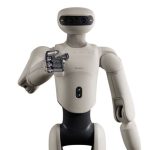 Sharpa demonstrated the three products at IROS through tasks including baton passing, cocktail mixing and catching toys.
 The partnership marks what AgiBot describes as the first 100-store-scale deployment of an embodied AI system in retail.
 The deployment puts hundreds of robots into a public environment with large visitor volumes and unpredictable human interactions.
 The company said that during a one-month trial, the platform registered 20,000 users and collected 13,000 task submissions.
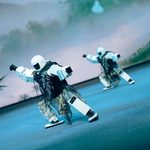 In the theater, individual robotic skills can be combined into complete performances and executed by multiple robots.
 AI is increasingly moving out of software and into machines that drive, fly, work and interact with the physical world.
 The common thread is a shift from robots performing demonstrations to robots becoming part of daily store operations.
 Step 5 Preview uses a sparse mixture-of-experts architecture with 600 billion total parameters but activates only 27 billion at a time.
与长隆集团-1-150x150.jpg) The scale of the project reflects a shift in how humanoid robots are being tested in commercial environments.
The scale of the project reflects a shift in how humanoid robots are being tested in commercial environments.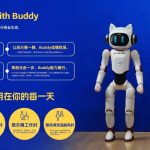 The tie-up signals a shift from robots executing fixed commands to AI agents that can reason, call external skills and act in the physical world.
 At 19,999 yuan, its robots sit closer to the price range of high-end consumer electronics than traditional industrial robots.
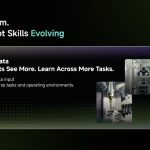 The idea is to shift robot deployment from one-off engineering projects toward a more repeatable process for producing and improving skills.
 Fleet size, real-world operating data and access to large-scale computing are becoming increasingly intertwined.
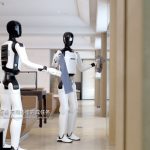 The latest deployments give potential customers a more concrete reference point as the company seeks to expand beyond China.
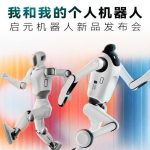 The strategy sets PrimeBot apart from most humanoid-robot companies focusing on factories, logistics and other applications.
 The Tengger deployment shows how legged robots are moving beyond industrial inspection into environmental and conservation work.
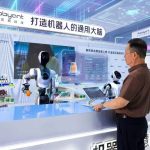 The system is powered by Robbyant’s LingBot-VLA 2.0 embodied-AI foundation model, which is designed to work across different robot bodies.
 The new base will help DEEP Robotics scale up production of robots already proven in business-oriented applications.
 The advance comes as global AR-glasses makers seek to move beyond green-only or limited-color displays into full-color gadgets.
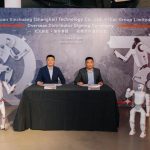 The IFA partnership marks a move from testing individual overseas markets to building a more systematic international channel.
 That raises a more obvious question: is the new unit as much about the IPO narrative as it is about technology?
-1-150x150.jpg) The partnership came as Shanghai-based PrimeBot opened official livestream sales on e-commerce platforms including Tmall and Douyin.
The partnership came as Shanghai-based PrimeBot opened official livestream sales on e-commerce platforms including Tmall and Douyin. It claims to be the first data provider in the sector with million-hour-scale datasets available for commercial sale.
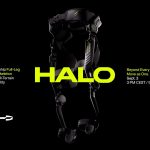 The company delivered about 30,000 units globally in 2025, with products sold across more than 70 countries and regions.
 As companies move toward commercialization, major competitions can serve as public demonstrations of technical capability.
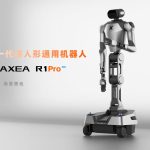 For Hangzhou, Galaxea’s arrival adds another well-funded embodied-AI player to a cluster that already includes several unicorn companies.
 It will comprise two computing-center buildings and primarily support Alibaba Cloud’s AI model training operations.
 Dreame’s expansion was fueled by a financing model that combined roughly 20% of its own capital with 80% from local state-backed investors.
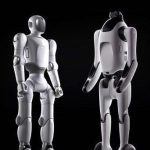 The company’s key technical bet is a Transformer-based architecture that allows the same hardware to operate across the two configurations.
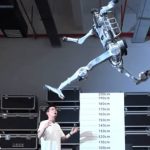 Released on the eve of Unitree’s IPO on August 19, the launch looks like more than a demonstration of engineering capability.
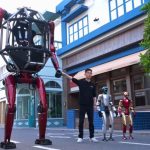 DeepSeek was allocated 933,400 shares, worth about 141 million yuan at the IPO price, making it one of the more notable strategic investors.
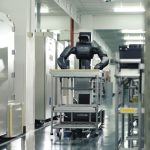 Its dual-arm system uses standard flanges and integrated interfaces, allowing operators to quickly switch end-of-arm tools for different tasks.
 HongShan and Gaorong Capital jointly led the round, with Tencent and the government-backed Shanghai Engine Fund also participating.
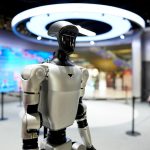 For the global robotics industry, the significance of Unitree’s production figures extends beyond one company.
 The extremely low allocation rate highlights investor enthusiasm for China’s first humanoid robot stock.
 AI speaking platforms offer lower marginal costs, round-the-clock availability and personalized interaction, potentially reshaping the market.
 Beyond the wealth creation story, Unitree’s IPO represents a broader market bet on China’s ambitions in embodied intelligence.
 Unitree plans to explore a wider range of robot products, including humanoid robots, quadruped robots, mechs and other robotic platforms.
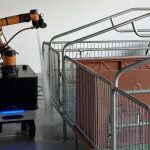 The company says a single unit can perform work equivalent to that of three employees and has already secured orders from several large-scale farming operators.
 Unitree, widely known as one of the “Six Dragons of Hangzhou,” has gained global recognition through its quadruped and humanoid robot platforms.
 Unitree’s IPO will provide one of the first public-market benchmarks for China’s emerging robotics sector.
 For overseas investors and industry observers, Zelostech’s Singapore journey offers a different perspective on autonomous driving competition.
 The factory launch comes as China’s embodied AI sector moves beyond early-stage technology validation.
 Robbyant has positioned itself as an intelligence-layer provider, following a “build the brain, not the body” strategy.
 Standard Robots’s challenges are not unique. The company represents a broader profitability dilemma facing China’s robotics industry.
 As the two companies compete on performance, cost and deployment speed, they are helping reshape the global competitive landscape for industrial quadruped robots.
 “The remaining challenges are no longer fundamental scientific problems, but engineering ones,” Wang said, adding that the scale of engineering work required remains unprecedented.
 The startup claimed it is the world’s first four-legged robot capable of completing a continuous 720-degree backflip.
 A total of 208 embodied AI products and more than 300 physical robots were exhibited at this year’s conference, held on July 17-20.
 The system decodes neural signals to identify movement intentions and controls external assistive devices to help restore hand grasping.
 Founded in Shanghai in 2019, PongBot has become one of China’s most closely watched AI sports hardware startups.
 The Transformer 1 will make its public debut at the 2026 World Artificial Intelligence Conference (WAIC) in Shanghai from July 17-20.
 The companies will collaborate on product development, technology integration, commercial deployment and sales channels.
 Robots have long struggled with visual perception in challenging environments involving transparent glass, reflective surfaces, small objects and complex lighting conditions.
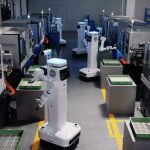 The company said the robot can be deployed within an hour of unpacking, reducing lengthy engineering integration and commissioning work.
 The changes are expected to have the greatest impact on latency-sensitive applications with frequent API calls.
-150x150.jpg) Founder and CEO Zhu Qiuguo said long-term competitiveness will no longer depend on standalone hardware or software, but instead on five integrated capabilities.
Founder and CEO Zhu Qiuguo said long-term competitiveness will no longer depend on standalone hardware or software, but instead on five integrated capabilities.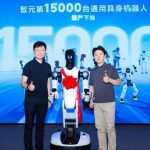 It took the company 11 months to grow from its 1,000th to its 5,000th robot, 3.5 months to reach 10,000 units, and less than three months to add another 5,000 robots.
 The Hangzhou-based AI upstart is among 308 newly added unicorns globally and has also entered the top 15 of the overall global unicorn ranking.
 The company said it is hiring across 33 positions spanning seven broad categories, with roles based in Beijing and Hangzhou.
 The agreement covers joint R&D, product co-creation, scenario expansion and ecosystem development, according to the two companies.
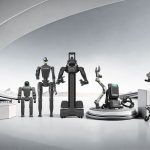 Despite having only 2.8 billion parameters—less than one-sixth the size of Nvidia Cosmos—Prime R0 delivered the best overall performance.
 Unitree said around 90% of core components are domestically developed in-house, including motors, reducers and controllers, helping reduce overall costs.
-150x150.jpg) Zhu’s comments come as embodied AI and robotics attract growing investment globally, with developers racing to move machines beyond controlled industrial settings and into everyday environments.
Zhu’s comments come as embodied AI and robotics attract growing investment globally, with developers racing to move machines beyond controlled industrial settings and into everyday environments.-150x150.jpg) Unlike previous demonstrations focused on individual workstations, the latest deployment extends across an entire inspection segment of the production process.
Unlike previous demonstrations focused on individual workstations, the latest deployment extends across an entire inspection segment of the production process.-1-150x150.jpg) The World Cup deployment adds to a growing track record of sports-event use cases for DEEP Robotics.
The World Cup deployment adds to a growing track record of sports-event use cases for DEEP Robotics.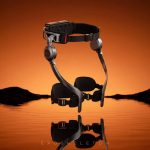 The rollout comes as TransitX seeks to build what it calls a “physical AI ecosystem” centered on human movement intelligence.
 Unlike traditional pest-control methods, the device relies on physical trapping rather than chemical agents.
 FAM employs “heatmap alignment” to efficiently capture 3D spatial features from 2D inputs, greatly reducing sample dependence.
-150x150.jpg) This marks what the company described as the first integration of electronic-nose technology with an embodied AI robotic platform.
This marks what the company described as the first integration of electronic-nose technology with an embodied AI robotic platform. 3D scanners convert physical objects into digital models, complementing 3D printers that turn digital designs into tangible items.
 The company generated more than $1 million in overseas sales in 2025, with customers in the Middle East, North America and Africa.
 The deal marks the first time domestic insurers have offered an integrated insurance package tailored to the sector.
 A review by local media found numerous videos allegedly recorded without the knowledge of passersby in locations including beaches, parks and subway stations.
 They target applications from last-mile delivery and urban logistics to industrial park transportation and long-haul freight.
-1-150x150.jpg) The textured footpads were designed to mimic the grip structure of polar bear paws, improving traction on low-friction ice surfaces.
The textured footpads were designed to mimic the grip structure of polar bear paws, improving traction on low-friction ice surfaces.-1-150x150.jpg) The rollout addresses a recurring logistical constraint in one of China’s best-known bayberry-growing regions.
The rollout addresses a recurring logistical constraint in one of China’s best-known bayberry-growing regions. The company said the milestone was reached within 10 months of mass production, which it claims is 2-3 years faster than the industry average.
 The system simulates fabric physics and wearing effects, enabling virtual pattern-making, online collaboration and cloud-based design review.
 The rollout follows an exclusive partnership with state broadcaster China Central Television, making Rokid the first AI glasses brand to sponsor World Cup broadcast.
 Lumos said participants will not be required to pay licensing fees, provide equity or make upfront purchases.
 “Choosing to build a company in China reflects the scale of opportunity in robotics, drones and visual intelligence as a trillion-yuan industry,” Feng said.
 Unitree staff said the new H2 Plus, built on Nvidia’s platform, offers substantially higher computing performance than previous generations.
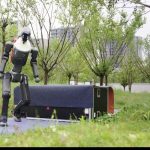 The footage shows the robot running across grassy slopes, stepping over factory thresholds, performing fine operations inside electrical control boxes and ending with front and back flips.
 The platform is designed for universities and research institutions and will be available through Unitree by the end of 2026.
 For companies like Eldar, once focused on conventional metal machining, the surge has opened a fast-growing niche supplying precision components used in next-generation cooling systems.
 Across the street sits Apple’s Jing’an store, underscoring Unitree’s ambitions to raise its profile among mainstream consumers.
 More than 636 million yen in pledges made Rokid’s AI glasses the highest-grossing crowdfunding project in the 13-year history of the Makuake platform.
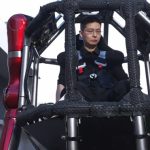 Wang opened up for the first time on the thinking behind GD01, which the company describes as the world’s first mass-produced, rideable mech robot.
 The Hangzhou-based company said the device addresses three common problems in water sports photography: lack of camera assistance, water damage risks and difficult drone controls.
 The cooperation could help move AI glasses beyond early-stage technology demonstrations into broader commercial use cases tied to large-scale live events.
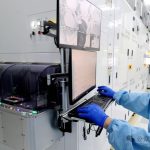 Micro LED is widely viewed as the next-generation display technology because of its high brightness, low power consumption and long lifespan.
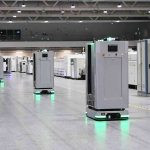 The latest order signals a clearer pivot: after consolidating its position in AMRs, Guozi is accelerating its push into humanoid robotics, a field still in early commercial development.
 Without remote control, the robot was shown sorting, storing and arranging objects while operating under external disturbances.
 Cui Tianyi, a former co-founder of quant trading firm TSY Capital, joined DeepSeek’s newly formed Harness team in March, according to his LinkedIn profile.
 At the new rates, DeepSeek said usage cost of its V4-Pro model now drops to industry-low levels, with cached input costing as little as 2.5 fen, the smallest unit of the Chinese currency, per million tokens.


-1-150x150.jpg.webp)


-150x150.jpg.webp)


-150x150.jpg.webp)
-150x150.jpg.webp)
-1-150x150.jpg.webp)


-150x150.jpg.webp)


-1-150x150.jpg.webp)
-1-150x150.jpg.webp)


