Hengrui licenses obesity drug to Novo Nordisk in deal worth up to $2.6B 2026-09-29 This transaction comes as the Danish drugmaker expands its pipeline of next-generation weight-loss treatments.
Today’s Yangtze funding roundup: medtech, wafer, fusion, eye drug, AIGC… 2026-09-29 The funding will support clinical development, reactor design, medical commercialization and AI platform expansion.
Today’s Yangtze funding roundup: biopharma, spacecraft, photonics… 2026-09-28 The funding will support clinical development, spacecraft prototypes and commercialization of next-generation optical technologies.
Today’s Yangtze funding roundup: commercial space, AIDD, energy AI, silicon… 2026-09-24 The funding will support rocket development, clinical programs, AI platforms, production expansion and advanced packaging.
Today’s Yangtze funding roundup: space tech, semicon, SAF, medtech… 2026-09-23 Companies in satellite communications, power semiconductors, sustainable aviation fuel and medical devices raised fresh capital.
Today’s Yangtze funding roundup: BCI, physical AI, brain-inspired computing 2026-09-22 New capital injections will support clinical research, robot foundation models and Physical AI commercialization.
Today’s Yangtze funding roundup: semiconductors, fusion, AI4S… 2026-09-21 Yangtze River Delta startups in semiconductor, fusion and AI-for-science spaces continue to draw fresh capital.
Today’s Yangtze funding roundup: metal 3D printer, robotics, chips… 2026-09-20 Yangtze River Delta startups in metal 3D printer, tactile robotics, photonic chips and aerospace automation raised fresh funding.
Today’s Yangtze funding roundup: AIDD, surgical robotics, AI4S… 2026-09-18 New capital will support R&D, clinical trials, commercialization and the deployment of AI-driven scientific research platforms.
Today’s Yangtze funding roundup: AIDD, robotaxi, mining truck, AI chip… 2026-09-17 Shanghai AI drugmaker Anew Labs raised $290 million in its first standalone funding round, valuing the company at $1.5 billion.
Today’s Yangtze funding roundup: AIDD, robotics, semicon, superconductor… 2026-09-16 New capital infusion will support drug development, chip production, global expansion and next-generation industrial technologies.
Today’s Yangtze funding roundup: robotics, semicon, fusion… 2026-09-15 New capital injections will support product R&D, manufacturing expansion, equipment upgrades and overseas growth.
Today’s Yangtze funding roundup: Embodied AI, photonics, quantum… 2026-09-14 Yangtze River Delta startups in embodied AI, photonics, world models and quantum computing raised fresh funding.
Today’s Yangtze funding roundup: Financial AI, fusion, special aircraft… 2026-09-11 Shanghai and Anhui startups working on financial AI research, terahertz fusion technology and high-speed flight raised fresh funding.
Enflame jumps 188% on debut as ‘GPU quartet’ reaches capital markets 2026-09-11 With Enflame’s listing, all four have now entered China’s capital markets, marking a new phase for the country’s homegrown AI-chip industry.
Today’s Yangtze funding roundup: Magnetic systems, gene editing, semicon… 2026-09-10 Yangtze River Delta startups in magnetic-drive systems, gene editing, semiconductors and AI infrastructure raised fresh funding.
Today’s Yangtze funding roundup: CIM chips, robotics, fusion, AI toys… 2026-09-09 The delta’s startups working on next-gen AI chips, physical AI, robotics, fusion and AI toys raised fresh funding.
Excelland Robotics rockets 142% in Hong Kong as losses linger 2026-09-09 Excelland’s listing offers a useful test of how far investor enthusiasm for robotics can outrun the underlying economics.
Today’s Yangtze funding roundup: Optics, BCI, physical AI, machinery… 2026-09-08 New capital injection will support product development, commercialization, global expansion and AI infrastructure.
Today’s Yangtze funding roundup: Quantum, robotics, AI infra, eVTOL… 2026-09-07 The latest rounds will fuel chip manufacturing, robot production, AI optimization and low-altitude technologies.
Today’s Yangtze funding roundup: eVTOL, AI memory, silicon chip… 2026-09-05 Chinese startups in eVTOLs, AI memory and silicon photonics chips raised fresh funding to fuel their expansion.
Today’s Yangtze funding roundup: CNS drug, flying robot, eVTOL… 2026-09-04 Chinese startups in central nervous system drugs, flying robots, eVTOLs and deep-sea equipment secured fresh funding.
Today’s Yangtze funding roundup: Hydrogen, AI marketing, diagnostics… 2026-09-03 Chinese startups in hydrogen materials, AI marketing and immuno-diagnostics have completed fresh funding rounds.
Today’s Yangtze funding roundup: Medtech, clean energy, EDA, robotics… 2026-09-02 The latest rounds will back global medtech expansion, AI power infrastructure, robot vision and sensing, agentic EDA and embodied robotics.
Today’s Yangtze funding roundup: lithography, optical links, life sciences… 2026-09-01 The latest rounds will support next-generation lithography, high-speed optical links and AI-native clinical trials.
Today’s Yangtze funding roundup: Fusion, cell therapy, space computing… 2026-08-31 The latest rounds will fuel fusion reactors, cell therapies, autonomous logistics, satellite computing and humanoid robots.
Today’s Yangtze funding roundup: GPU, chip equipment, robotics… 2026-08-29 China’s deep-tech sector saw another wave of major funding, with AI chips and semiconductor equipment leading the charge.
Sharpa bags $670 million as Hesai founders bet on dexterous robot hands 2026-08-29 Rather than relying primarily on laboratory demonstrations, Sharpa has been testing its technology in an operating restaurant.
Today’s Yangtze funding roundup: Biopharma, physical AI infra… 2026-08-28 Biotech and physical AI startups raised fresh capital to advance clinical programs and next-generation robotics infrastructure.
Today’s Yangtze funding roundup: embodied AI, chip, model router… 2026-08-27 Embodied AI and chip startups drew fresh capital as China accelerates investment in next-generation computing infrastructure.
Today’s Yangtze funding roundup: chip, AI models, thermal management… 2026-08-26 New funding is accelerating advances in chip interconnects, AI-driven engineering, dermatology and aerospace thermal management.
Today’s Yangtze funding roundup: Optical interconnect, MicroLED display… 2026-08-25 Optical interconnect and micro-display startups raised fresh capital to accelerate product commercialization and core technology development.
Today’s Yangtze funding roundup: BCI, new materials, robotics, quantum… 2026-08-21 AI and quantum startups attracted fresh capital, spanning brain-computer interfaces, materials discovery and next-generation computing.
Today’s Yangtze funding roundup: quantum chip, metrology and robot data… 2026-08-17 New funding is also flowing into physical AI data infrastructure, supporting the expansion of embodied intelligence
Alibaba sells game unit Lingxi Games for more than $1.5 billion, media reports 2026-08-14 Maintaining the existing team and monetizing established titles could provide a path toward a future IPO or another asset sale.
Infiforce raises nearly $148 million to build ’embodied brain’ 2026-08-14 Infiforce says it will soon release what it describes as the world’s first embodied model built around high-quality Ego data.
Today’s Yangtze funding roundup: AI components, robot parts… 2026-08-13 Recent rounds target the hardware and software layers needed to scale humanoid robots from components to intelligent systems.
Today’s Yangtze funding roundup: Humanoid robotics, quantum, server CPU… 2026-08-12 China’s deep-tech startups are drawing fresh capital across embodied AI, quantum computing and advanced semiconductors.
Today’s Yangtze funding roundup: AI drug discovery, robotics, BCI… 2026-08-11 AI biotech, industrial robotics and brain-computer interface startups secured fresh funding to advance next-generation technologies.
Quantum precision firm Ciqtek soars over 400% in STAR Market debut 2026-08-11 Ciqtek is among a small number of companies globally capable of independently developing the full chain of quantum sensing technologies.
Today’s Yangtze funding roundup: Biotech, metrology, chips… 2026-08-10 Deep-tech companies across biotech, precision manufacturing and photonic computing secured fresh capital to accelerate commercialization.
Today’s Yangtze funding roundup: fusion, space comms, AI vision models… 2026-08-09 Latest funding rounds underscored advances in next-generation energy systems, satellite infrastructure and intelligent computing.
Nasn jumps 64% on HK trading debut as first drive-by-wire listing 2026-08-07 By 2025 sales volume of brake-by-wire solutions, Nasn ranked among China’s top three domestic suppliers in the sector.
Today’s Yangtze funding roundup: manufacturing, cell therapy, space chip… 2026-08-07 Recent rounds backed precision printing, cell therapy, space chips and advanced medical devices.
Chipmaker Semitech soars over fourfold in Chi-Next trading debut 2026-08-07 Semitech’s strong market debut illustrates how investors are reassessing the prospects of China’s domestic analog semiconductor industry.
Today’s Yangtze funding roundup: Physical AI, aerospace, world model… 2026-08-06 The latest rounds backed physics engines, satellite propulsion systems and AI models designed to understand and simulate the physical world.
Today’s Yangtze funding roundup: robot parts, optics, edge AI… 2026-08-05 New funding rounds spanned humanoid robot supply chains, AI-powered laboratories, autonomous vehicles and edge intelligence platforms.
Today’s Yangtze funding roundup: Space, fusion, biotech, solar, robotics… 2026-08-04 Deep-tech startups in space, fusion, biotech and solar secured fresh funding as investors backed next-generation technologies.
Today’s Yangtze funding roundup: robotics, BCI, quantum, eVTOL, AI chips… 2026-08-03 Investors are pouring money into frontier technologies from embodied intelligence and brain-computer interfaces to quantum computing and AI chips.
Today’s Yangtze funding roundup: Physical AI, eVTOL, cell therapies… 2026-07-31 Investors are backing frontier technologies spanning embodied intelligence, next-generation aviation and advanced therapies.
Unitree targets $6 billion valuation in final step toward August IPO 2026-07-31 Unitree will also retain a dual-class voting structure, with founder and CEO Wang Xingxing controlling 68.78% of voting rights.
Steel-drill maker CH Tools jumps nearly 200% in Shenzhen IPO debut 2026-07-30 The listing underscores investor appetite for specialized manufacturing companies with established industrial niches.
Today’s Yangtze funding roundup: human-AI collaboration, brain health… 2026-07-29 The latest deals underscore investor appetite for startups building practical AI applications and next-generation hardware for global markets.
Today’s Yangtze funding roundup: Medical AI, drug discovery, AI infrastructure 2026-07-28 SenseCare tops 10 billion yuan in valuation, while AI drug discovery, digital pathology and AI infrastructure startups secure new funding.
Today’s Yangtze funding roundup: home audio, life sciences, legal AI… 2026-07-27 New financing rounds have backed companies spanning home audio, legal AI, life sciences and advanced materials.
CXMT shares surge 466% in blockbuster STAR Market debut 2026-07-27 The closing price was only 1% below the opening level, with the stock trading at elevated levels throughout the session.
Memory titan CXMT surges in record STAR Market debut 2026-07-27 CXMT’s listing marks the largest semiconductor IPO in A-share history and one of Asia’s biggest public offerings this year.
Today’s Yangtze funding roundup: robot brain, chip inspection, 4D radar… 2026-07-26 The latest deals highlight investor appetite for companies with proven products, growing customer traction and clear industrial applications.
Today’s Yangtze funding roundup: robotics, AI processor, nuclear fusion… 2026-07-24 The funding will accelerate commercialization, manufacturing and next-generation technology development.
Today’s Yangtze funding roundup: pain killer, AI yacht, robot hand… 2026-07-23 The funding will accelerate clinical development, product commercialization and manufacturing expansion
Today’s Yangtze funding roundup: special robotics, space tech, humanoids… 2026-07-22 Investors chose to back specialized robotics, commercial space technology and emotional AI humanoid robot firms.
Today’s Yangtze funding roundup: AI memory, satellite comms… 2026-07-21 The proceeds will fund AI agents, memory systems and next-generation space computing technologies.
Today’s Yangtze funding roundup: Hydrogen, dexterous hand, robot parts… 2026-07-17 The deals highlight growing demand for deep-tech suppliers enabling China’s next-generation industries
Today’s Yangtze funding roundup: quantum, autonomous trucking, aviation… 2026-07-16 Three Chinese deep-tech startups have raised nearly 1 billion yuan in fresh funding.
Today’s Yangtze funding roundup: AI model, robotics, industrial AI 2026-07-15 The capital will support AI model development, robot commercialization and global expansion.
Today’s Yangtze funding roundup: CNC, embodied AI, quantum computing… 2026-07-14 The funding will support AI models, quantum software, industrial automation and biotech commercialization.
Today’s Yangtze funding roundup: Hydrogen, biotech, AI hardware… 2026-07-13 Startups working in hydrogen energy, AI, biotech and intelligent hardware attracted the lion’s share of funding.
Today’s Yangtzeer funding roundup: Quantum, edge AI, RISC-V… 2026-07-11 Chinese investors poured fresh capital into quantum computing, edge AI chips, RISC-V processors and embodied AI as startups accelerated commercialization.
MiniMax secures $2 billion in escalating China AI funding race 2026-07-10 The fundraising comes as MiniMax’s market performance has diverged sharply from that of domestic rival Zhipu AI.
Enflame given go-ahead for IPO registration, completes AI chip quartet 2026-07-10 Enflame’s IPO approval marks another milestone in China’s bid to build a self-sufficient AI semiconductor industry amid tightening US export controls.
Today’s Yangtze funding roundup: Remote sensing, robotics, physical AI… 2026-07-09 Investment appetite remains strong across frontier technologies, from commercial space and embodied AI to industrial automation.
Today’s Yangtze funding roundup: Energy storage, drug discovery, robotics… 2026-07-08 The latest rounds will fund product development, clinical trials, manufacturing expansion and global growth.
Momenta shifts into high gear with $9B valuation on HK debut 2026-07-08 The company ended its first trading day with a market capitalization of about HK$70.3 billion.
SynMeta Bio raises nearly $15m to develop bio-based leather 2026-07-06 The company said overseas orders are approaching 100 million yuan this year, with international business accounting for roughly two-thirds of total sales.
Yizhu Tech raises over $147 million for in-memory AI chip push 2026-07-06 Unlike conventional chips based on the von Neumann architecture, computing-in-memory integrates computation directly into memory arrays.
Glitterin Tech closes $15M pre-Series A round to scale spectral chips 2026-07-06 Glitterin Tech said it has already entered the supply chains of companies including L’Oréal, Huawei and Xiaomi.
Sicreat Semiconductor nets $147 million in Series C+ funding round 2026-07-06 In 2020, the Suzhou startup became one of the first Chinese firms to produce 450mm ultra-large semiconductor-grade single-crystal silicon ingots.
RobotGym lands $15M pre-Series A to spur embodied AI for eldercare 2026-07-04 The company has also launched a “Thousand Homes Plan” to expand deployments in residential settings.
Gestala raises record $62 million for non-invasive ultrasound BCIs 2026-07-03 Founded in 2025, Gestala is committed to developing ultrasound-based non-invasive BCIs, an alternative to conventional implanted electrical systems.
PhotonNex raises shy of $15M to build optical interconnects for AI clusters 2026-07-03 Interest in optical interconnect technologies has accelerated alongside the rapid expansion of AI infrastructure.
Autonomous driving firm Westwell steers toward $545 million Shenzhen IPO 2026-07-03 The IPO marks Westwell’s latest attempt to reach the public markets after several false starts.
Unitree gets final regulatory go-ahead for Shanghai listing 2026-07-02 Based on the proposed fundraising and offering structure, the IPO implies a minimum post-listing valuation of about 42 billion yuan for Unitree.
Fudan-backed HidFunc raises nearly $15M to scale sodium battery production 2026-07-02 The company’s anode-free architecture aims to reduce manufacturing costs while achieving energy densities closer to lithium-ion cells.
Ant-backed home robot startup JoyIn snags $74M pre-Series A round 2026-07-02 The financing comes as China’s embodied AI sector shifts beyond industrial deployments toward consumer applications.
SunUp Fusion bags follow-on funds weeks after $100 million round 2026-07-02 Those characteristics could allow future fusion plants to be deployed closer to cities, industrial parks and data centers.
Robot gearbox maker Laifual falls nearly 15% in Hong Kong debut 2026-07-02 It is also one of only two domestic manufacturers to have achieved mass production and commercial deliveries of harmonic drives for humanoid robots.
Xinghe Fusion raises $122 million in record debut financing round 2026-07-01 Unlike the better-known tokamak, a stellarator generates its magnetic field entirely through complex external three-dimensional coils.
Satellite developer Puxing Space secures angel+, pre-Series A funding 2026-07-01 The fundraising comes as China’s commercial space industry shifts from policy support toward large-scale deployment.
Tsinghua-backed Discover Robotics raises over $100M in angel round 2026-07-01 The company focuses on integrating AI with robotics and is leveraging Wuxi’s advanced manufacturing ecosystem to accelerate commercialization.
GTAC nets nearly $15M to expand avionics for airliners, eVTOLs 2026-07-01 The company’s customer base now spans China’s three major civil aviation markets: large commercial aircraft, eVTOLs and heavy unmanned aerial vehicles.
Copper artworks maker Zhubingren Bronze files for $58 million IPO 2026-06-30 The company has posted rapid growth despite broader weakness in China’s consumer sector.
eVTOL upstart Blue Vector lands fresh funding as valuation doubles 2026-06-30 The fundraising comes amid accelerating investment across China’s eVTOL industry.
World’s largest caviar producer Xunlong Tech jumps 51% in HK debut 2026-06-30 The company sold 16.33 million H shares in the offering, which was oversubscribed more than 2,100 times by retail investors and nearly 20 times by institutional buyers.
Urtopia bags $29 million to expand beyond e-bikes into exoskeletons 2026-06-30 The company sees applications extending from hardware sales into active health management and intelligent outdoor services, particularly for aging populations.
Robot barista maker CAYE pours $59M into global coffee ambitions 2026-06-30 Its products are built around a proprietary Bionic Barista system, which redesigns key brewing processes including grinding, dosing, tamping and espresso extraction.
Specialized robotics firm MicBot secures Series B1 funding 2026-06-29 MicBot has positioned itself in high-risk industrial sectors such as mining, metallurgy and chemicals.
Archon Robotics closes record seed round to build foundation model 2026-06-29 Archon aims to release what it says will be the world’s first open-source humanoid foundation model later this year.
Momenta launches Hong Kong IPO backed by global blue-chip investors 2026-06-29 The IPO has attracted 14 cornerstone investors, who have collectively committed about $376 million and will subscribe to nearly half of the shares on offer.
Dasouche tumbles over 40% on Nasdaq debut after $51 million IPO 2026-06-26 The decline marked one of the steepest first-day drops for a Chinese listing in recent years.
UniFusion raises angel funding to advance compact nuclear reactors 2026-06-25 UniFusion’s approach to fusion differs from larger tokamak systems by using a more compact design and lower construction costs.


 This transaction comes as the Danish drugmaker expands its pipeline of next-generation weight-loss treatments.
 The funding will support clinical development, reactor design, medical commercialization and AI platform expansion.
 With Enflame’s listing, all four have now entered China’s capital markets, marking a new phase for the country’s homegrown AI-chip industry.
 Excelland’s listing offers a useful test of how far investor enthusiasm for robotics can outrun the underlying economics.
 Rather than relying primarily on laboratory demonstrations, Sharpa has been testing its technology in an operating restaurant.
 Maintaining the existing team and monetizing established titles could provide a path toward a future IPO or another asset sale.
 Infiforce says it will soon release what it describes as the world’s first embodied model built around high-quality Ego data.
 Ciqtek is among a small number of companies globally capable of independently developing the full chain of quantum sensing technologies.
 By 2025 sales volume of brake-by-wire solutions, Nasn ranked among China’s top three domestic suppliers in the sector.
 Semitech’s strong market debut illustrates how investors are reassessing the prospects of China’s domestic analog semiconductor industry.
 Unitree will also retain a dual-class voting structure, with founder and CEO Wang Xingxing controlling 68.78% of voting rights.
 The listing underscores investor appetite for specialized manufacturing companies with established industrial niches.
 The closing price was only 1% below the opening level, with the stock trading at elevated levels throughout the session.
 CXMT’s listing marks the largest semiconductor IPO in A-share history and one of Asia’s biggest public offerings this year.
 The fundraising comes as MiniMax’s market performance has diverged sharply from that of domestic rival Zhipu AI.
 Enflame’s IPO approval marks another milestone in China’s bid to build a self-sufficient AI semiconductor industry amid tightening US export controls.
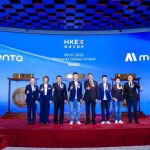 The company ended its first trading day with a market capitalization of about HK$70.3 billion.
 The company said overseas orders are approaching 100 million yuan this year, with international business accounting for roughly two-thirds of total sales.
 Unlike conventional chips based on the von Neumann architecture, computing-in-memory integrates computation directly into memory arrays.
 Glitterin Tech said it has already entered the supply chains of companies including L’Oréal, Huawei and Xiaomi.
 In 2020, the Suzhou startup became one of the first Chinese firms to produce 450mm ultra-large semiconductor-grade single-crystal silicon ingots.
 The company has also launched a “Thousand Homes Plan” to expand deployments in residential settings.
 Founded in 2025, Gestala is committed to developing ultrasound-based non-invasive BCIs, an alternative to conventional implanted electrical systems.
 Interest in optical interconnect technologies has accelerated alongside the rapid expansion of AI infrastructure.
 The IPO marks Westwell’s latest attempt to reach the public markets after several false starts.
 Based on the proposed fundraising and offering structure, the IPO implies a minimum post-listing valuation of about 42 billion yuan for Unitree.
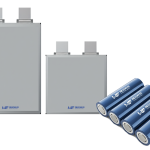 The company’s anode-free architecture aims to reduce manufacturing costs while achieving energy densities closer to lithium-ion cells.
 The financing comes as China’s embodied AI sector shifts beyond industrial deployments toward consumer applications.
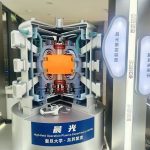 Those characteristics could allow future fusion plants to be deployed closer to cities, industrial parks and data centers.
 It is also one of only two domestic manufacturers to have achieved mass production and commercial deliveries of harmonic drives for humanoid robots.
 Unlike the better-known tokamak, a stellarator generates its magnetic field entirely through complex external three-dimensional coils.
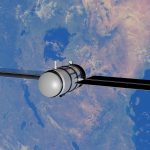 The fundraising comes as China’s commercial space industry shifts from policy support toward large-scale deployment.
 The company focuses on integrating AI with robotics and is leveraging Wuxi’s advanced manufacturing ecosystem to accelerate commercialization.
 The company’s customer base now spans China’s three major civil aviation markets: large commercial aircraft, eVTOLs and heavy unmanned aerial vehicles.
 The company has posted rapid growth despite broader weakness in China’s consumer sector.
 The fundraising comes amid accelerating investment across China’s eVTOL industry.
 The company sold 16.33 million H shares in the offering, which was oversubscribed more than 2,100 times by retail investors and nearly 20 times by institutional buyers.
 The company sees applications extending from hardware sales into active health management and intelligent outdoor services, particularly for aging populations.
 Its products are built around a proprietary Bionic Barista system, which redesigns key brewing processes including grinding, dosing, tamping and espresso extraction.
-3-150x150.jpg) MicBot has positioned itself in high-risk industrial sectors such as mining, metallurgy and chemicals.
MicBot has positioned itself in high-risk industrial sectors such as mining, metallurgy and chemicals. Archon aims to release what it says will be the world’s first open-source humanoid foundation model later this year.
 The IPO has attracted 14 cornerstone investors, who have collectively committed about $376 million and will subscribe to nearly half of the shares on offer.
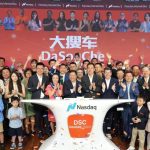 The decline marked one of the steepest first-day drops for a Chinese listing in recent years.
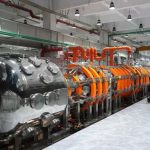 UniFusion’s approach to fusion differs from larger tokamak systems by using a more compact design and lower construction costs.


-3-150x150.jpg.webp)


