- The $1 billion language-learning unicorn has registered a Chinese entity in Yuhang, its first physical foothold in mainland China
- Speak plans to use Hangzhou as a base for localization, regional expansion and enterprise services
Speak, an AI-powered language-learning startup backed repeatedly by OpenAI and its founder Sam Altman, has established a legal entity in Hangzhou’s Yuhang district, marking the company’s first physical presence in mainland China.
The company registered its Chinese name as “Shuobike” (说必可) on July 30, according to corporate registration records, Chinese media reported on August 8.
The entity has registered capital of $50,000, with Zhang Yihui (张逸晖) listed as its legal representative and Speakeasy Labs Inc., Speak’s parent company, as its shareholder.
Backed by OpenAI
Founded in 2016 and headquartered in San Francisco, Speak describes itself as an AI-native language-learning platform focused on spoken-language practice.
The company raised $78 million in a Series C round in December 2024 at a valuation above $1 billion, becoming the first unicorn in the AI-powered language-learning sector.
Its investors include Accel, OpenAI Startup Fund, Khosla Ventures and Y Combinator, as well as Sam Altman, Peter Thiel and former LinkedIn CEO Jeff Weiner. OpenAI has invested in Speak four times to date.
Built around speaking
Speak uses OpenAI’s Whisper speech-recognition technology and GPT models to power an immersive speaking-training system designed to get users talking within 30 seconds of opening the app.
Users interact verbally with the AI, which provides real-time feedback on pronunciation and grammar while simulating everyday conversations.
Speak says its users speak five to 10 times more frequently than users of other language-learning products.
The company reported more than $100 million in annual recurring revenue in 2025, making it the first AI language-learning product to surpass that threshold, according to the company.
By the end of 2025, it had recorded more than 15 million downloads across more than 40 countries and regions and served over 500 corporate customers, including KPMG and Hyundai Motor.
Tapping China’s English-learning market
Speak’s entry comes as AI-powered education gains traction in China’s large English-learning market.
Market researcher Technavio estimates that China’s English-language training market could expand by more than $18.7 billion between 2026 and 2030, with a compound annual growth rate of 29.2%.
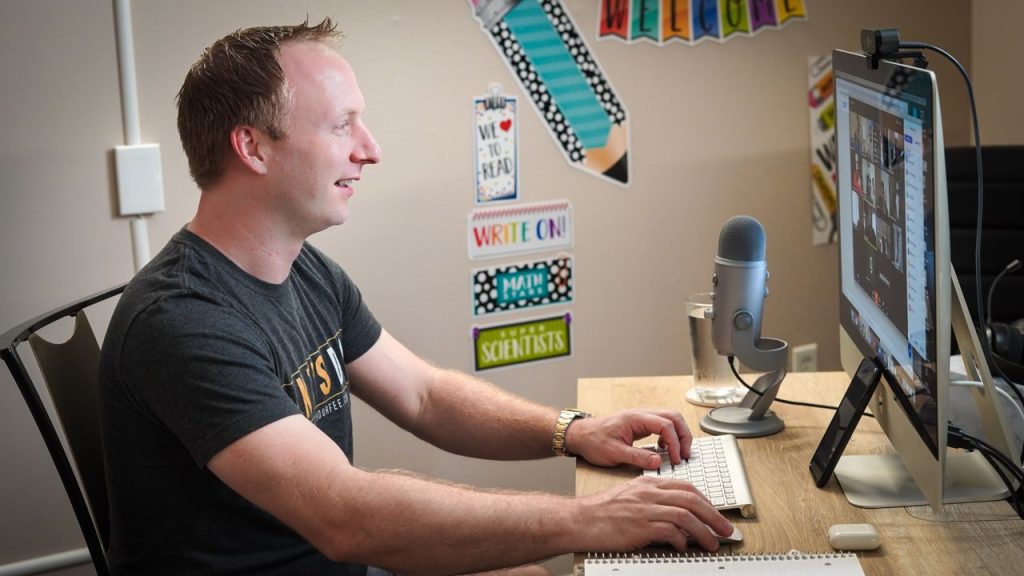
The market has traditionally relied heavily on one-on-one lessons with foreign teachers, but the model faces high labor costs and limited scalability.
AI speaking platforms offer lower marginal costs, round-the-clock availability and personalized interaction, potentially reshaping the market.
Why Yuhang
Yuhang, a major technology hub in Zhejiang, is home to regional operations of companies including Alibaba, ByteDance and Kuaishou.
With its Asian operations headquarters in South Korea, Speak’s new China operation is expected to focus on localized content development, expansion across East Asia and enterprise customer services.
The company has already launched a Traditional Chinese version for China’s Taiwan region and is expanding its localized research and teaching team in Japan.
For Speak, the Hangzhou base offers more than access to China’s education market. It gives an OpenAI-backed AI company a platform for regional expansion at a time when AI-native products are increasingly moving beyond their home markets.
For China’s AI education sector, meanwhile, the arrival of a billion-dollar global competitor marks another step in the shift from human-led language tutoring toward AI-driven, conversational learning.