- The city will distribute QwenWork Token cards worth about 500 yuan to entrepreneurs and workers at 35 university startup parks
- The pilot adds AI usage to Hangzhou’s growing menu of support for young founders, from subsidized workspace to computing vouchers
For young entrepreneurs in Hangzhou, AI could soon become a little cheaper.
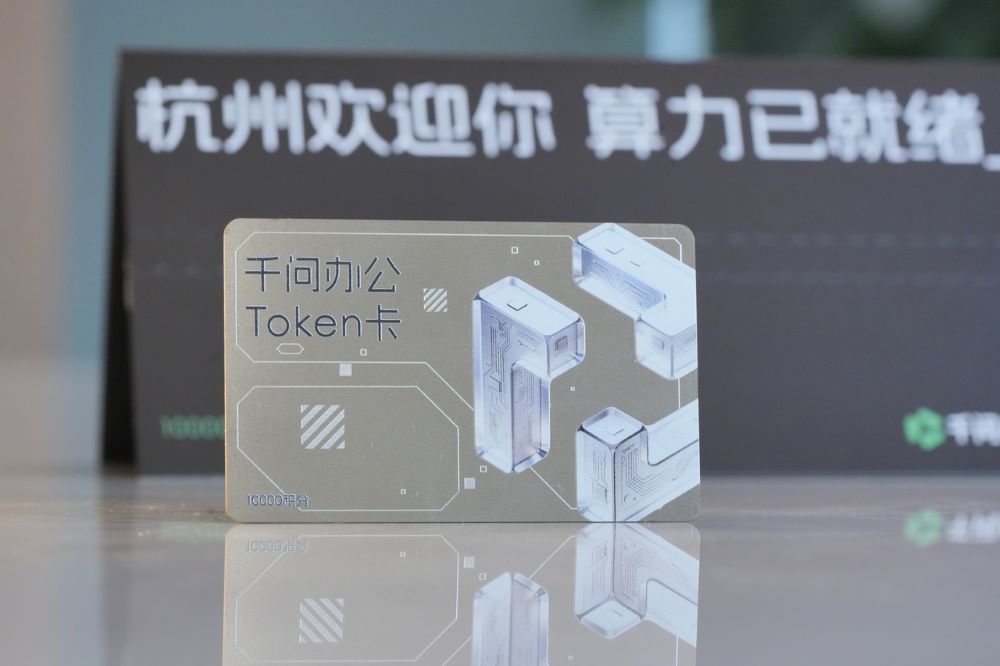
Starting September 20, the city will begin handing out QwenWork Token cards to entrepreneurs and workers at 35 municipal university startup parks, giving them free access to AI services worth about 500 yuan ($74) each.
The pilot, announced on September 3 by the Hangzhou Talent Center, an agency under the Municipal Human Resources and Social Security Bureau, offers one card per person on a first-come, first-served basis.
Each card contains 10,000 QwenWork credits, which users can activate through the QwenWork app.
Tokens are the basic unit used by AI models to process tasks. Writing a business plan, generating a presentation or running data analysis all consume Tokens, making them an increasingly tangible cost for AI-heavy startups.
Hangzhou says a 10-person startup can easily spend several thousand yuan a month on Tokens, while some employees at its startup parks have been paying out of pocket for AI tools to improve productivity.
For young companies operating on tight budgets, that can be a meaningful expense.
From rent subsidies to AI credits
The initiative is the latest in Hangzhou’s effort to lower the cost of starting and running small technology businesses.
At a tech conference in June, the city said it would issue a cumulative 1 billion yuan in AI service vouchers by 2028.
Eligible individual one-person companies, or OPCs, can receive up to 10 million yuan a year in computing vouchers, which can be used to offset spending on AI computing and large-model services.
Hangzhou aims to have more than 100 OPC communities and 100 OPC companies generating annual revenue of more than 10 million yuan by 2028.
The decision to start with university startup parks was deliberate, the Talent Center said. Their entrepreneurs are “the youngest, quickest to embrace new tools and most concerned about costs.”
Beyond cutting expenses, the city wants to show aspiring founders that AI can be part of the basic toolkit of starting a business.
A new kind of startup subsidy
Hangzhou’s support for entrepreneurs has traditionally focused on tangible costs such as office space, rent and financing.
AI usage is different: it is a recurring digital expense that has yet to become a standard item in municipal subsidy or reimbursement programs.
That makes the Token cards an unusual experiment.
An unusual experiment
The talent center says it will use feedback from the first batch of users to consider expanding the program to more parks and use cases.
“Where the pain point is, the service follows.” the center wrote in a WeChat post explaining its philosophy.
For Hangzhou, the experiment also reflects a broader shift in what it means to support entrepreneurship.
As AI becomes deeply embedded into everyday business, helping a young founder pay for the tools that power that business may become as routine as subsidizing the office where it starts.
Header image generated by Doubao