
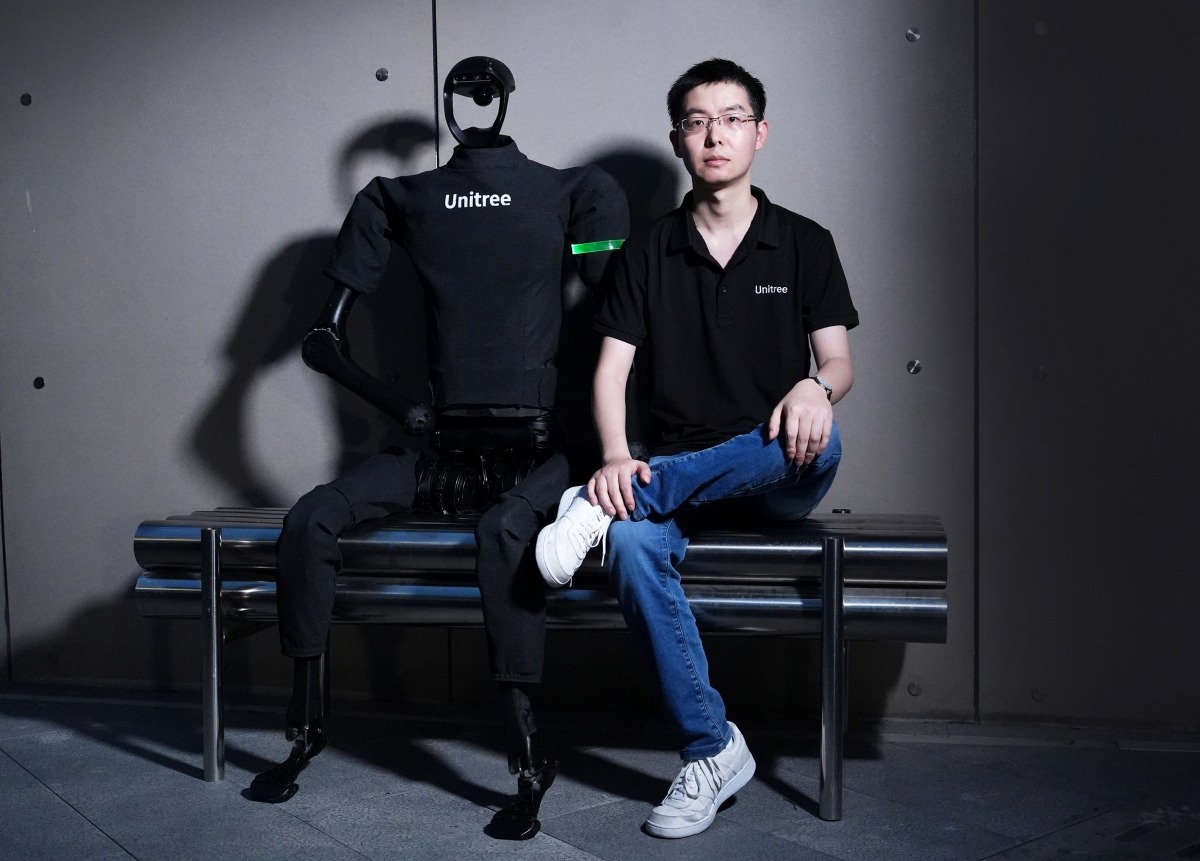
- Wang Xingxing warns general-purpose embodied AI still faces hurdles in learning, data efficiency and reinforcement learning
- Pretrained motion intelligence and video-based training seen as keys to scaling robots in factories and homes
Humanoid robots capable of performing most tasks from natural-language instructions are still at least one to two years away, Unitree Robotics founder and CEO Wang Xingxing said on March 17, U.S. Pacific Time, at the NVIDIA GTC 2026 conference.
He described this milestone — a so-called “ChatGPT moment” — as the tipping point when robots can handle 80% of tasks in 80% of unfamiliar scenarios without prior training.
Wang outlined three major bottlenecks in his speech: models struggle with generalization and complex task expression; training requires massive real-world datasets; and reinforcement learning lacks cumulative knowledge, limiting scalability.
Overcoming these is essential before humanoid robots can be widely deployed, he told the audience via live remote videoconferencing.
He favors world-model approaches over Vision-Language-Action (VLA) models, arguing they can leverage vast online data for higher performance.
Nonetheless, he noted that aligning video and real-world robot execution remains a key technical challenge. Breakthroughs will likely rely on combining video generation with reinforcement learning, says the 35-year-old entrepreneur.
Motion intelligence must advance alongside task ability. “Without rich movement and stability, robots can’t truly enter factories or homes,” Wang said.
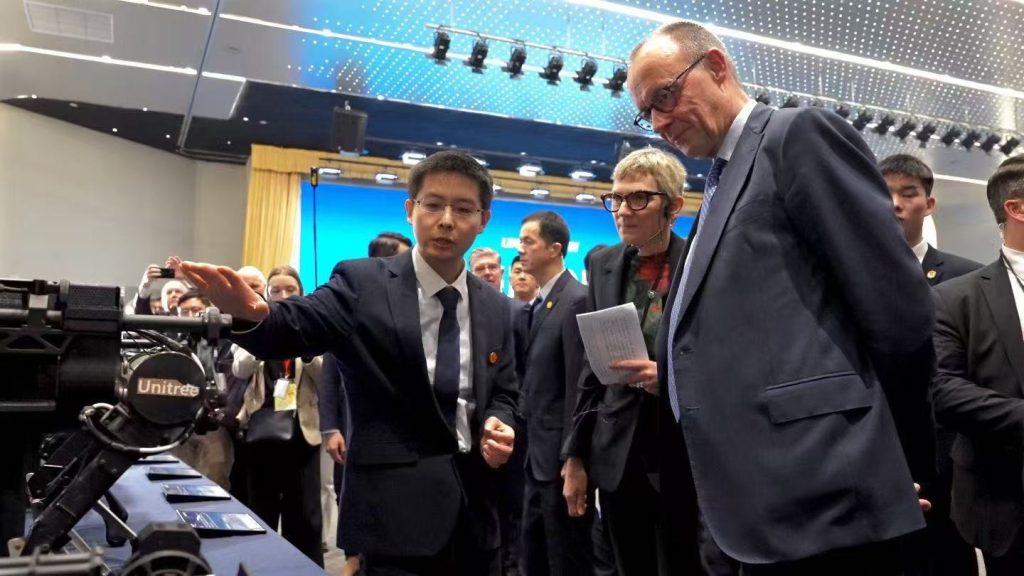
Demonstrations such as Unitree’s WuBOT show during this year’s spring festival gala highlight this principle, with dozens of robots performing complex martial arts routines using pretrained full-body reinforcement learning rather than single-action training.
Safety remains a concern for large humanoids, with recommended human-robot distances of 2–3 meters, Wang explained.
He projected global humanoid shipments this year at tens of thousands, with Unitree targeting 10,000–20,000 units, but cautioned that general-purpose embodied AI is still far from everyday household applications.