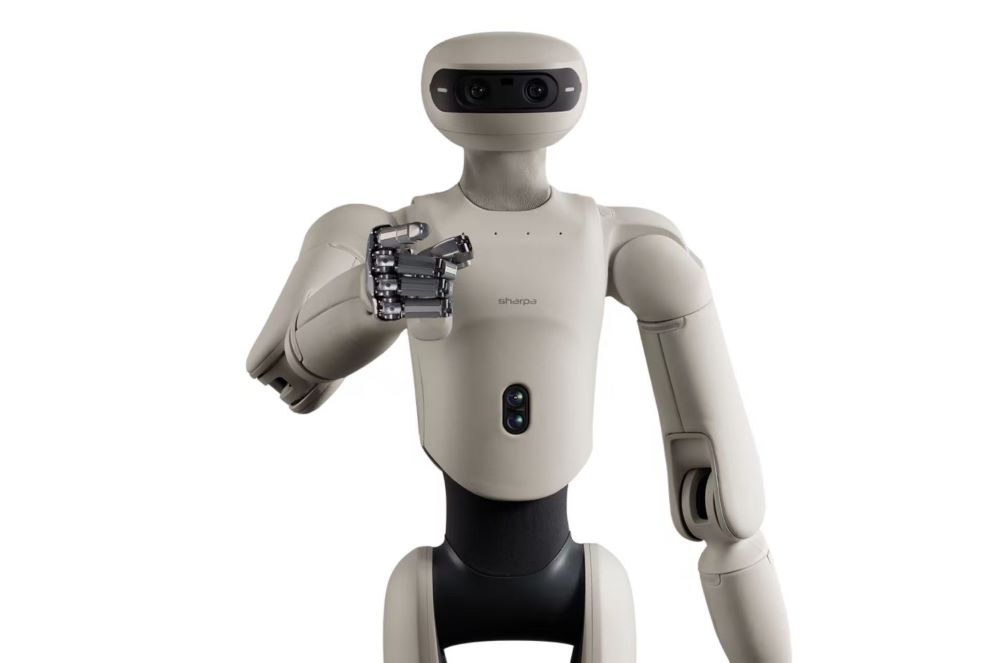
- A consortium of backers led by major internet firm bet on dexterous manipulation as next robotics bottleneck
- Young Hangzhou company targets mass production amid crowded field of Chinese competitors
Xynova, a Hangzhou-based robotics startup focusing on dexterous robotic hands, has raised several hundred million yuan in a pre-Series A funding round led by an undisclosed major internet company, Chinese tech media outlet 36Kr reported today.
This fundraising underscores growing investor interest in the hardware layer seen as critical to the commercialization of embodied artificial intelligence (AI).
The round also roped in financial investors including Caitong Capital, Addor Capital and Zhejiang University Alumni Venture Capital, alongside industry backers such as 37 Interactive Entertainment and Hangzhou Data Corporation.
Existing shareholders, including China Electronics Technology Group Corporation, Orient Renaissance Capital and Xiaomi’s strategic investment arm, also increased their stakes.
The proceeds will be used to expand hiring, accelerate mass production and push commercialization of its robotic manipulation systems.
“Dexterous hands are the key actuator for achieving general-purpose embodied intelligence, and the market outlook is broad,” Caitong Capital said in a statement. “This investment reflects our effort to support local innovation and connect Zhejiang companies to the global robotics industry wave. We look forward to advancing breakthroughs and industrial adoption together with Xynova.”
Founded in 2024, Xynova is targeting what robotics developers often describe as the “last centimeter” problem of embodied AI — enabling robots to physically interact with the real world with human-like precision.
The company develops high-degree-of-freedom robotic hands, miniature electric cylinders and integrated joint modules, while maintaining in-house control over motors, motion control systems, algorithms and core mechanical components.
Its flagship product, the Xynova Flex 1, features 25 degrees of freedom while weighing just 380 grams, yet can handle payloads exceeding 30 kilograms.

The design uses tendon-driven architecture integrating arm and hand motion, aiming to balance flexibility, strength and lightweight construction — a combination widely viewed as essential for robots operating in factories, commercial environments and eventually homes.
Xynova plans to release an upgraded Flex 2 model later this year with improvements in perception, control algorithms and compactness.
The company’s training framework combines reinforcement learning, imitation learning and simulation with real-world data, augmented by human-in-the-loop reinforcement learning to expand robots’ transferable manipulation skills beyond basic grasping tasks.

A proprietary new manufacturing facility is entering ramp-up production, with annual capacity expected to exceed 10,000 dexterous hands and 200,000 miniature actuators by year-end.
Investors are betting that dexterous manipulation will become a defining battleground in robotics.

Yet competition is intensifying rapidly: industry data shows more than 80 companies globally are developing robotic hands, with Chinese firms accounting for over half.
Some domestic rivals have already achieved significant scale, highlighting the challenge facing newer entrants as humanoid robotics edges closer to commercialization.
LinkerBot is reported to hold more than 80% of the global high-degree-of-freedom dexterous hand market, with monthly shipments exceeding 1,000 units. Inspire Robots said its deliveries surpassed 10,000 units in 2025, with its systems now compatible with more than 60% of mainstream humanoid robot models.