
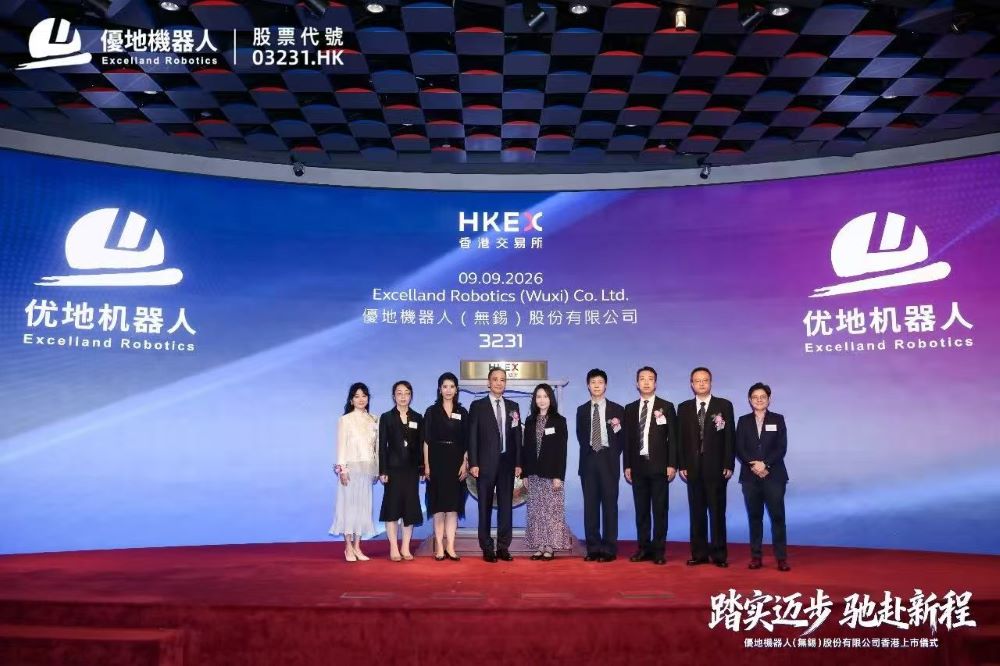
- The Chinese commercial-service robot maker opened at HK$35, more than double its IPO price of HK$14.45
- The blockbuster debut comes despite years of losses, thin margins and heavy reliance on a handful of hotel and food-delivery customers
Excelland Robotics (优地机器人), a commercial service robot manufacturer, surged 142% in its Hong Kong debut on September 9, giving investors an early vote of confidence in China’s commercial-service robotics market even as the company continues to struggle with profitability.
Shares opened at HK$35 ($4.46), up 142.21% from the IPO price of HK$14.45, valuing the Wuxi-based company at about HK$14.57 billion.
As of press time, its shares stood at HK$37.5 apiece, up nearly 160%, giving the firm a markt cap of HK$15.61 billion.
Excelland sold 45 million H shares globally and raised about HK$577 million. Its Hong Kong public offering was oversubscribed by about 140 times, with a one-lot winning rate of just 24.5%.
The listing gives Excelland the distinction of becoming what it calls Hong Kong’s first listed company “focused on full-scenario commercial service robots.”
But beneath the strong debut is a far less impressive financial picture.
Losses remain the biggest hurdle
Excelland’s revenue rose from 244 million yuan ($36.38 million) in 2023 to 318 million yuan in 2025. But it posted losses of 251 million yuan, 151 million yuan and 111 million yuan during the same period, accumulating more than 500 million yuan in losses.
Improvement failed to continue in 2026. First-quarter revenue rose 5.7% year on year to 76.5 million yuan, while its loss widened to 31.2 million yuan from 26 million yuan a year earlier.
Margins remain thin. Gross margin was 6.9% in 2023, 14.3% in 2024, 13.9% in 2025 and 11.2% in the first quarter of 2026.
Robot products generated gross margins of only about 8%, leaving little room for profit after sales, research and development and other operating costs.
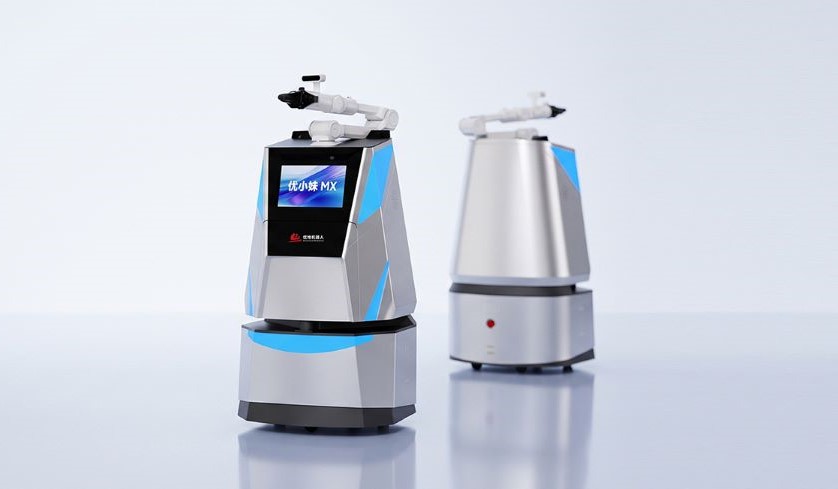
At the same time, Excelland has been cutting prices. The average selling price of its flagship delivery robot Yomie MX fell from 20,112 yuan in 2023 to 13,438 yuan in 2025 and 11,138 yuan in the first quarter of 2026 — a decline of more than 40% in three years.
The company attributed the decline to intensifying competition in its prospectus.
Excelland competes with better-known Chinese service-robot makers including Pudu Robotics (普渡科技), Keenon Robotics (擎朗智能) and Yunji (云迹科技).
Customers are highly concentrated
Excelland also remains heavily dependent on a small group of customers.
The five largest customers accounted for 71.3% of revenue in 2023, rising to 83.2% in the first quarter of 2026.
They include hotel operators Huazhu Group, BTG Homeinns Hotels and Greenland Hotels, as well as Shengyangsheng Group and food-delivery platform Ele.me.
That concentration leaves the company exposed to changes in procurement decisions by a handful of major customers.
From USTC veterans to commercial robots
Excelland was founded in 2013 by a team of former USTC International — the Chinese telecommunications company better known as UTStarcom (UT斯达康) — executives, including former chairman Lu Ying (卢鹰) and former president Gu Zhenjiang (顾震江).
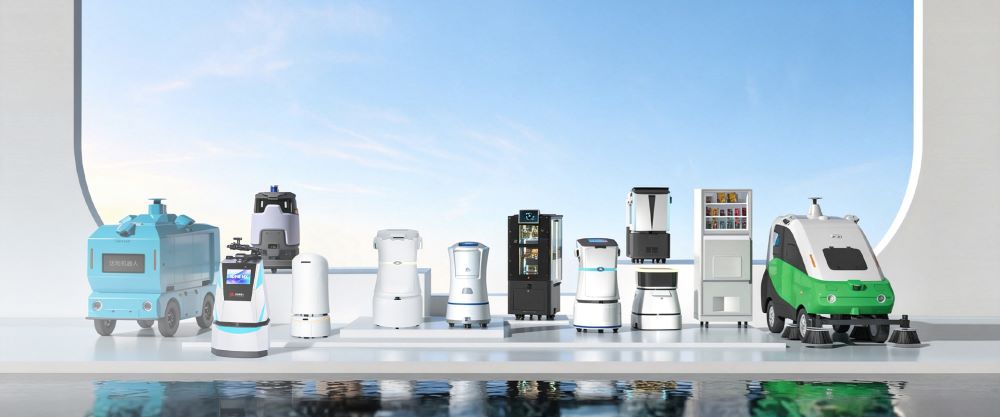
The company now sells five major categories of commercial robots, covering hotel delivery, high-capacity delivery, outdoor delivery, cleaning and retail.
According to Frost & Sullivan, Excelland was China’s third-largest commercial-service robot supplier by revenue in 2025, with an 8.9% market share, behind Pudu and Keenon.
But shipment rankings tell a somewhat different story. IDC data show Keenon, Pudu and Gaussian Robotics (高仙机器人) as the three largest commercial-service robot suppliers globally by shipments in 2025, together accounting for about 53.2% of the market.
The gap between the rankings highlights how different companies are pursuing different combinations of unit volume and selling prices.
A test for China’s robot boom
Excelland’s listing offers a useful test of how far investor enthusiasm for robotics can outrun the underlying economics.
The company counts prominent investors including Alibaba-backed YF Capital, Legend Capital, SenseTime, iFlytek and Huazhu Group.
Yet despite its broad product portfolio, Excelland has not established a dominant position in any single commercial-robot category.
That matters as China’s robotics industry enters a new phase. More than 50 companies with robotics-related businesses are reportedly preparing Hong Kong IPOs in 2026, putting an increasing number of robot makers under the scrutiny of public-market investors.
The next question is whether the market will continue to reward shipment growth and the promise of commercialization — or start demanding something harder to deliver: sustainable margins and profits.
For Excelland, the spectacular first-day rally may have answered the first question. Its financial statements still need to answer the second.
Header image credit: Excelland Robotics

