
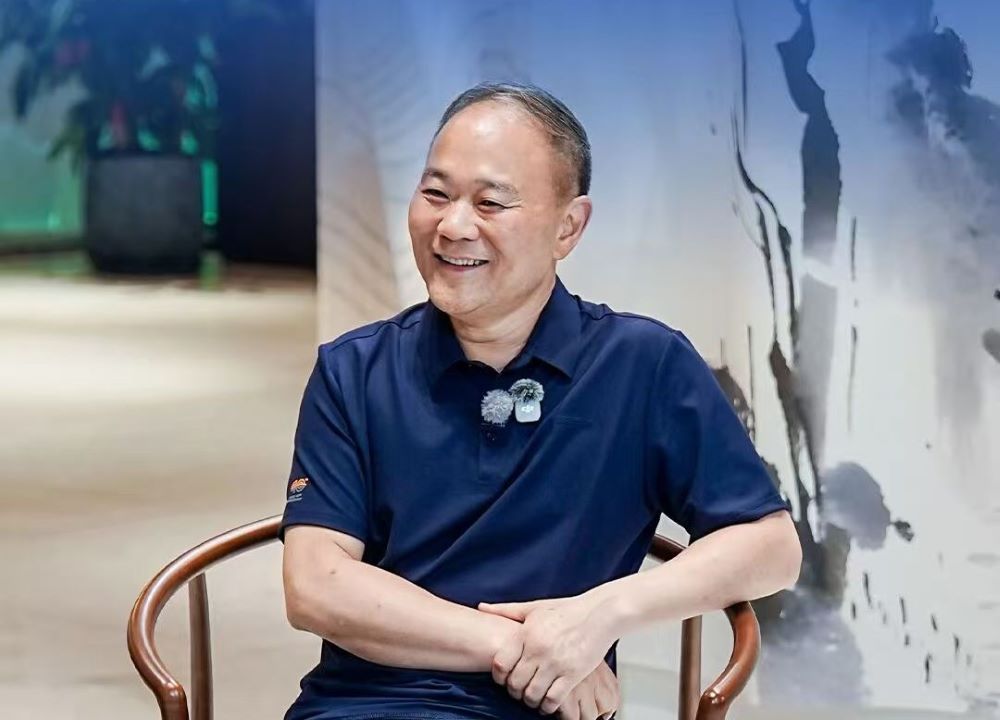
- The Geely chairman says automakers should not sacrifice testing and reliability for faster product launches
- Li’s comments come as China’s carmakers face intensifying competition and debate over increasingly compressed development cycles
Geely Holding Chairman Li Shufu (李书福) has warned Chinese automakers against taking shortcuts to bring new models to market, arguing that the auto industry is a “marathon with no finish line” and that safety must not be compromised for speed.
Li made the comments in an interview with the People’s Daily published on September 7, his first major interview since stepping down as chairman of Geely Auto’s board.
Addressing the industry’s growing focus on so-called “prefabricated cars” — a term used in China to describe development models that shorten testing and validation cycles — Li said a vehicle should generally undergo three to five years of development before being launched.
Cutting that process could leave problems with maturity, durability and reliability, he said, adding that automakers should not reduce testing or compress validation time simply to accelerate launches.
“Taking shortcuts, cutting corners and building cars in a ‘fast and easy’ way will not succeed,” Li told the People’s Daily, the Chinese Communist Party’s official newspaper.
He also criticized what he called overly aggressive innovation, in which insufficiently tested designs are incorporated into vehicles.
Cars are products directly tied to human lives, he said, making safety the most fundamental principle in their design, manufacturing and service.
A marathon with no finish line
Li said the way to survive the industry’s cycles is to think in decades rather than quarters.
“The auto industry is a marathon with no finish line,” he said.

Geely, founded 40 years ago, began by making refrigerator components before moving into building materials, motorcycles and eventually automobiles. It has since grown into a multinational automotive group.
For Li, ensuring that the company survives for generations is as important as winning the next round of competition.
He said Geely needs stronger modern corporate governance and a younger management team, with professionals developed internally eventually taking over key positions.
That succession, he said, would help preserve the company’s “spirit and vitality” as it seeks to become a century-old business.
A warning against rat race
Li also called for a healthier competitive environment in China’s auto industry, saying companies should support one another rather than allow aggressive competition to become an arms race.
“Doing a good job is less useful than talking about it well,” he said, arguing that an overly publicity-driven environment can discourage companies focused on actually building better products.
His comments reflect a broader tension in China’s auto market, where rapid model launches, price cuts and increasingly sophisticated features have become key weapons in the battle for market share.
Li’s message was that speed alone cannot be the measure of success: automakers still need to survive the longer test of reliability, safety and sustained investment.
But whether it will hit home in a Chinese automotive industry on steroids — or fall on deaf ears — remains an open question.
Header image downloaded from Geely Auto Holding’s official WeChat account

