
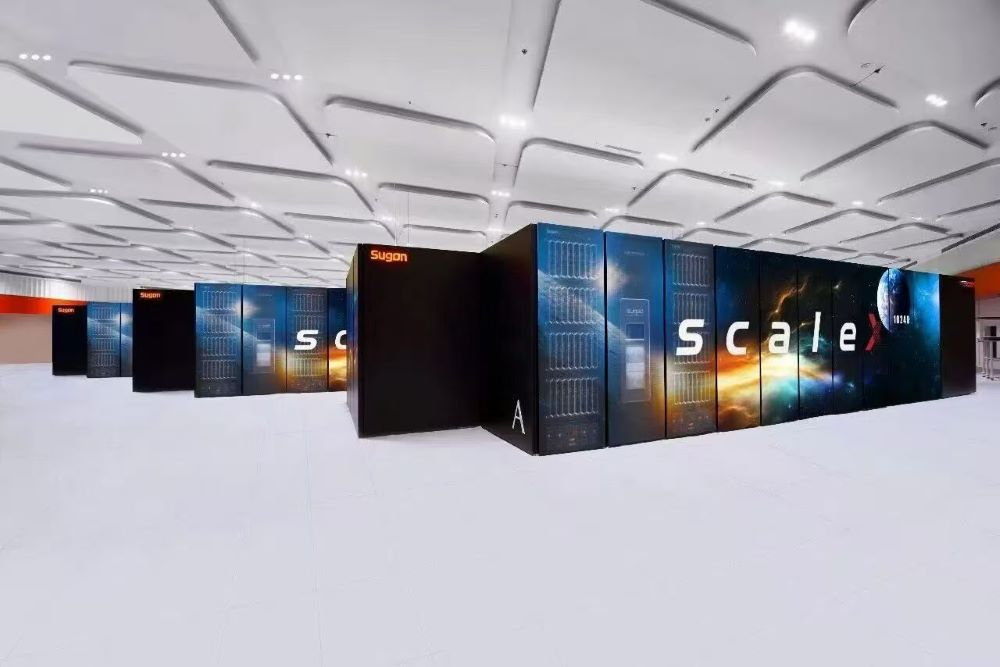
- The data-center cooling specialist is building a new base as AI workloads push rack power toward megawatt levels
- The project will cover liquid-cooling R&D, manufacturing and testing
Sugon DataEnergy (曙光数创), a subsidiary of Chinese computing infrastructure giant Sugon (中科曙光), signed an agreement on September 19 with Kunshan New & Hi-tech Industrial Development Zone in Jiangsu to develop an advanced thermal-management industrial project.
The project will focus on high-conductivity cooling materials and liquid-cooling products, with a base integrating R&D, pilot production, mass manufacturing and testing.
Kunshan, adjacent to Shanghai and governed by Suzhou, has ranked first among China’s county-level cities by GDP for years.
Liquid cooling scales up
Sugon DataEnergy has topped China’s data-center liquid-cooling market for five consecutive years, with a 56.8% share, according to CCID Consulting. Its share of the AI-inference cooling market has also exceeded 50%, the consultancy said.
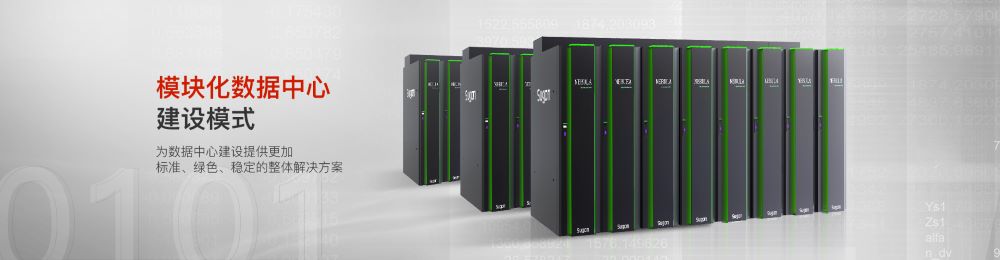
The company’s C8000 V3.0 immersion phase-change cooling system, launched in 2026, supports more than 900 kilowatts per rack and has a power usage effectiveness, or PUE, as low as 1.04.
It has been deployed in what Sugon describes as China’s first fully domestic 100,000-GPU AI supercluster.
A growing AI cluster
The Kunshan project will place Sugon DataEnergy’s manufacturing capacity near a growing AI-hardware cluster that includes established companies such as Luxshare and WUS Printed Circuit.
Kunshan’s planned Nansong Lake AI Bay (南淞湖人工智能湾) also lists liquid cooling as a key component of its AI infrastructure supply chain.
With a plan to attract more than 300 AI companies, the cluster target 300 billion ($44.8 billion) in additional output by 2030.
AI drives demand
As AI computing drives server power densities toward the megawatt range, conventional air cooling is becoming increasingly impractical.
Advanced liquid cooling is therefore emerging as a critical technology for managing energy consumption and operating costs at high-density AI data centers.

China has been tightening PUE requirements for data centers, with national policy targeting a PUE of 1.25 or lower for new large and hyperscale facilities and 1.2 or lower for projects in national computing hubs.
For Chinese AI infrastructure operators, advanced liquid cooling could also help offset higher power consumption associated with domestic chips and systems that may require more energy to deliver comparable computing performance.
Header image credit: Sugon’s official WeChat

.jpg)