MiniMax launches M3.1-Flash-Preview with 1 million-token context 2026-09-29 MiniMax positions it as an end-to-end coding model that can take a software task from diagnosis through delivery.
Unitree conference in October to spotlight physical AI, ecosystem 2026-09-29 More than 3,000 guests are expected to attend, including industry executives and technology experts from around the world.
Qwen-Audio-3.1 tops global voice leaderboard as prices plunge 2026-09-28 Alibaba has reduced prices across its Qwen-Audio voice models by as much as 95%, including a roughly 70% cut for text-to-speech services.
China Life insurers commit $600M to Shanghai’s three key industries 2026-09-28 China Life has increasingly used both S transactions and fund investments to gain exposure to technology assets.
Unitree founder defends $581,000 rideable robot despite zero sale at event 2026-09-28 The roughly 3-meter-tall robot weighs about 500 kilograms with a rider and can switch between bipedal and quadrupedal modes.
Momenta, Stellantis-backed unit to develop ADAS for Peugeot, Jeep 2026-09-28 For Momenta, the partnership also provides a route for its driving technology to reach overseas markets through Stellantis’ global brands.
Nio, Geely deepen battery-swapping tie-up with cross-investment 2026-09-28 Nio and Geely began working together on battery swapping in November 2023, when Geely joined Nio’s battery-swapping alliance.
DeepSeek raises $7.5 billion as annualized revenue tops $1 billion — report 2026-09-24 CXMT founder and memory titan GigaDevice’s venture arm reportedly behind the AI champion with a 5 billion yuan bet.
Alibaba names Liu Dayiheng as new head of Qwen LLM project 2026-09-24 He has been involved in the development of Qwen’s core language models as well as Qwen-Coder and multimodal models.
QwenWork launches AI education program with 100-plus schools 2026-09-24 Many teachers and students are already using AI agents for lesson preparation, research and learning, but mostly on an individual basis.
Zhejiang tops China’s 2026 private-company rankings with 104 firms 2026-09-23 The 104 Zhejiang companies making the list span internet services, automotive, chemicals, advanced materials and smart manufacturing.
Alibaba CEO says machines could do 1,000x more ‘thinking’ than humans 2026-09-23 Its Qwen team plans to train a new model with 5 trillion to 10 trillion parameters as it moves toward artificial superintelligence, or ASI.
Alibaba upgrades Qwen AI platform to bring agents into production 2026-09-23 The platform’s customer base had grown sixfold over the past year as AI agents began moving into core business processes.
Alibaba launches QwenNote A2 AI hardware for QwenWork 2026-09-23 Users can activate QwenWork with a single voice command and have the AI turn conversations into tasks, notes and follow-ups.
Alibaba unveils Zhenwu V900 with 3x AI computing performance 2026-09-22 The V900 is scheduled to enter mass production in the first quarter of 2027 and will be deployed across Alibaba Cloud data centers.
Alibaba targets over 20GW of global data-center capacity by 2032 2026-09-22 This move comes as the Hangzhou-based tech giant ramps up AI infrastructure investment to meet surging demand for computing power.
Ant Group creates new Alipay business affiliate to push ‘agentic commerce’ 2026-09-22 The restructuring comes four days after Ant adopted Alibaba’s QwenWork as its AI workplace platform for all employees.
Unitree launches Dex5-S dexterous hand with 22 degrees of freedom 2026-09-22 The new model increases the number of degrees of freedom while reducing the overall size and improving drive precision, according to Unitree.
CXMT puts fifth-generation DRAM process into production 2026-09-21 CXMT said the G5 yield ramp-up will take time and that new products must go through customer testing and certification before broader adoption.
AI infra titan Sugon expands liquid cooling footprint in eastern China 2026-09-21 As AI computing drives server power densities toward the megawatt range, conventional air cooling is becoming increasingly impractical.
Tesla audits Zhejiang suppliers as Optimus production moves closer 2026-09-21 Tesla’s reported supplier strategy highlights the role of China’s existing automotive manufacturing base in its robotics push.
Unitree shares jump 6% as market value tops $29 billion again 2026-09-18 The rebound reversed a monthlong slide that had taken the stock below the 500-yuan mark for the first time on September 10.
MiniMax brings three AI tools into Singapore’s national AI skills program 2026-09-18 For Chinese AI companies expanding overseas, the partnership marks a shift in how their products can reach foreign consumers.
Huawei unveils Ascend 960 supernode to power million-chip AI clusters 2026-09-18 A supernode essentially connects thousands of computing cards through high-speed links so they can work together as a single computing system.
Qwen teaches seniors to become AI creators at Hangzhou community schools 2026-09-18 The Hangzhou experiment takes a different approach, positioning seniors as AI users, creators and contributors.
Qwen upgrades minors mode as China tightens AI companion rules 2026-09-18 The app then limits access to four learning functions: photo-based Q&A, AI writing, translation and deep research.
Qwen expands health capabilities with medical and nutrition databases 2026-09-17 The latest additions broaden that effort from drug and product information to medical knowledge and nutrition data.
Leapmotor unveils new architecture as it enters plug-in hybrids, robotics 2026-09-17 Through its partnership with Stellantis, Leapmotor International now has more than 1,000 sales and service outlets across 45 markets.
DeepSeek engineer’s viral essay lays bare the AI replacement paradox 2026-09-17 The essay offers an unusual glimpse into how AI automation is being perceived by engineers at the cutting edge of China’s AI industry.
Geely and Renault roll out first locally made EV at Brazil plant 2026-09-17 The first vehicle rolling off the line less than a year after the partnership was signed highlights the speed of the approach.
Qwen becomes Hugging Face’s most-liked open-source model 2026-09-16 Reuters, Airbnb and Pinterest have also adopted Qwen models as companies seek to reduce their reliance on proprietary AI systems.
Huawei unveils ‘world’s first’ 3D data center at Anhui conference 2026-09-16 Huawei says the 3D architecture can halve the time required for mechanical, electrical and plumbing delivery.
DeepSeek said to hire venture firm partner as CFO ahead of IPO 2026-09-15 The appointment would mark one of DeepSeek’s most significant senior hires outside its core tech team since the firm was founded.
Unitree launches global startup program to build embodied-AI ecosystem 2026-09-15 The strategy also marks a potential shift for China’s leading robotics companies from exporting products to exporting ecosystems.
Lei Jun visits Unitree as Xiaomi deepens ties with humanoid robots 2026-09-15 Whether Lei’s latest visit was simply a high-profile show of support or a sign of deeper industrial cooperation remains unclear.
Unitree launches G1+ at $14,000, giving its robot a more human touch 2026-09-15 The original G1 was launched in 2024 at 85,000 yuan and helped Unitree become the world’s top humanoid robot maker by shipments in 2025.
Ant Group CEO says agentic commerce has reached its ‘ChatGPT moment’ 2026-09-14 Han said this could change the starting point of commerce from standardized products and fixed app pages to user intent.
DeepSeek quietly tests two-way voice chat in first push into voice AI 2026-09-14 For developers, the bigger question is whether DeepSeek will bring its aggressive pricing strategy to voice AI.
Alipay launches agent prize to unlock AI’s ‘eight hours beyond work’ 2026-09-11 AI agents could make services that once relied on scarce experts or were too costly to deliver at scale available to a much wider population.
Unitree open-sources foundation model, says it tops 7 benchmarks 2026-09-11 This move comes as the Chinese robotics maker seeks to push deeper into the underlying software stack for embodied AI.
Ant Afu claims world’s largest health AI user base at 150 million 2026-09-11 A new “Health” section has been added to Afu’s homepage, alongside its AI chat and medical-service entrances.
DeepSeek launches V4.1 Flash with lower AI inference costs 2026-09-10 As an official DeepSeek partner, Tencent’s WorkBuddy has fully integrated V4.1 Flash in China and is offering a two-week promotional discount.
DeepSeek said to prepare for Star Market IPO with CITIC Securities as tutor 2026-09-10 The potential listing comes after China expanded the STAR Market’s so-called fifth listing standard in June to cover AI companies.
Qwen could give college students a 3,000-hour time boost, guide finds 2026-09-10 Rather than simply discussing AI in theory, the guide provides step-by-step instructions and ready-made prompts for each scenario.
Unitree CEO says humanoid robots are headed for self-evolution 2026-09-10 He expects that “ChatGPT moment” in embodied intelligence to arrive in as little as two to three years, though it could take five to 10 years.
Geely founder Li Shufu warns against ‘shortcuts’ in China’s auto race 2026-09-09 He also criticized what he called overly aggressive innovation, in which insufficiently tested designs are incorporated into vehicles.
CXMT rolls LPDDR6 memory tech into Xiaomi flagship phone and beyond 2026-09-09 The company expects the technology eventually to expand beyond flagship smartphones into smart vehicles, edge servers and wearables.
DeepSeek cuts Flash API prices by up to 60% as AI price war heats up 2026-09-09 DeepSeek’s latest strategy combines aggressive pricing to win users and peak/off-peak rates to encourage better use of computing capacity.
DeepSeek begins testing V4.1 Flash with native multimodal support 2026-09-09 More revealingly, the company’s internal testing questionnaire asks users whether the model could fully replace the current DeepSeek V4 Pro online.
Alibaba’s QoderWake 1.0 creates digital employees with a prompt 2026-09-09 The launch reflects a shift in AI-agent development from helping individuals work faster toward assigning AI agents specific roles.
Stationery titan Deli enters consumer 3D printing with major hiring push 2026-09-08 That puts Deli up against an increasingly concentrated market led by Shenzhen companies including Bambu Lab, Creality and Anycubic.
DeepSeek opens 150 engineering jobs with none for AI researchers 2026-09-08 The hiring points to DeepSeek’s growing focus on its in-house elastic computing platform, DSec, or DeepSeek Elastic Compute.
Unitree pushes humanoids from scripted moves to autonomous fighting 2026-09-08 Unitree said the model overcomes bottlenecks in real-time planning, decision-making and dynamic interaction.
Qwen embeds financial AI agents across investment, insurance 2026-09-07 The model differs from many overseas AI finance products, which are generally built within individual platforms.
Manycore Tech joins Stock Connect as investors revisit ‘Six Dragons’ 2026-09-07 The Stock Connect inclusion gives Manycore access to a broader pool of Chinese investors and could improve trading liquidity.
iFlytek launches Spark X2.5 with stronger coding and agentic AI 2026-09-07 iFlytek says it was trained and deployed entirely on domestic computing infrastructure and is now available through its open platform.
Alibaba’s QwenWork launches AI workspace for teams of up to 100 2026-09-07 The pitch is straightforward: companies no longer need to buy a dedicated SaaS product or commission custom software for every workflow.
QwenWork tops 30 million users in first month as enterprise AI takes off 2026-09-04 The rapid growth of QwenWork comes as China’s technology giants increasingly focus their AI firepower on workplace agents.
Tmall turns AI Tokens into a product users can buy like mobile data 2026-09-03 Tmall is turning those services into standardized retail products that can be bought alongside more familiar digital goods.
Alibaba updates Qwen3.8-Max, takes top spot in global coding benchmark 2026-09-02 The model is available through Alibaba’s Qwen AI platform as an API and has been integrated into Qwen Office, Qoder and the Qwen app.
iFlytek launches China’s first open-source million-token edge AI model 2026-09-02 The launch comes as the AI industry moves toward putting increasingly capable models directly onto consumer electronics and machines.
UniVista unveils China’s first Agentic EDA stack as AI enters chip design 2026-09-02 It introduces four expert-level AI agents spanning key verification stages including software and hardware simulation.
Unitree draws fire over alleged $15 expense rule, work schedule 2026-09-02 The attention reflects the pressures facing an industry that has attracted large amounts of capital and talent since the rise of generative AI in 2023.
Alibaba, SAIC join China’s space race to build a Starlink rival 2026-09-01 Their entry marks a rare convergence of internet and automotive capital around China’s commercial satellite industry.
Enflame sets IPO price at $21 as China’s AI chip race hits public markets 2026-09-01 Founded in 2018, Enflame develops cloud AI chips and has built four generations of architectures and five AI accelerators.
Qwen adds AI agent teams for one-click video creation 2026-08-31 For an AI short drama, users provide the story concept while the agents collaborate sequentially to turn it into a finished video.
Hikvision returns to Zhejiang’s top three as Bank of Ningbo leads profits 2026-08-31 The security-camera maker posted 7.90 billion yuan in net profit, up 39.57%, marking one of its strongest growth rates in nearly a decade.
Auto-parts maker Minth opens Europe’s first humanoid robot plant in Serbia 2026-08-31 The move follows a high-profile visit by Serbian President Aleksandar Vučić to Minth’s future factory in Jiaxing on May 27.
Manycore Tech unveils AI model to generate 3D assets in 20 seconds 2026-08-28 The company aims to move 3D content creation from labor-intensive manual modeling toward automated, large-scale production.
Unitree to sponsor young tech talent in bid to nurture future geeks 2026-08-28 That makes the program resemble an early-stage technology grant or angel investment more than a conventional corporate recruitment scheme.
Alibaba takes QwenWork global in push for AI office agents 2026-08-27 The international launch comes as AI agents move beyond chatbots toward software that can independently execute multi-step tasks.
Alibaba’s Qwen3.8-Flash takes on Claude at fraction of cost 2026-08-27 The model, unveiled Tuesday night, uses a new “Next” architecture with 125 billion total parameters but activates just 6 billion at a time.
Nongfu Spring founder donates $138M in shares to back biomedical research 2026-08-26 For investors, the move offers a different perspective at a time when founder share sales are closely watched.
Jack Ma buys $76M of Alibaba shares as founder, execs back AI bet 2026-08-26 Insider buying can demonstrate conviction; it cannot by itself prove that Alibaba’s AI investments will generate attractive returns.
Alibaba execs buy HK$120M as shares tumble 8.5% after $10M placement 2026-08-25 The market’s reaction reflects the tension between Alibaba’s long-term AI strategy and its near-term financial burden.
Alibaba’s Wan3.0 turns slides and spreadsheets into 30-second videos 2026-08-24 This helps to address a persistent problem with AI-generated video: maintaining continuity across a sequence.
DeepSeek makes weekends half-price in latest API pricing tweak 2026-08-24 Under the revised rules, effective from midnight Beijing time on Aug. 23, DeepSeek no longer distinguishes between peak and off-peak hours on weekends.
Alibaba raises $10.2 billion in record HK share sale to fund AI push 2026-08-24 The fundraising comes as Alibaba enters an AI investment window defined by accelerating revenue but mounting pressure on profits.
Geely hands over the reins as founder Li Shufu steps back 2026-08-18 The real test for the succession will be whether “One Geely” can deliver more than the founder alone could.
DeepSeek API pricing takes effect, peak-hour rates up 1,100% 2026-08-18 The company is using price incentives to steer non-urgent workloads toward nights, weekends and holidays
Delta Electronics sets up $22M Hangzhou unit as AI power demand surges 2026-08-17 This entity expands its presence in China’s mainland as AI-driven demand for data-center power and cooling infrastructure accelerates.
DeepSeek V4 Pro goes official with 1M context, 3X higher prices 2026-08-13 Pro output tokens are therefore three times more expensive, while cache-miss input is also priced at three times the Flash rate.
Alibaba Cloud launches M890 supernode with 64-card AI compute 2026-08-13 The M890 supernode is also the first supernode architecture in China reported to have successfully run AI models exceeding 2 trillion parameters.
Zhipu AI opens institute in Hangzhou, partners with Zhejiang University 2026-08-13 Zhipu’s expanding Hangzhou presence reflects a broader trend among China’s leading AI companies: building research, talent and commercial ecosystems outside Beijing.
Qwen launches paid office assistant plans as Alibaba tests AI monetization 2026-08-12 The move comes just one week after Alibaba opened public testing of QwenWork, its enterprise-focused AI productivity platform.
DeepSeek recruits civil engineers as AI giants enter infrastructure race 2026-08-12 For AI companies, owning or controlling data centers, power resources and physical capacity can translate into lower costs and greater supply certainty.
CXMT joins MSCI Index, marking fast track into global capital markets 2026-08-12 MSCI announced on July 28 that CXMT had met the eligibility criteria, with the inclusion taking effect on August 10.
Farizon hits 600,000th EV milestone, targets 1 million units by 2030 2026-08-11 The company has ranked No. 1 in China’s new-energy commercial vehicle market for four consecutive years since entering the sector a decade ago.
Alibaba Cloud cuts AI data center build time to 100 days, costs by 10% 2026-08-11 The architecture, known as CUBE 5.0, raises the modularization rate of the five major systems from about 30% in earlier designs to 90%.
Qwen opens AI service platform, turns chats into one-stop transactions 2026-08-10 The first wave of partners covers more than 10 sectors, including logistics, housing, local services, wealth management and automobiles.
Alibaba’s ‘Seedance’ rival Wan3.0 intensifies AI video race 2026-08-07 Wan3.0 reflects a broader shift in AI video generation — from experimental content creation toward practical production workflows.
CXMT steps up next-gen chip production as China narrows memory gap 2026-08-06 If prototype testing meets expectations, its domestically developed LPDDR6 chips could enter large-scale production within the year.
Alibaba’s AI summit to signal AI shift from model to deployment 2026-08-06 More than 2,000 global leaders and industry experts are expected to participate in discussions throughout the event.
Cainiao launches three-day global delivery, challenges express giants 2026-08-06 Cainiao said that as 72-hour door-to-door delivery becomes accessible to more sellers, global e-commerce competition will enter a new phase.
‘Nickel King’ Tsingshan buys $570 million Shanghai site for HQ tower 2026-08-05 The Shanghai headquarters project represents Tsingshan’s latest effort to strengthen its presence in one of the world’s key trade and financial centers.
Alibaba’s Qwen3.8 pushes AI toward autonomous software development 2026-08-04 Qwen3.8 arrives as the AI industry moves from conversational models toward agentic systems that can independently complete multi-step tasks.
Alibaba opens QwenWork beta as AI office race shifts from models to platforms 2026-08-03 QwenWork combines three previously separate products — QoderWork, MuleRun and Wukong — into a single AI office platform.
CFMoto claims triple crown at Europe’s toughest off-road race 2026-08-03 CFMoto went head-to-head with established global motorcycle names including Yamaha, KTM, Honda and BMW.
DeepSeek V4-Flash boosts agent capabilities, advances funding and IPO plans 2026-08-03 The release of V4-Flash once again challenges the industry belief that larger models automatically deliver superior performance.
Leapmotor crosses 100,000 monthly deliveries, Geely accelerates global push 2026-08-03 The company has built a product lineup spanning four series — A, B, C and D — covering price ranges from 60,000 yuan ($8,888) to 300,000 yuan.


 MiniMax positions it as an end-to-end coding model that can take a software task from diagnosis through delivery.
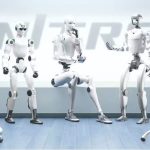 More than 3,000 guests are expected to attend, including industry executives and technology experts from around the world.
-150x150.jpg) Alibaba has reduced prices across its Qwen-Audio voice models by as much as 95%, including a roughly 70% cut for text-to-speech services.
Alibaba has reduced prices across its Qwen-Audio voice models by as much as 95%, including a roughly 70% cut for text-to-speech services. China Life has increasingly used both S transactions and fund investments to gain exposure to technology assets.
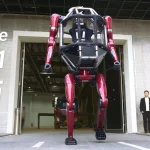 The roughly 3-meter-tall robot weighs about 500 kilograms with a rider and can switch between bipedal and quadrupedal modes.
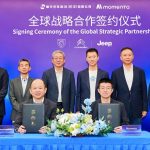 For Momenta, the partnership also provides a route for its driving technology to reach overseas markets through Stellantis’ global brands.
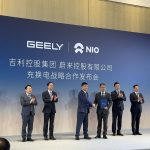 Nio and Geely began working together on battery swapping in November 2023, when Geely joined Nio’s battery-swapping alliance.
 CXMT founder and memory titan GigaDevice’s venture arm reportedly behind the AI champion with a 5 billion yuan bet.
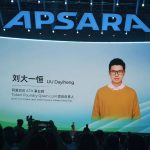 He has been involved in the development of Qwen’s core language models as well as Qwen-Coder and multimodal models.
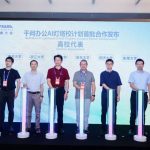 Many teachers and students are already using AI agents for lesson preparation, research and learning, but mostly on an individual basis.
 The 104 Zhejiang companies making the list span internet services, automotive, chemicals, advanced materials and smart manufacturing.
-150x150.jpg) Its Qwen team plans to train a new model with 5 trillion to 10 trillion parameters as it moves toward artificial superintelligence, or ASI.
Its Qwen team plans to train a new model with 5 trillion to 10 trillion parameters as it moves toward artificial superintelligence, or ASI. The platform’s customer base had grown sixfold over the past year as AI agents began moving into core business processes.
 Users can activate QwenWork with a single voice command and have the AI turn conversations into tasks, notes and follow-ups.
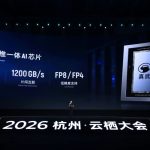 The V900 is scheduled to enter mass production in the first quarter of 2027 and will be deployed across Alibaba Cloud data centers.
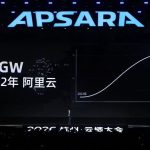 This move comes as the Hangzhou-based tech giant ramps up AI infrastructure investment to meet surging demand for computing power.
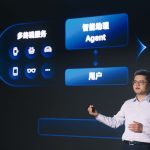 The restructuring comes four days after Ant adopted Alibaba’s QwenWork as its AI workplace platform for all employees.
 The new model increases the number of degrees of freedom while reducing the overall size and improving drive precision, according to Unitree.
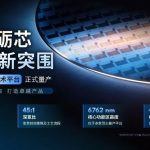 CXMT said the G5 yield ramp-up will take time and that new products must go through customer testing and certification before broader adoption.
 As AI computing drives server power densities toward the megawatt range, conventional air cooling is becoming increasingly impractical.
 Tesla’s reported supplier strategy highlights the role of China’s existing automotive manufacturing base in its robotics push.
 The rebound reversed a monthlong slide that had taken the stock below the 500-yuan mark for the first time on September 10.
 For Chinese AI companies expanding overseas, the partnership marks a shift in how their products can reach foreign consumers.
 A supernode essentially connects thousands of computing cards through high-speed links so they can work together as a single computing system.
 The Hangzhou experiment takes a different approach, positioning seniors as AI users, creators and contributors.
 The app then limits access to four learning functions: photo-based Q&A, AI writing, translation and deep research.
 The latest additions broaden that effort from drug and product information to medical knowledge and nutrition data.
 Through its partnership with Stellantis, Leapmotor International now has more than 1,000 sales and service outlets across 45 markets.
 The essay offers an unusual glimpse into how AI automation is being perceived by engineers at the cutting edge of China’s AI industry.
-150x150.jpg) The first vehicle rolling off the line less than a year after the partnership was signed highlights the speed of the approach.
The first vehicle rolling off the line less than a year after the partnership was signed highlights the speed of the approach. Reuters, Airbnb and Pinterest have also adopted Qwen models as companies seek to reduce their reliance on proprietary AI systems.
-150x150.jpg) Huawei says the 3D architecture can halve the time required for mechanical, electrical and plumbing delivery.
Huawei says the 3D architecture can halve the time required for mechanical, electrical and plumbing delivery. The appointment would mark one of DeepSeek’s most significant senior hires outside its core tech team since the firm was founded.
 The strategy also marks a potential shift for China’s leading robotics companies from exporting products to exporting ecosystems.
 Whether Lei’s latest visit was simply a high-profile show of support or a sign of deeper industrial cooperation remains unclear.
 The original G1 was launched in 2024 at 85,000 yuan and helped Unitree become the world’s top humanoid robot maker by shipments in 2025.
 Han said this could change the starting point of commerce from standardized products and fixed app pages to user intent.
 For developers, the bigger question is whether DeepSeek will bring its aggressive pricing strategy to voice AI.
 AI agents could make services that once relied on scarce experts or were too costly to deliver at scale available to a much wider population.
 This move comes as the Chinese robotics maker seeks to push deeper into the underlying software stack for embodied AI.
-150x150.jpg) A new “Health” section has been added to Afu’s homepage, alongside its AI chat and medical-service entrances.
A new “Health” section has been added to Afu’s homepage, alongside its AI chat and medical-service entrances. As an official DeepSeek partner, Tencent’s WorkBuddy has fully integrated V4.1 Flash in China and is offering a two-week promotional discount.
 The potential listing comes after China expanded the STAR Market’s so-called fifth listing standard in June to cover AI companies.
 Rather than simply discussing AI in theory, the guide provides step-by-step instructions and ready-made prompts for each scenario.
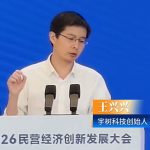 He expects that “ChatGPT moment” in embodied intelligence to arrive in as little as two to three years, though it could take five to 10 years.
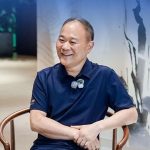 He also criticized what he called overly aggressive innovation, in which insufficiently tested designs are incorporated into vehicles.
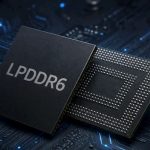 The company expects the technology eventually to expand beyond flagship smartphones into smart vehicles, edge servers and wearables.
 DeepSeek’s latest strategy combines aggressive pricing to win users and peak/off-peak rates to encourage better use of computing capacity.
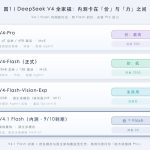 More revealingly, the company’s internal testing questionnaire asks users whether the model could fully replace the current DeepSeek V4 Pro online.
-150x150.jpg) The launch reflects a shift in AI-agent development from helping individuals work faster toward assigning AI agents specific roles.
The launch reflects a shift in AI-agent development from helping individuals work faster toward assigning AI agents specific roles. That puts Deli up against an increasingly concentrated market led by Shenzhen companies including Bambu Lab, Creality and Anycubic.
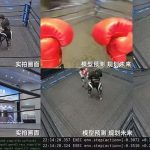 Unitree said the model overcomes bottlenecks in real-time planning, decision-making and dynamic interaction.
-150x150.jpg) The model differs from many overseas AI finance products, which are generally built within individual platforms.
The model differs from many overseas AI finance products, which are generally built within individual platforms. The Stock Connect inclusion gives Manycore access to a broader pool of Chinese investors and could improve trading liquidity.
 iFlytek says it was trained and deployed entirely on domestic computing infrastructure and is now available through its open platform.
 The pitch is straightforward: companies no longer need to buy a dedicated SaaS product or commission custom software for every workflow.
 The rapid growth of QwenWork comes as China’s technology giants increasingly focus their AI firepower on workplace agents.
 Tmall is turning those services into standardized retail products that can be bought alongside more familiar digital goods.
 The model is available through Alibaba’s Qwen AI platform as an API and has been integrated into Qwen Office, Qoder and the Qwen app.
 It introduces four expert-level AI agents spanning key verification stages including software and hardware simulation.
 The attention reflects the pressures facing an industry that has attracted large amounts of capital and talent since the rise of generative AI in 2023.
 Their entry marks a rare convergence of internet and automotive capital around China’s commercial satellite industry.
 Founded in 2018, Enflame develops cloud AI chips and has built four generations of architectures and five AI accelerators.
-1-150x150.jpg) For an AI short drama, users provide the story concept while the agents collaborate sequentially to turn it into a finished video.
For an AI short drama, users provide the story concept while the agents collaborate sequentially to turn it into a finished video. The security-camera maker posted 7.90 billion yuan in net profit, up 39.57%, marking one of its strongest growth rates in nearly a decade.
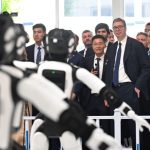 The move follows a high-profile visit by Serbian President Aleksandar Vučić to Minth’s future factory in Jiaxing on May 27.
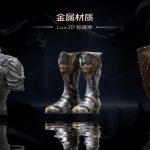 The company aims to move 3D content creation from labor-intensive manual modeling toward automated, large-scale production.
 That makes the program resemble an early-stage technology grant or angel investment more than a conventional corporate recruitment scheme.
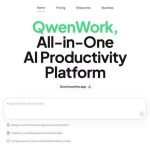 The international launch comes as AI agents move beyond chatbots toward software that can independently execute multi-step tasks.
 The model, unveiled Tuesday night, uses a new “Next” architecture with 125 billion total parameters but activates just 6 billion at a time.
 For investors, the move offers a different perspective at a time when founder share sales are closely watched.
 Insider buying can demonstrate conviction; it cannot by itself prove that Alibaba’s AI investments will generate attractive returns.
 The market’s reaction reflects the tension between Alibaba’s long-term AI strategy and its near-term financial burden.
 This helps to address a persistent problem with AI-generated video: maintaining continuity across a sequence.
 Under the revised rules, effective from midnight Beijing time on Aug. 23, DeepSeek no longer distinguishes between peak and off-peak hours on weekends.
3-150x150.jpg) The fundraising comes as Alibaba enters an AI investment window defined by accelerating revenue but mounting pressure on profits.
The fundraising comes as Alibaba enters an AI investment window defined by accelerating revenue but mounting pressure on profits. The real test for the succession will be whether “One Geely” can deliver more than the founder alone could.
 This entity expands its presence in China’s mainland as AI-driven demand for data-center power and cooling infrastructure accelerates.
 The M890 supernode is also the first supernode architecture in China reported to have successfully run AI models exceeding 2 trillion parameters.
 Zhipu’s expanding Hangzhou presence reflects a broader trend among China’s leading AI companies: building research, talent and commercial ecosystems outside Beijing.
 The move comes just one week after Alibaba opened public testing of QwenWork, its enterprise-focused AI productivity platform.
 For AI companies, owning or controlling data centers, power resources and physical capacity can translate into lower costs and greater supply certainty.
 MSCI announced on July 28 that CXMT had met the eligibility criteria, with the inclusion taking effect on August 10.
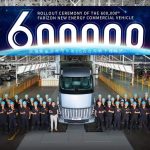 The company has ranked No. 1 in China’s new-energy commercial vehicle market for four consecutive years since entering the sector a decade ago.
 The architecture, known as CUBE 5.0, raises the modularization rate of the five major systems from about 30% in earlier designs to 90%.
 The first wave of partners covers more than 10 sectors, including logistics, housing, local services, wealth management and automobiles.
 Wan3.0 reflects a broader shift in AI video generation — from experimental content creation toward practical production workflows.
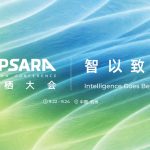 More than 2,000 global leaders and industry experts are expected to participate in discussions throughout the event.
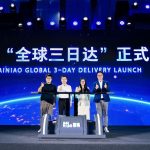 Cainiao said that as 72-hour door-to-door delivery becomes accessible to more sellers, global e-commerce competition will enter a new phase.
 The Shanghai headquarters project represents Tsingshan’s latest effort to strengthen its presence in one of the world’s key trade and financial centers.
-150x150.jpg) QwenWork combines three previously separate products — QoderWork, MuleRun and Wukong — into a single AI office platform.
QwenWork combines three previously separate products — QoderWork, MuleRun and Wukong — into a single AI office platform. CFMoto went head-to-head with established global motorcycle names including Yamaha, KTM, Honda and BMW.
 The company has built a product lineup spanning four series — A, B, C and D — covering price ranges from 60,000 yuan ($8,888) to 300,000 yuan.


-150x150.jpg.webp)


-150x150.jpg.webp)


-150x150.jpg.webp)


-150x150.jpg.webp)


-1-150x150.jpg.webp)


3-150x150.jpg.webp)


-150x150.jpg.webp)

