
- G5 platform brings China’s DRAM process closer to leading global production nodes
- Yield ramp-up and customer validation mean large-scale sales will take time
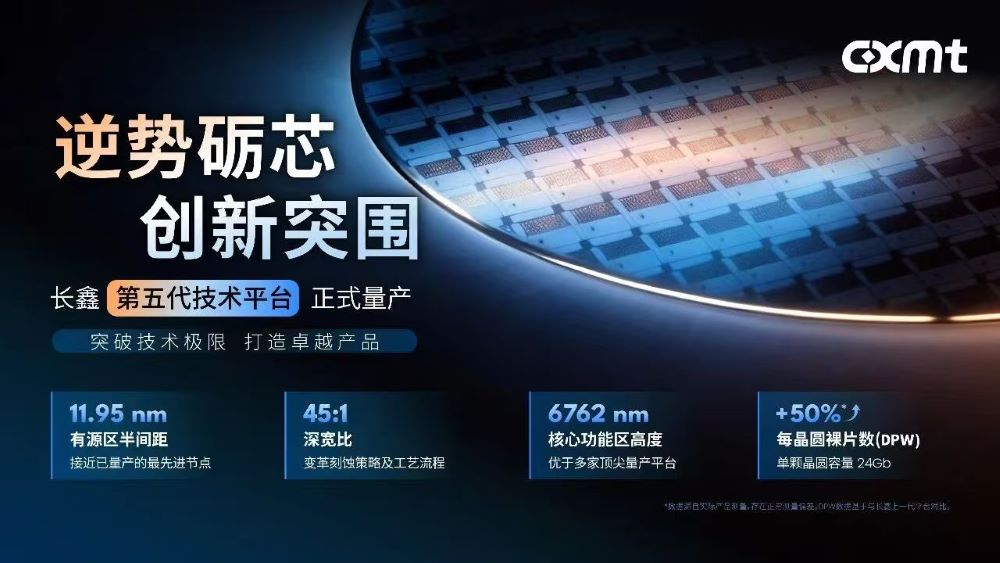
Chinese memory-chip maker CXMT (长鑫存储) said September 20 that its fifth-generation DRAM process platform, or G5, has entered production, marking a major step in the company’s push to narrow the gap with leading global memory makers.
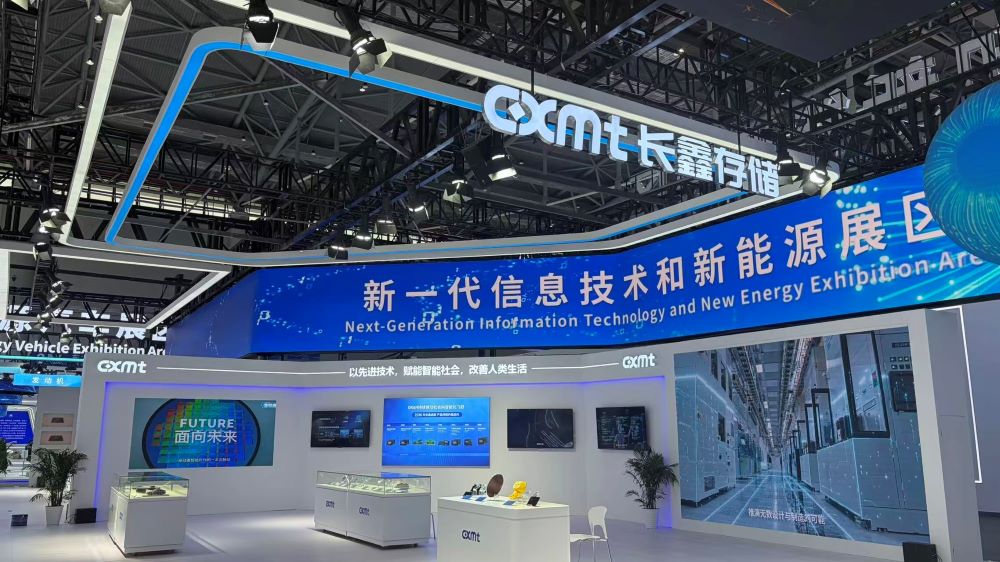
CXMT announced the milestone at the 2026 World Manufacturing Convention, held on September 20-23 in the Anhui provincial capital of Hefei, and showcased LPDDR5X products built on the new platform.
Using quadruple-patterning technology, G5 shrinks the half-pitch of the active area in its memory array to 11.95 nanometers, a process level the company said is comparable with leading commercial DRAM production nodes.
CXMT also said each wafer can produce at least 50% more dies than its fourth-generation platform.
First commercial deployment
The company displayed two mass-produced LPDDR5X products based on G5, including memory running at up to 10,667 Mbps.
One was used in the Nubia NaviX Ultra smartphone, jointly developed by ByteDance and ZTE around ByteDance’s Doubao AI assistant.
CXMT said the products mark the first commercial deployment of domestically produced 10,667 Mbps LPDDR5X memory.
Both have a capacity of 24Gb and are designed for smartphones and portable consumer electronics. The products have entered mass production, according to the company.
Not yet commercial scale
Despite the production announcement, CXMT cautioned that G5-based products have yet to generate significant sales and are unlikely to materially affect its financial results in the short term.
That reflects a familiar challenge in semiconductor manufacturing: moving a new process from production qualification to stable commercial output requires time to improve yields and complete customer validation.
CXMT said the G5 yield ramp-up will take time and that new products must go through customer testing and certification before broader adoption.
The milestone therefore confirms CXMT’s progress in advanced DRAM manufacturing, but does not yet translate into equivalent commercial returns.
From entry to catch-up
The G5’s launch marks another step in China’s effort to build a domestic DRAM industry after CXMT began producing its own DDR4 memory in 2019.
The company is also expanding production capacity. Korean media have reported that CXMT’s monthly wafer capacity could rise from about 300,000 wafers in 2026 to 600,000 by 2029.
Higher die output per wafer could further increase effective supply as the company ramps up its new process.
But catching up in process technology and winning global market share are different challenges. Yield improvement, customer qualification and the technological lead held by Samsung, SK Hynix and Micron — particularly in high-bandwidth memory — remain hurdles for CXMT as it scales its next-generation DRAM technology.
Header image credit: CXMT’s official WeChat

.jpg)