

- As AI takes over predictable tasks, human skill may increasingly lie in judgment rather than execution
- WorldSkills Shanghai offers a glimpse of what machines may struggle to replicate: physical intuition, adaptability and knowing when to break the rules
The 48th WorldSkills Competition will open in the evening of September 22 in Shanghai, bringing together 1,385 competitors from around the world to compete in 64 skills.
At first glance, the competition looks almost like a celebration of everything AI is supposed to make obsolete: young people spending years perfecting the ability to weld, repair, assemble, cook and build things with their hands.
But look more closely at this year’s event and a more interesting picture emerges.

Seven new skills have been added, including unmanned aerial systems, software testing and digital interactive media design. Others include retail sales and dental prosthetics.
In other words, even the world’s biggest skills competition is changing with AI and automation.
AI reshapes skills
That raises an awkward question: If AI is coming for so many jobs, why are we still celebrating human skill?
The concern is not imaginary. The International Labour Organization (ILO) estimates that one in four workers worldwide are in occupations with some exposure to generative AI.
But the ILO makes an important distinction: in most cases, AI is more likely to transform jobs than eliminate them entirely.
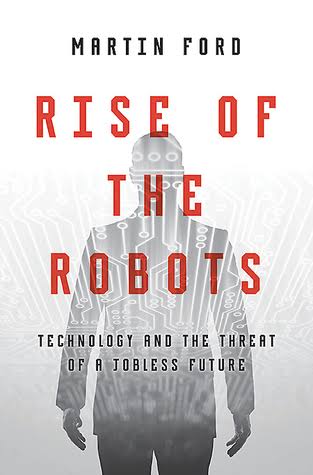
Futurist Martin Ford put the challenge more bluntly in Rise of the Robots: “But I do think this time is different.”
His test for whether a job is vulnerable to automation is even more revealing: could another person learn to do your job by studying a detailed record of everything you have done? If so, an algorithm may eventually be able to learn much or all of it too.
That question goes well beyond factory work or data entry. It applies to any job whose knowledge can be turned into a sufficiently detailed set of instructions.
The 0.2mm test
So what happens to the skilled worker?
Perhaps the answer can be found in 0.2 millimeters.
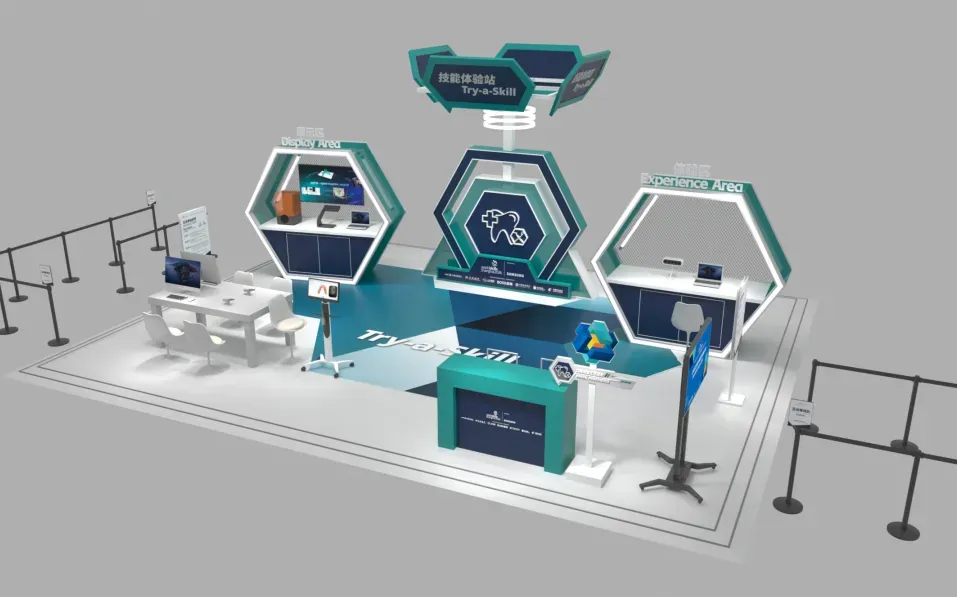
At WorldSkills, competitors in dental prosthetics must make dentures by hand. A deviation of just 0.2 millimeters can make a restoration fail to fit properly.
AI can help scan a patient’s mouth and analyze dimensions. But the final grinding, fitting and adjustment still depend on a person’s ability to feel material, recognize subtle differences and make tiny corrections in real time.
That is not nostalgia for an analog world.
As AI-generated text, images and videos become increasingly abundant, we may actually place more value on things that carry visible traces of human experience: the pressure a carpenter applies to a plane, the tiny adjustment a chef makes while seasoning a dish, or the expression on a mechanic’s face when an engine makes an unfamiliar sound.
These actions are difficult to reduce to a clean set of rules because they are built through long interaction with the physical world.
Judgment over execution
And that may be the more important distinction.
AI is very good at optimizing within a set of rules. Humans remain valuable when they have to decide which rules matter in the first place.
The new unmanned aerial systems competition offers a good example. Competitors must build circuit boards from scratch, tune flight-control parameters, print replacement parts and assemble a drone capable of flying autonomously.
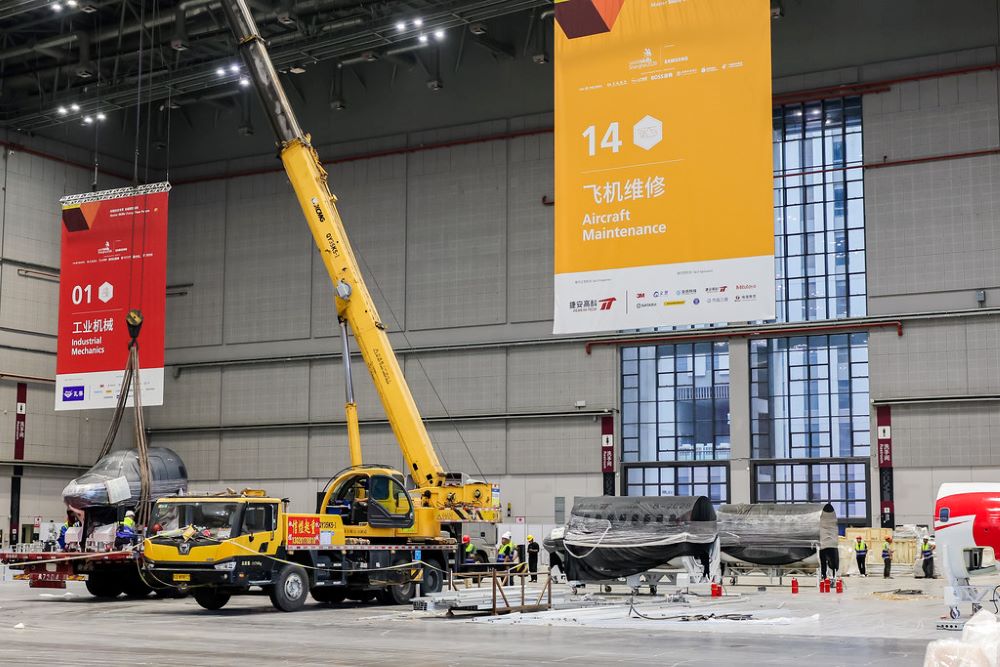
The challenge is not simply to repeat a known procedure faster. It is to define the problem, break it down and find a workable solution under real-world constraints.
That is also where AI may change the role of skilled workers rather than simply eliminate it.
Where humans still matter
A 2026 Harvard Business School study found that AI can significantly improve knowledge workers’ performance on some tasks while making them more prone to errors on others.
This underscores the importance of knowing when to rely on AI and when to exercise human judgment.

Imagine an experienced welder being presented with 10 possible welding parameters by an AI system.
The machine may know which settings have worked most often. But the welder may know that today’s material behaves differently, that the workshop is unusually cold or that a tiny change in the joint will affect the finished product.
The value is no longer simply in producing an answer. It is in knowing which answer makes sense here and now. AI is good at optimizing within a set of rules; humans remain valuable when they have to decide which rules matter.
The craftsman’s shifting role
This does not mean craftsmanship will escape automation. Many repetitive tasks will disappear, and workers will increasingly work alongside machines.
But the skilled worker of the AI era may be the person who knows what should be done by hand, what should be left to the machine and when a standard procedure needs to change.

That may be why WorldSkills still matters. It is not simply preserving skills from the past, but testing which human abilities remain valuable when machines become extraordinarily good at following patterns.
And when competitors stand at their workstations, what is most striking is often not their speed, but their concentration.
A machine can reproduce a movement; it is much harder to reproduce the years of failure, practice and judgment behind it.
The craftsman’s place in the AI age may therefore lie not merely in making things by hand, but in knowing what is worth making, how it should be made and when the rules need to change.

