
- Alibaba Cloud plans a major AI infrastructure expansion as demand for computing power surges
- The company also gives AI agents their own digital identities at its flagship cloud conference
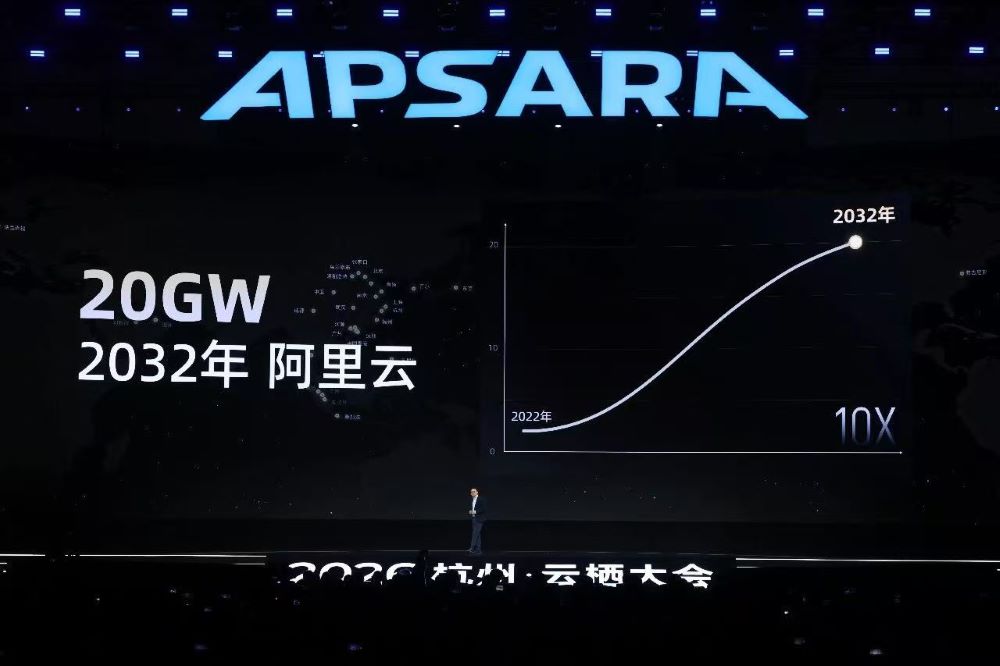
Alibaba plans to expand the global data-center capacity operated by its cloud business to more than 20 gigawatts by 2032, one of its top executives has said at a top tech summit.
Alibaba CEO Eddie Wu announced the target on September 22 at the opening of the 2026 Apsara Conference in Hangzhou, saying the company would “go all in” on AI infrastructure.
This move comes as the Hangzhou-based tech giant ramps up AI infrastructure investment to meet surging demand for computing power.
Wu described AI models, AI chips and AI cloud as the three pillars of the machine-intelligence era. Reuters separately reported the 20GW target following his keynote.
A shift in global pitch
The target marks a shift in Alibaba Cloud’s global pitch from model capabilities toward the infrastructure needed to train and run increasingly demanding AI systems.
However, its 20GW target would be far above the current capacity of the leading hyperscalers if measured on the same basis.
AWS is estimated to have about 2.3GW of active IT capacity, followed by Meta at 1.5GW, Microsoft Azure at 1.2GW and Google Cloud at about 508MW, according to a Februry report from ABI Research.
Alibaba did not disclose its current global data-center capacity or provide a year-by-year expansion plan.
Wu said strong customer demand for AI is driving the push as businesses increasingly need computing resources to train models and deploy AI applications at scale.
The 20GW target would put Alibaba’s planned infrastructure footprint in the same broad league as the power demands of the world’s largest hyperscalers, although comparisons are complicated by differences in how companies measure data-center and IT capacity.
Agents become conference attendees
The Apsara Conference is also testing a new way of interacting with AI.
For the first time, attendees can bring their own AI agents to the event. Each agent receives a digital identity and can access schedules and exhibition information in real time, recommend sessions and exhibits based on user preferences, and participate in activities such as the Agent Arena.
Alibaba is positioning the setup as an “agent-native” approach in which AI agents are treated not simply as tools, but as participants in their own right.
The conference features three main forums, more than 120 subforums and a 50,000-square-meter exhibition area covering chips, computing infrastructure, foundation models and agentic applications.
Nvidia takes top partner slot
Nvidia is the conference’s highest-level “Peak Partner,” while Intel and AMD are designated Diamond and Ruby partners, underscoring the continued importance of global chip suppliers to Alibaba’s AI infrastructure strategy.
The presence of Nvidia also highlights the global supply chain behind China’s AI expansion.
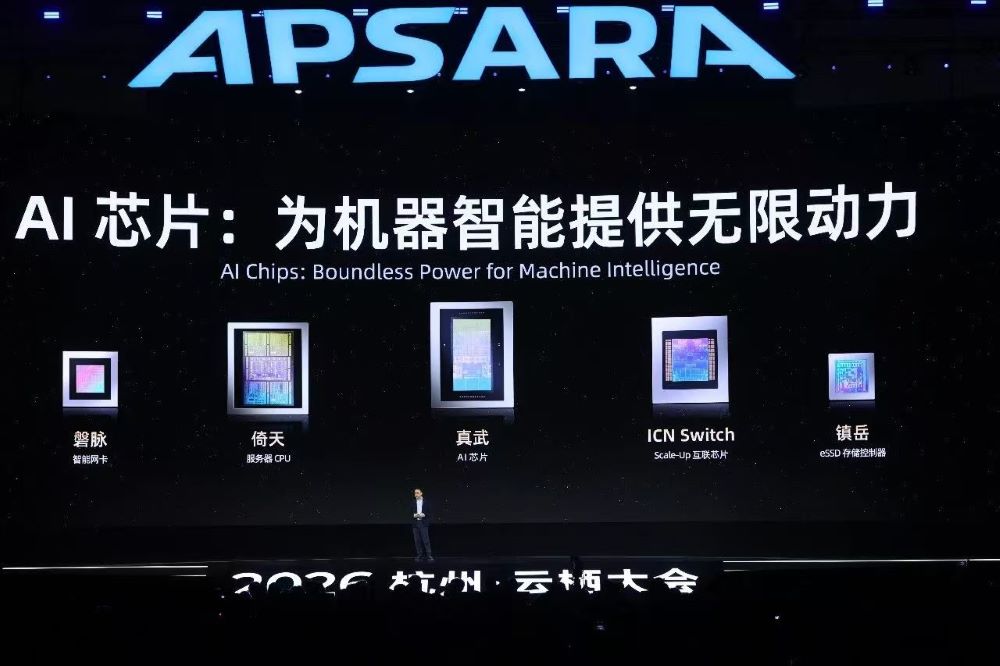
Alibaba has been developing its own AI chips through its T-Head semiconductor unit while building an ecosystem spanning chips, cloud infrastructure, models and applications.
Alibaba’s 20GW target signals its ambition to build a large-scale infrastructure platform for AI.
The “agent-native” conference, meanwhile, points to another emerging battleground: how AI agents interact with people, services and digital ecosystems.
Header image credit: Alibaba Group’s official WeChat

.jpg)