
- Wang Xingxing says large robots are an inevitable trend and Unitree will build one even if others do too
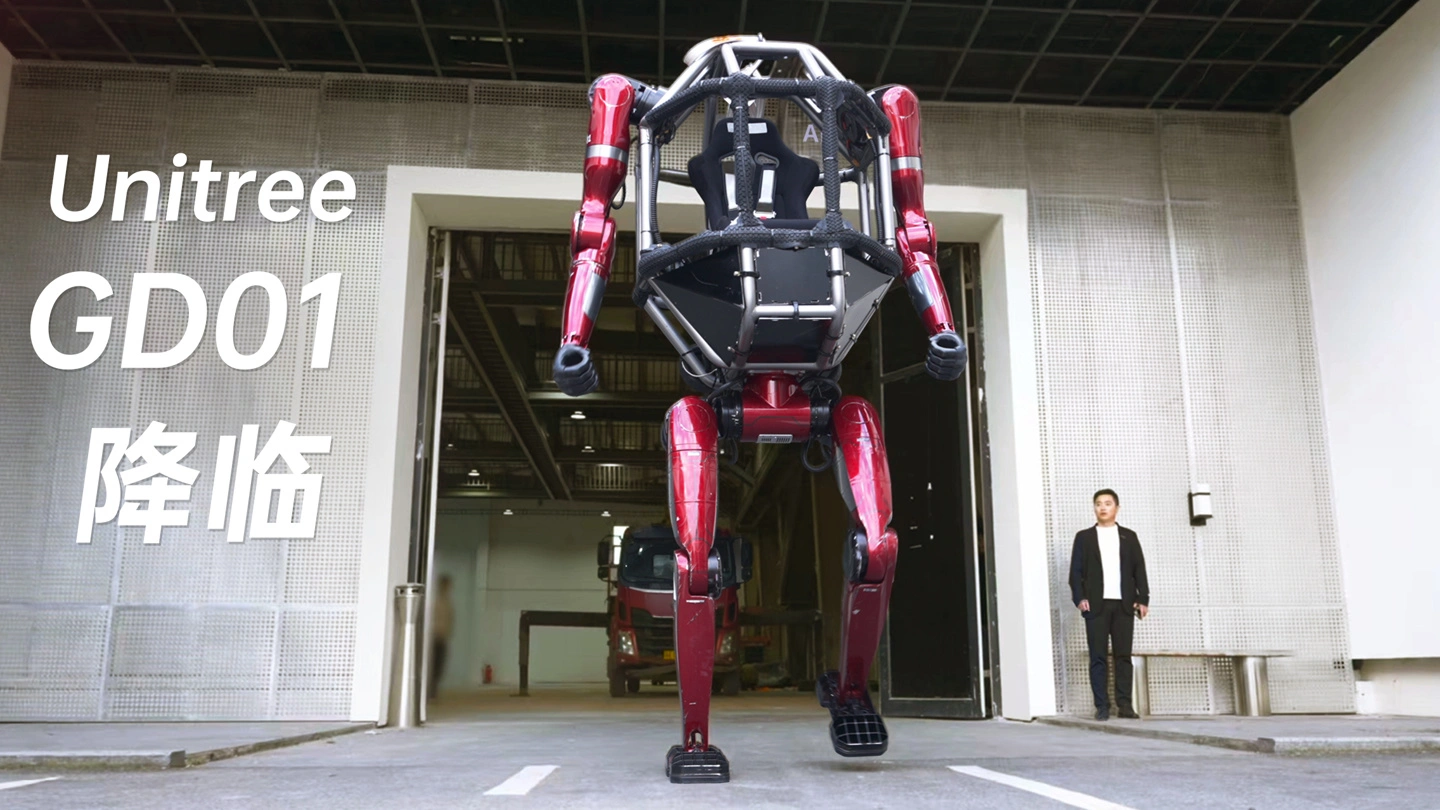
- The 3-meter GD01 is designed as an “off-road vehicle” for outdoor environments rather than a conventional industrial robot
Unitree founder Wang Xingxing has defended the company’s decision to build a 3.9 million yuan ($580,940) rideable transforming robot, saying large-scale robots will become an inevitable part of the industry as AI and robotics technologies mature.
Speaking at a forum during the Global Digital Trade Expo in Hangzhou on September 27, Wang said Unitree would pursue the market even if it meant competing with other companies.
“Even if Unitree doesn’t build it, other companies will in the next few years,” he said, arguing that large robots are an unavoidable direction for the industry.
An ‘off-road vehicle’?
Wang described the GD01 as an “off-road vehicle among robots,” designed not for indoor or urban environments but for difficult outdoor terrain where strong mobility is needed to perform tasks.
Unitree unveiled the GD01 in May with a starting price of 3.9 million yuan. The roughly 3-meter-tall robot weighs about 500 kilograms with a rider and can switch between bipedal and quadrupedal modes.
The machine attracted considerable interest at the trade expo, with many visitors asking about its price, according to exhibition staff. But no units had been sold by the end of the event, held on September 23-27.
The Yangtzeer reported earlier that, addressing questions over the giant machine’s high cost, Wang said the project was designed as a test bed to validate technologies that could eventually be deployed across a much wider range of robots.
An increasingly crowded field
Unitree is not alone in exploring large rideable robots.
Japan’s Kawasaki Heavy Industries unveiled its development plan for Corleo, a four-legged rideable robot, in July.

Riders control the machine through shifts in body weight rather than a conventional steering wheel. Kawasaki plans to build a prototype by 2028 and target mass production by 2035, initially positioning it as a theme-park attraction.
Chinese companies are also exploring larger four-legged machines. AgiBot has also entered the segment with Agiquad (智元酷拓), which launched a rideable quadruped robot during the World Artificial Intelligence Conference in Shanghai during July.

Run Robotics (润科聚能), another Shanghai-based startup, showed a “centaur robot” at the 2026 World Robot Conference, combining a humanoid upper body with a quadruped lower body for applications including factory inspection, railway security, mining and emergency response.
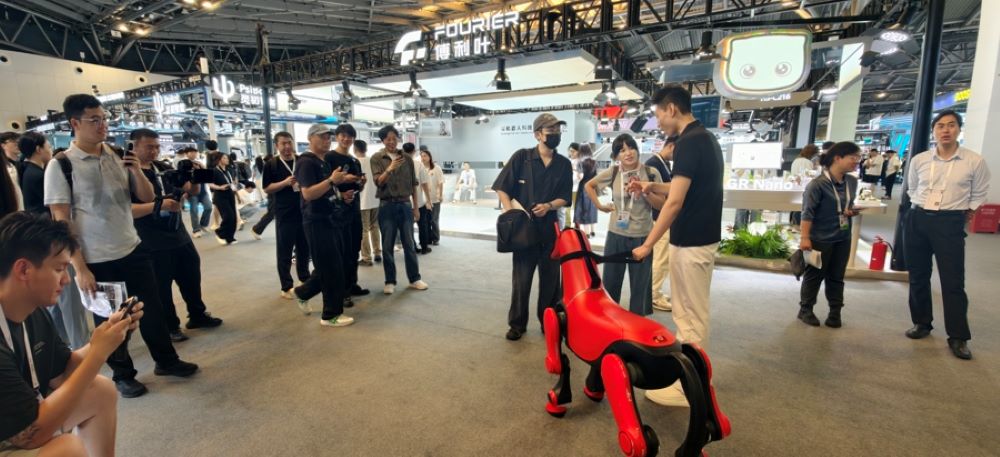
DEEP Robotics (云深处科技), Unitree’s long-time rival, also showcased its “Yunju” robot horse at the WAIC this year as a specialized model for specific applications.
Three-fourths of global shipments
The broader quadruped-robot market is also becoming more competitive. Global shipments reached about 35,000 units in the first half of 2026, according to industry data, with Unitree accounting for 37% of the market.
Three other Chinese companies — AgiBot’s Agiquad, Genisom AI (智身科技) and DEEP Robotics — followed, with the four together accounting for about 76% of global shipments, industry data show.
Unitree’s business remains concentrated in entertainment and education, which account for more than 70% of its sales, while industrial inspection and emergency-response applications are reportedly led by Agiquad and DEEP Robotics.
The GD01 represents a different bet: rather than competing directly in industrial reliability, Unitree is using a rideable, transforming robot to target outdoor environments and potential applications in tourism and entertainment.
Header image: screenshot from Unitree’s official video

.jpg)