- Two large quadrupeds were not delivered on time, while two smaller robots reportedly arrived with stability problems
- The customer also says MicBot promised secondary development support but did not provide the access needed to integrate its own systems
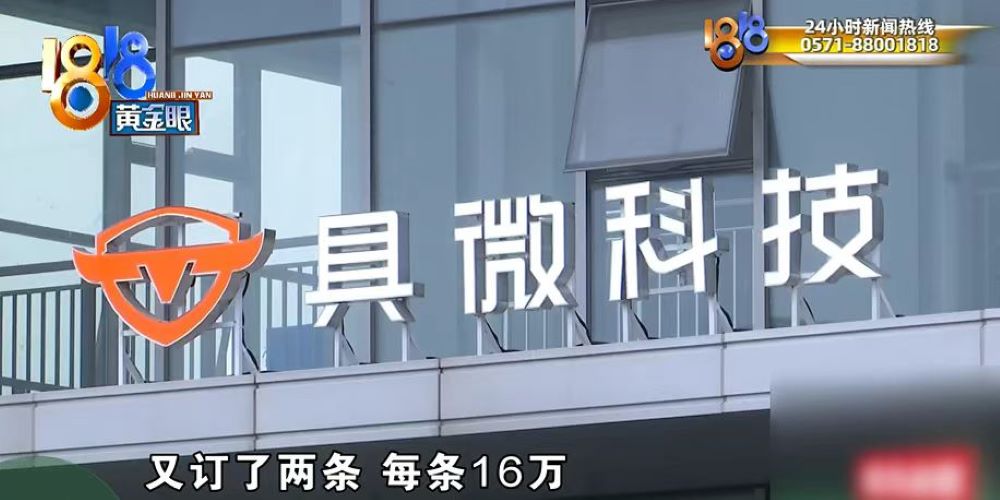
Hangzhou-based quadruped robot maker MicBot (具微科技) is facing a contract dispute after a customer spent nearly 900,000 yuan ($134,237) on four robots but says two were not delivered on time and the other two failed to meet basic expectations.
The customer, Zhejiang Fazhiqing Robotics (浙江法智擎机器人有限公司), ordered two P2 wheeled quadrupeds from MicBot on July 29 for a total of 580,000 yuan, with delivery promised by August 10.
It paid 70% upfront, or 406,000 yuan. The deadline passed without delivery. MicBot first cited a delay and later said the motors needed an upgrade, according to a report by state-run Zhejiang Television’s “1818 Golden Eye,” a digital news channel.
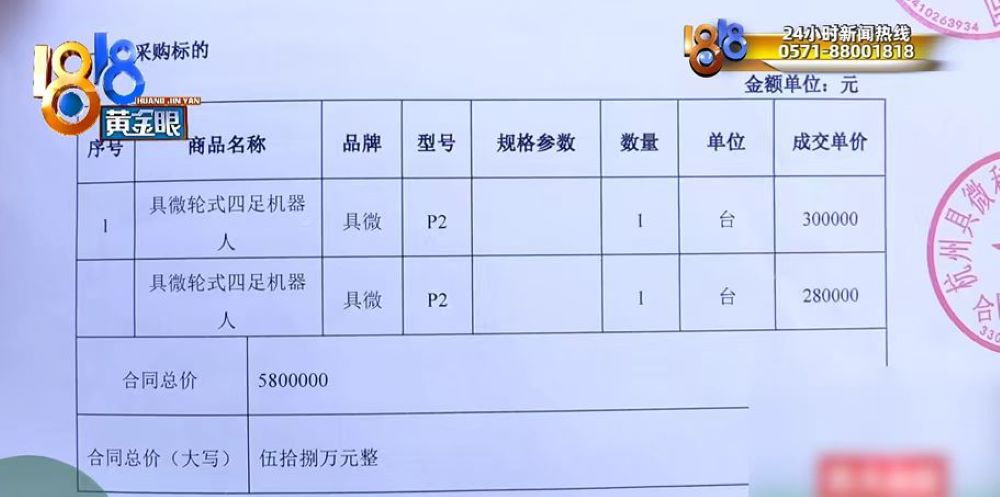
With its project still waiting, the customer ordered two S01 medium-sized quadrupeds for 160,000 yuan each on August 28. The robots arrived the next day, but one reportedly could not stand properly, with its legs uneven and its gait unstable.
After about an hour of on-site troubleshooting, MicBot said the robot would have to be returned to the factory for repairs, with the process expected to take about a week, according to the report.
For a customer buying nearly 900,000 yuan worth of robots for a commercial project, the episode raises a basic question: what exactly is being delivered when the contract is signed?
The missing development access
The dispute goes beyond late delivery and hardware problems.
Zhejiang Fazhiqing bought the robots specifically for secondary development. It planned to add cameras and a cloud platform, connect the machines to its own legal-industry AI model, and use them for autonomous patrols and security at parks and residential sites.
The customer says MicBot’s sales staff explicitly told it that the robots supported secondary development. Interface documentation was also shared in a technical discussion group, it said.
But after the purchase, the customer found that key parts of the system were locked and that it had not received the development keys needed to integrate its own software.
“We bought the robots so we could add a cloud platform and cameras and let them navigate and patrol autonomously,” the customer said in the television report. “Now we simply cannot develop them.”
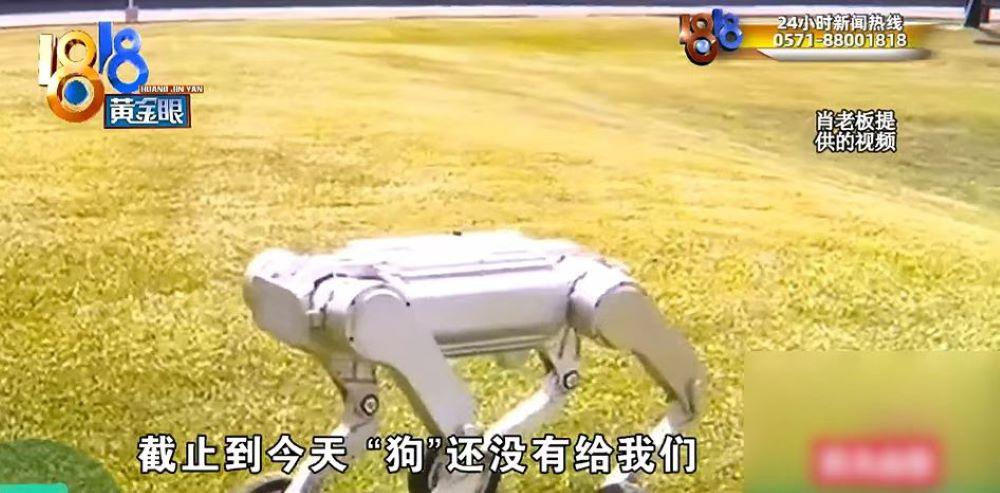
MicBot’s response was that the contract did not explicitly promise secondary development. A company representative said MicBot was responsible for the quality of the robot itself, rather than the customer’s planned modifications.
The company also cited security and intellectual-property concerns. Lower-level system access, it said, requires a separate agreement and liability waiver for commercial use. The customer had not completed the required process, MicBot said.
That distinction may matter legally. But commercially, it leaves a glaring question: if secondary development was important enough to discuss before the sale and technical documentation was circulated afterward, why was the scope of that access not clearly written into a contract worth hundreds of thousands of yuan?
A bigger problem for MicBot
MicBot is not an established industrial automation giant. Founded in February 2025, it is one of Hangzhou’s young quadruped-robot startups and has positioned itself around difficult industrial environments such as electrolytic aluminum and petrochemical facilities.
The company has raised four rounds of funding since the start of 2026, attracting industrial investors including Zhengqiang Corporation (正强股份), Weiqiao Group (魏桥集团) and Befar Group (滨化股份).
That makes the dispute more consequential than the value of a single order.
MicBot’s pitch to customers and investors is built around robots capable of operating where conventional machines struggle. Its products are designed for demanding environments, where reliability, safety and predictable operation are not optional extras.
Yet the reported dispute involves problems far more basic: a promised delivery date that was missed, a robot that reportedly could not maintain a stable standing position, and a disagreement over whether the customer was entitled to the software access it says it was promised.
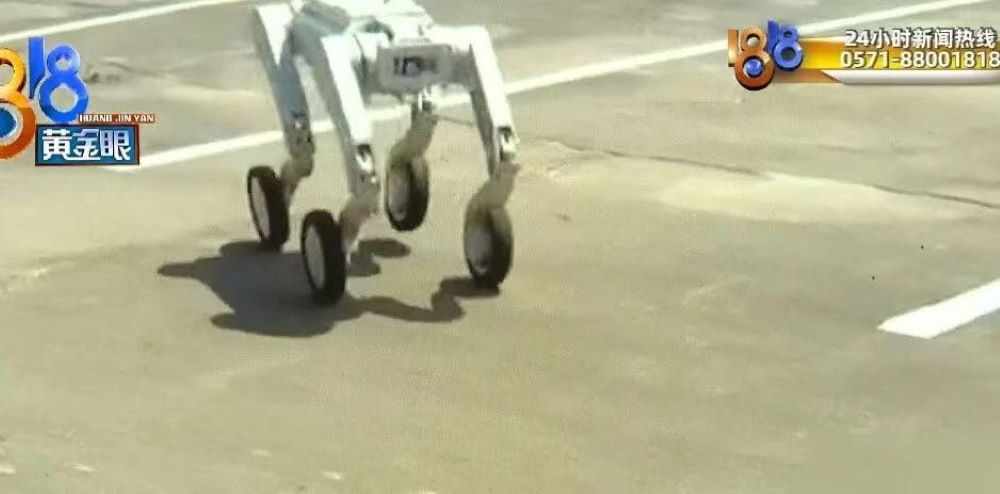
The company can reasonably argue that commercial access to low-level robot systems creates security and intellectual-property risks.
It can also insist that customers should not expect development rights that were never included in their contracts. But that only makes the contractual gap more damaging.
Credibility in crisis
If a robot company tells customers before a sale that its machines support secondary development, then leaves the scope of that development undefined, it is creating exactly the kind of ambiguity that can turn a technology sale into a dispute.
A customer can believe it has bought a programmable robot; the manufacturer can later argue that it sold only a finished machine. That is not a minor paperwork problem. It goes to the credibility of the business model.
MicBot is trying to sell robots into industrial environments where customers cannot afford vague promises about delivery, software access or system capabilities.
A machine that arrives late is a problem. A machine that arrives unstable is a bigger one. A machine that cannot be integrated into the customer’s system after the sale is potentially useless for the job it was purchased to perform.
For an emerging robotics company, the most damaging failure may therefore not be a robot that cannot walk. It may be a sales process that cannot clearly tell customers what they are buying.
Header image credit: 1818 Golden Eye