- Yangtze River Delta startups in AI infrastructure, multimodal models, satellite communications and space robotics secured major new funding
- New capital will support AI computing infrastructure, real-time multimodal models, satellite communications chips and robotic systems for in-orbit servicing
AI Infra startup Infinigence raises 2.3 billion yuan in Series C
Shanghai-based AI infrastructure company Infinigence (无问芯穹) has raised 2.3 billion yuan ($344 million) in a Series C round, bringing its cumulative funding to 4.3 billion yuan since its founding. The company said both figures set records for China’s AI-native infrastructure sector.
Investors span state-backed funds, industry players and financial institutions. State-backed investors include Hangzhou Hi-Tech Financial Investment Holding Group, Social Security Fund ZGC Fund, Zhuhai Technology Industry Group, Xiamen Guoxing Investment, Xuhui Capital, Fortera Capital, China Insurance Investment and China Development Bank Sci-Tech Innovation Capital.
Industry investors include Lenovo, Ubiquant Partners, Resonance Ventures, Tencent and Baidu. Financial investors include HongShan, Aplus Capital, Qiming Venture Partners, Fortune Capital, Shunwei Capital and Monolith.
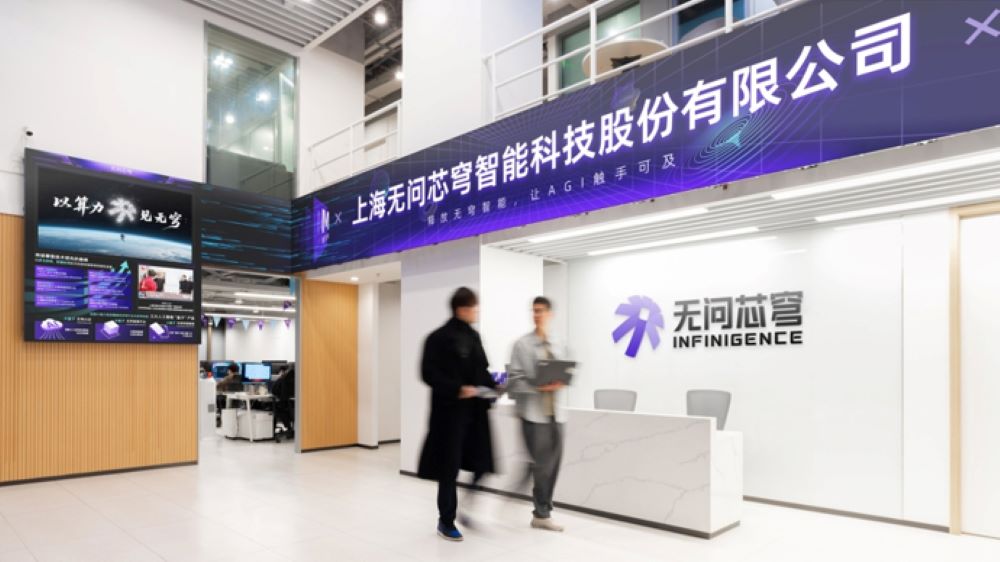
Founded with support from Tsinghua University’s Department of Electronic Engineering, Infinigence commercializes research from Tsinghua University and Shanghai Jiao Tong University.
Co-founder and CEO Xia Lixue (夏立雪) holds a doctorate from Tsinghua, where he studied under Wang Yu (汪玉), head of the Department of Electronic Engineering.
The company positions itself as an “intermediate computing layer” between chips and AI models, focusing on heterogeneous computing-resource scheduling and hardware-software co-optimization. Its approach is designed to connect multiple models with different chip architectures.
Under its “front shop, back factory, one hub” strategy, its computing-resource aggregation platform has access to 37,000 petaflops of computing power and supports 16 major chip types. Its “Token factory” has helped cut inference costs tenfold over the past year, while daily token calls have increased 40-fold since December.
The company has reportedly confidentially filed for a Hong Kong IPO and could list as early as the first half of 2027.
AI model startup Mosi bags over 1 billion yuan in pre-Series A
Shanghai-based multimodal AI company Mosi (模思智能) has raised more than 1 billion yuan ($149 million) in a Pre-Series A round led by TH Capital.
Other investors include China Development Bank Sci-Tech Innovation Capital, Shanghai Sci-Tech Innovation Center Capital, Simic Capital, Xuhui Capital, Chasing Light Capital and Lingang Ceyuan Fund. Existing investors Oriza Holdings, Shanghai STVC Group and Link-X Capital also participated.
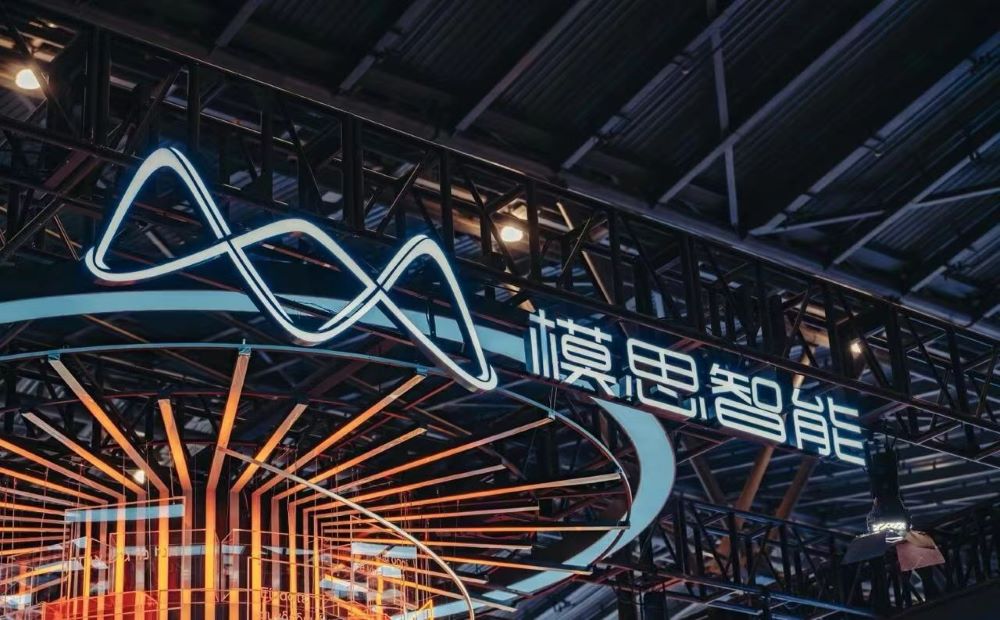
Founded in November 2024, Mosi was incubated by the OpenMOSS team at Fudan University. Its founder and chief scientist, Qiu Xipeng (邱锡鹏), is a distinguished professor at Fudan and deputy dean of Shanghai Innovation Institute.
Qiu previously led the team behind the open-source MOSS large language model. CEO Li Shimin (李世民) was a core author of SpeechGPT.
Mosi focuses on real-time, full-modality interaction, developing models for speech, vision and multimodal applications. Its products include MOSS-VL for real-time video understanding and MOSS-Transcribe-Diarize for speech recognition.
The funding will support R&D and capability building for real-time multimodal intelligence, as well as global commercialization. The company also announced that its real-time interaction system, MOSS Live, is coming soon.
Space chipmaker Innochip nets over 200 million yuan in Series D2
Innochip Technology (创芯慧联), a Nanjing-based chipmaker serving the commercial space sector, has raised more than 200 million yuan ($30 million) in a Series D2 round led by Industrial Securities Asset Management.
Other investors include Deyang Economic Development Innovation Fund, Changsha Urban Development Fund and Chengdu Jinniu Jiaozi Fund. Existing shareholder Guixin Semiconductor also increased its investment.
The proceeds will support scaled shipments of chips for direct-to-satellite connectivity and integrated space-ground communications terminals, as well as product development and early-stage R&D for 6G.
Founded in 2019, Innochip was established by Ni Haifeng (倪海峰), a former deputy general manager of ZTE Microelectronics. The company has completed nine funding rounds, with shareholders including China Mobile, CDH Investments and Addor Capital.
Its portfolio is built on a proprietary RISC-V chip architecture and includes baseband chips for direct-to-satellite low-Earth-orbit connectivity, integrated space-ground communications and 4G/5G terrestrial cellular terminals.
Its flagship Firefly 200 is described by the company as the world’s first narrowband software-defined radio satellite-connectivity single-chip solution based on a RISC-V core.
It has entered mass production and shipping, and can support direct connections from ground terminals to major low-Earth-orbit satellite networks, including the GW constellation operated by China Satellite Network Group.
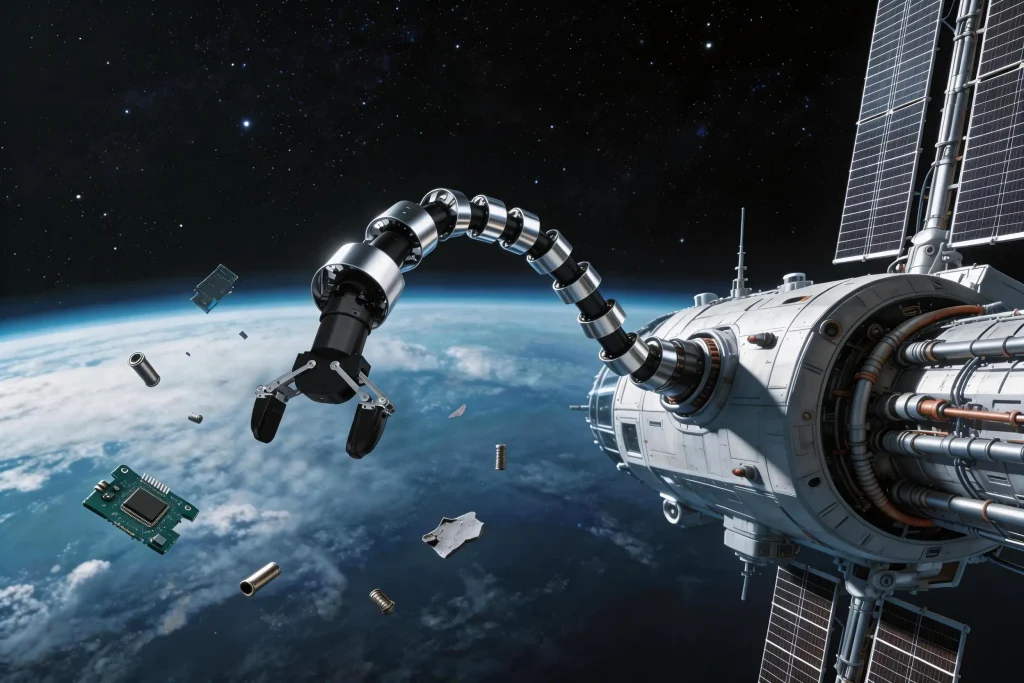
Sinxbot closes three funding rounds to scale space robotics
Sinxbot (弦引未来), a Hefei-based developer of tendon-driven flexible space robots and intelligent in-orbit servicing systems, has raised hundreds of millions of yuan across three rounds in four months.
Founded in September 2025, the company was incubated through technology transfer from a team led by Tsinghua University professor Liang Bin (梁斌) and the Jianghuai Advanced Technology Center. It completed angel, pre-Series A and Series A rounds between May and September 2026.
Lanchi Ventures, GL Ventures and BeFor Capital led the angel round, with participation from industrial investors including AgiBot and Trinasolar. Meridian Capital led the Pre-Series A round, with support from Oriza Seed.
Alibaba and China Mobile Chain Leader Fund led the Series A, joined by Aplus Capital, Zhuhai Technology Industry Group and Genesis Capital.
Sinxbot is developing robotic systems for in-orbit refuelling, assisted deorbiting and in-orbit inspection and maintenance. It plans to conduct technology validation for space rendezvous and docking in 2027.