- The Shanghai startup has completed five funding rounds in three years
- Fresh capital will support deployments in nursing homes and home-care settings
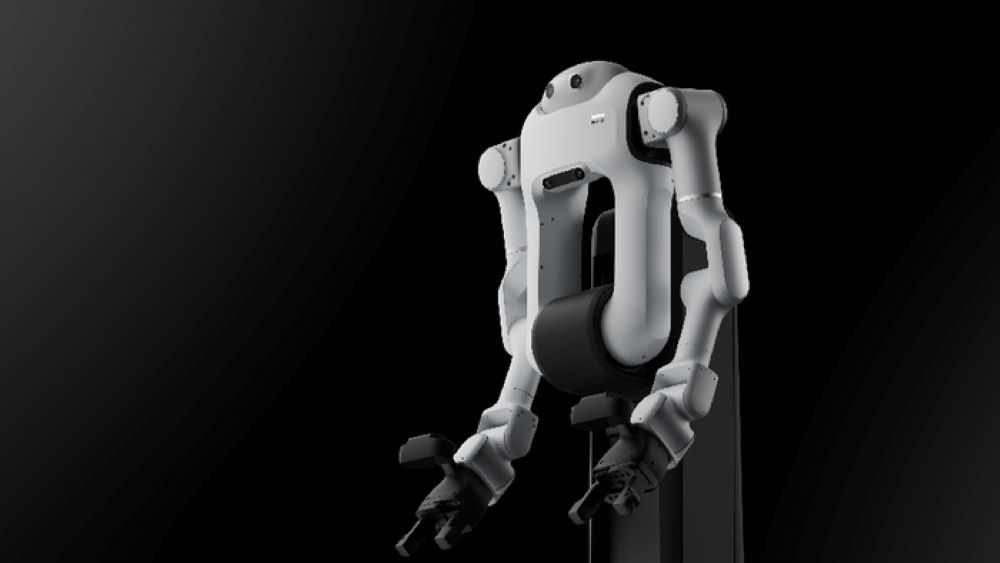
Embodied AI startup RobotGym (如身科技) has raised around 100 million yuan ($14.73 million) in a pre-Series A funding round, as the company accelerates the commercialization of robots designed for eldercare and rehabilitation amid China’s rapidly ageing population.
The latest round was co-invested by Tsing Song Capital, AI data center operator Range Technology, and state-backed Pinghu Zexin Industry Investment.
The Shanghai-based startup will use the proceeds to expand deployments of embodied AI systems in nursing homes and home-care environments.
Founded in June 2023, RobotGym has now completed five funding rounds in just three years, raising nearly 200 million yuan in total.

At the intersection of AI and healthcare
The investor lineup reflects growing interest in embodied AI applications for healthcare and elderly care.
Tsing Song Capital specializes in healthcare and life sciences investments, while Range Technology is one of China’s leading AI data center infrastructure providers, bringing complementary expertise in computing infrastructure.
RobotGym’s founding team includes researchers and engineers from Tsinghua University, Shanghai Jiao Tong University and the University of Oxford, with expertise spanning embodied intelligence, robotics control, motion planning and human-machine interaction.

Using eldercare to train embodied AI
Rather than developing robots for a single task, RobotGym has chosen to build its technology around real-world elderly care environments, where robots continuously perform tasks and generate operational data that can be used to improve AI models.
The company describes this as a closed-loop system linking real-world scenarios, data collection and model iteration, allowing its robots to become more capable through continuous deployment rather than relying solely on laboratory training.
According to RobotGym, its robots have operated continuously for more than 45 days in eldercare institutions across Shanghai and the Beijing-Tianjin-Hebei region, collecting more than 1,000 hours of operational data.
The company has also launched a “Thousand Homes Plan” to expand deployments in residential settings.
“The core of embodied intelligence is not what robots can do today, but how they continuously become smarter in the real world,” founder and chief executive Shi Yunlei (师云雷) said. “Eldercare is the first real-world scenario we have chosen, but it will not be the last.”

A full eldercare robotics portfolio
RobotGym has introduced what it says is the world’s first dual-mode embodied nursing robot capable of both transporting people and providing caregiving services.
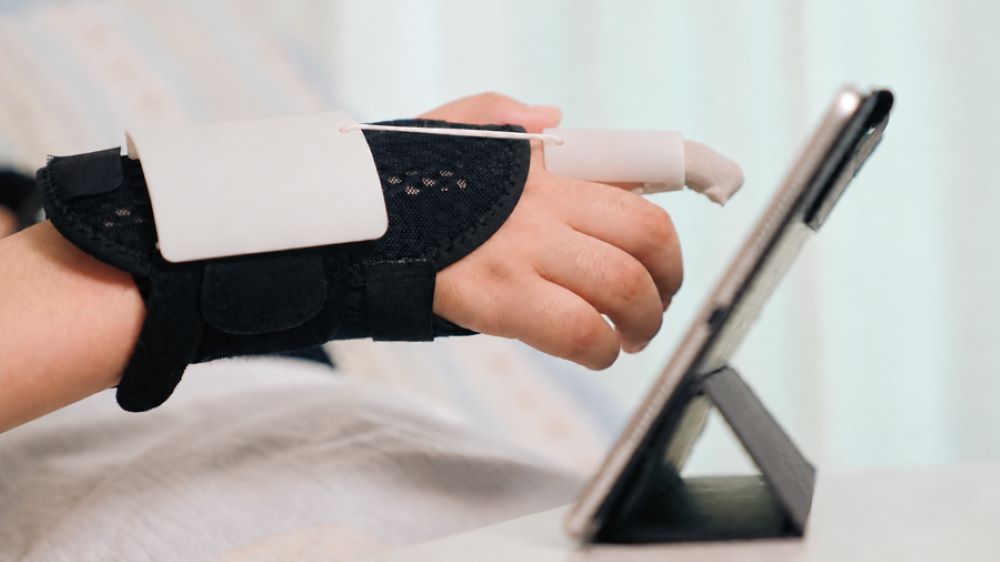
Its UniGym (格物) rehabilitation robot series has entered mass production and been exported to North America, Europe and Southeast Asia, while its XiuShen (修身) rehabilitation therapy robots have been deployed in dozens of domestic locations.
A third product line, Qijia (齐家), is expected to begin pilot operations in eldercare institutions later this year.
The company is also participating in an initiative led by China’s Ministry of Industry and Information Technology to develop and pilot intelligent eldercare service robots.
According to a 2026 report released by the ministry on smart eldercare service robotics, China’s senior care robotics market is expected to exceed 10 billion yuan this year, providing growing commercial opportunities for companies developing embodied AI systems tailored to China’s rapidly aging population.