- ByteDance’s cloud unit plans AI innovation park as part of Linping’s drive to anchor computing power.
- Semiconductor, energy materials and life science projects also included in district’s blueprint to become new growth hub.
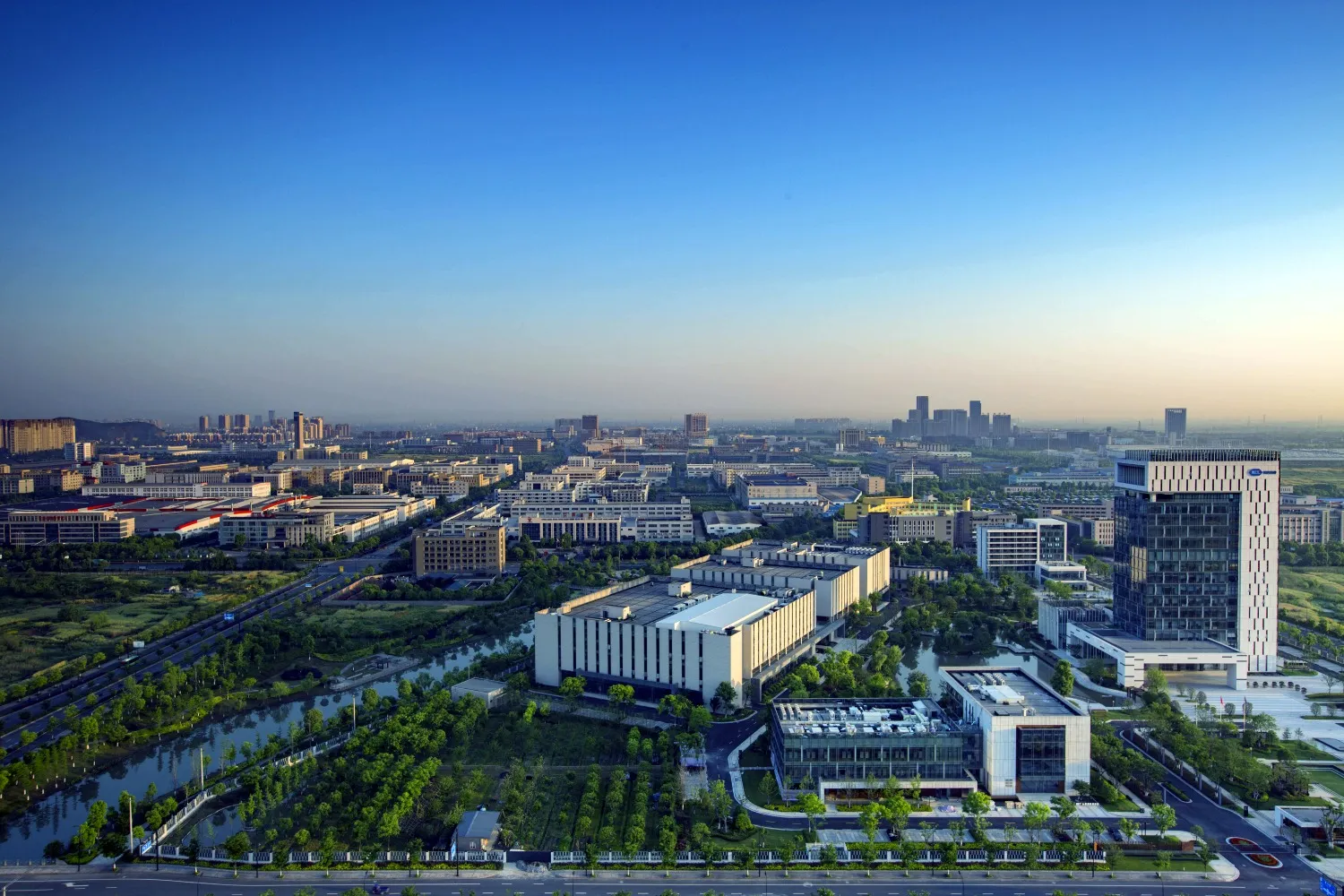
Hangzhou’s Linping District yesterday signed deals worth more than 10 billion yuan ($1.4 billion) for the first quarter of 2026, betting heavily on AI and advanced manufacturing as it joins the city’s other districts in competing to secure the next wave of industrial growth.
The agreements, covering 42 projects across sectors including high-end equipment, life sciences, new energy and advanced materials, mark one of the district’s largest single-quarter coordinated investment drives to date.
They also align with Hangzhou’s broader ambitions to build globally competitive manufacturing clusters.
AI emerged as the centerpiece of the signing ceremony. Volcano Engine, the AI and cloud unit of ByteDance, plans to develop an AI innovation industrial park, aiming to accelerate adoption of large-model applications such as Doubao in urban governance and smart manufacturing.
The project will also open shared AI capabilities to smaller firms, lowering technological barriers for companies within the industrial park.
Digital infrastructure is set to expand alongside software ambitions. A data-container project by Zhongke SecTrust, a state-backed cyber security firm, will provide computing capacity designed to support smart-city systems
Local governments across China are racing to build foundational AI infrastructure rather than rely solely on application-layer innovation.
Manufacturing upgrades form another pillar of the investment push. Zhejiang Jingsheng Mechanical & Electrical will set up a new subsidiary focused on semiconductor wafer inspection equipment capable of detecting defects at sub-micron precision, highlighting China’s continued push to localize advanced chipmaking tools amid external technology constraints.
Meanwhile, a phase-change energy storage materials project commercialized from Peking University research will construct what officials describe as the country’s first 10,000-ton production line, targeting applications ranging from electronics cooling to thermal management in new-energy systems.
Local authorities in Linping said they would streamline approvals and strengthen support for land, labor and energy supply to accelerate project implementation, positioning the district as a new growth hub in eastern Hangzhou.