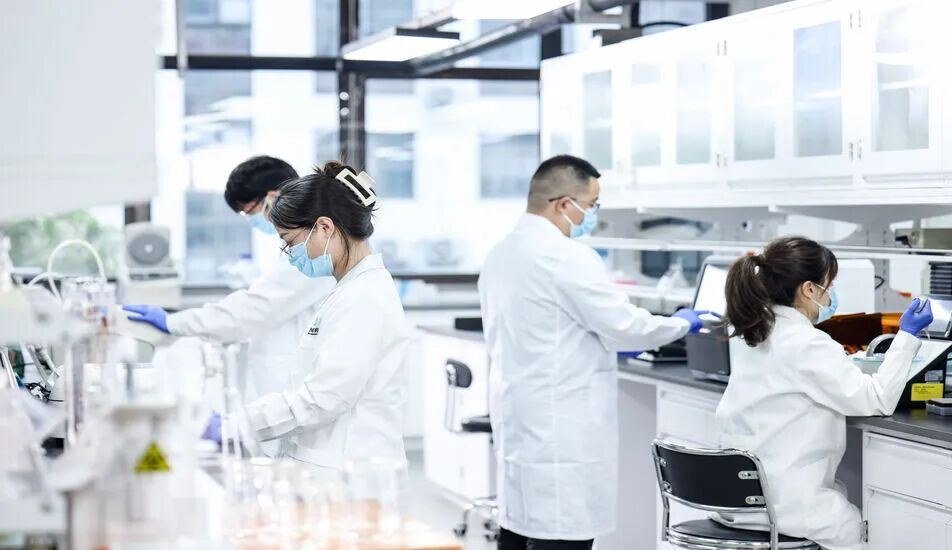
- The drug reached approval in about three and a half years, far faster than the traditional drug-development timeline
- Its developers say the milestone shows how AI and DNA-encoded libraries can speed up the search and optimization of new drug candidates
A drug developed with AI from target discovery through candidate optimization has won regulatory approval in China, marking a major milestone for the country’s emerging AI-drug discovery industry.
Isatevir hydrochloride tablets, marketed as Aipusiv, were granted conditional approval by China’s National Medical Products Administration to treat mild and moderate COVID-19 in adults.
The drug was jointly developed by Westlake University, Westlake Laboratory and Westlake Pharmaceutical (西湖制药).
The developers say it is the first domestically developed small-molecule innovative drug to reach the market with AI playing a role throughout the discovery process, from screening initial compounds to optimizing the final candidate.
The drug took about three and a half years to reach approval, far shorter than the traditional drug-development timeline, which can take a decade or more and require billions of dollars in investment.
Fishing through billions of molecules
The drug is based on DNA-encoded library, or DEL, technology, which allows researchers to screen an enormous pool of potential compounds against a target protein.
In this case, about 49 billion DNA-barcoded molecules were screened. Compounds that could bind to the target were identified and then rapidly filtered and optimized with the help of AI.
The result is a drug that does not need to be combined with ritonavir, potentially reducing drug-interaction and off-target risks. Its developers also say it has broad activity against coronaviruses.
Why it matters globally
The approval comes as AI is reshaping the economics of early-stage drug discovery.
Globally, AI is being used to cut preclinical development timelines to around a year, while more than 170 AI-originated drug candidates have entered clinical development, according to industry estimates.
Technology companies including Google and Nvidia are also moving deeper into drug discovery, while China has made AI-driven drug-discovery platforms part of its broader push to integrate AI with biotechnology.
For the pharmaceutical industry, Aipusiv offers a significant proof point: AI and DEL technology can potentially connect target discovery, molecule screening and candidate optimization into a single, much faster workflow.
If the approach can be replicated across other diseases, the biggest impact may not be one new COVID-19 drug, but a reduction in the cost and time of pharmaceutical trial and error.
Header image credit: Westlake Pharmaceuticals