- A patient in Shanghai became the first to receive Neuracle’s NEO system after it won regulatory approval earlier this year
- The milestone marks one of the first commercial deployments of invasive brain-computer interface technology
A Shanghai hospital has issued the world’s first prescription for a commercially approved invasive brain-computer interface (BCI), marking a key step in bringing the technology from the lab into clinical practice.
Chinese media reported on July 15 that the first implantation of the NEO hand motor function compensation system was completed on July 13 at Huashan Hospital, affiliated with Fudan University, in Shanghai.
NEO, the abbreviation for Neural Electronic Opportunity, represents the vision of using neuroelectronic technology to create new opportunities for functional recovery.
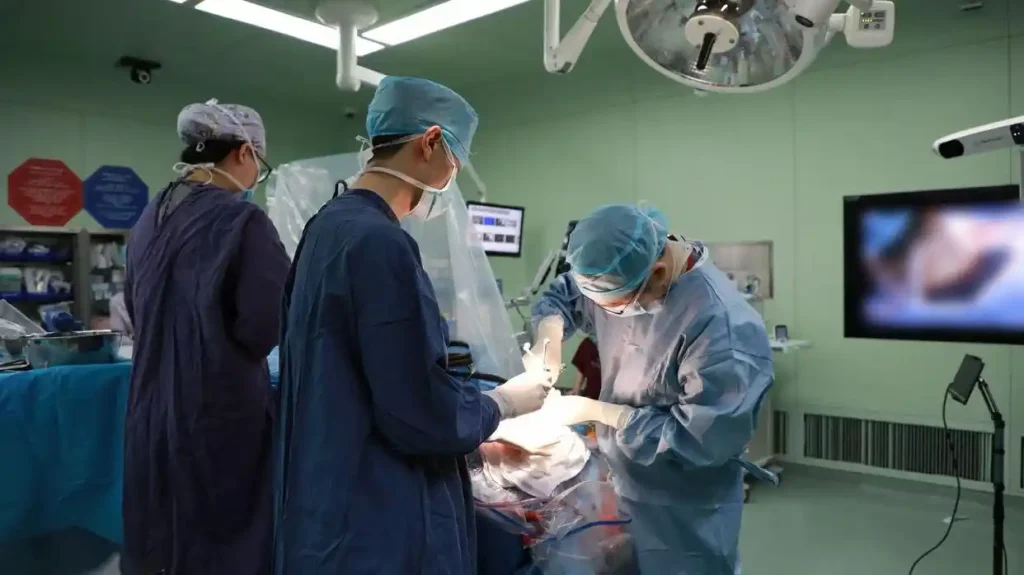
The patient, who suffered a cervical spinal cord injury in a traffic accident a decade ago and lost hand grasping ability, remained in stable condition after surgery.
Intraoperative tests showed the device collected stable, high-quality epidural brain signals.
Developed by Shanghai-based BCI startup Neuracle (博睿康), NEO became the world’s first commercially approved invasive BCI medical device after receiving Class III approval from China’s National Medical Products Administration (NMPA) in March.
Unlike Elon Musk-backed Neuralink, which implants electrodes directly into the brain, NEO adopts a semi-invasive epidural approach, placing electrodes above the dura mater without penetrating the blood-brain barrier.
The design aims to balance surgical safety with signal quality.
Meant for spinal cord injuries
The system is intended for patients aged 18 to 60 with cervical spinal cord injuries. It decodes neural signals to identify movement intentions and controls external assistive devices to help restore hand grasping.
Clinical trials showed a 100% assisted grasp response rate at both three and six months after surgery.
After six months, 68.8% of patients improved their hand function scores by more than six points, with no serious device-related adverse events reported.
Just four months after approval, the product has completed manufacturing, hospital deployment, patient screening and reimbursement rollout.

Shanghai’s Huhuibao (沪惠保) supplementary insurance program now covers up to 150,000 yuan ($22,146) for BCI surgical consumables, making NEO China’s first BCI product included in a city-level health insurance plan.
Neuracle also filed for a STAR Market IPO in June, seeking to raise 2.5 billion yuan.
Supportive policy framework
The first NEO prescription marks a turning point as invasive BCIs move from experimental research to clinical use. While Neuralink remains in human trials, NEO is already being prescribed to patients.
Shanghai has emerged as China’s leading BCI hub, hosting about one-third of the country’s BCI companies and accounting for nearly 60% of financing deals in the sector during the first half of the year.
Three locally developed invasive BCI products have entered China’s fast-track review program for innovative medical devices.
China is also building reimbursement and pricing systems for BCIs. National pricing guidelines have been released, while Shanghai, Jiangsu and Anhui have added related medical consumables to procurement systems.
The domestic BCI market is projected to exceed 5 billion yuan in 2026 and triple to 15 billion yuan by 2030, according to a 2026 joint survey released by Beijing Fourth Wave Think Tank and Zhongguancun Tiancheng Innovation Research Center.

Why it matters for global readers
China has become the first country to move an invasive BCI from regulatory approval to routine clinical use, giving Neuracle an estimated two- to three-year commercialization lead over domestic rivals.
The rollout also offers an alternative path to commercialization.
Rather than pursuing fully invasive implants, China’s first approved BCI uses a semi-invasive approach that seeks to balance safety and performance—an approach that could influence the broader evolution of the global BCI industry.