
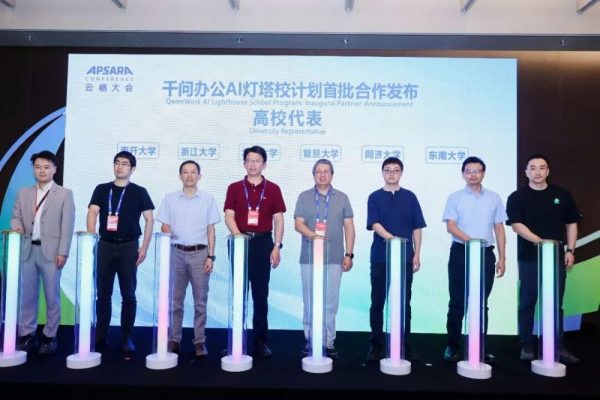
QwenWork launches AI education program with 100-plus schools
Many teachers and students are already using AI agents for lesson preparation, research and learning, but mostly on an individual basis.
Many teachers and students are already using AI agents for lesson preparation, research and learning, but mostly on an individual basis.

Qwen said the simulation data will also be used to train vision-language-action models for telescope control.

AI agents could make services that once relied on scarce experts or were too costly to deliver at scale available to a much wider population.
-600x400.jpg.webp "Alibaba’s QoderWake 1.0 creates digital employees with a prompt")
The launch reflects a shift in AI-agent development from helping individuals work faster toward assigning AI agents specific roles.
-600x400.jpg.webp "Qwen embeds financial AI agents across investment, insurance")
The model differs from many overseas AI finance products, which are generally built within individual platforms.

The pitch is straightforward: companies no longer need to buy a dedicated SaaS product or commission custom software for every workflow.

The shift reflects a broader change in China’s robotics industry: humanoids are moving from perform for audiences to doing real work.

More than 2,000 global leaders and industry experts are expected to participate in discussions throughout the event.
-600x400.jpg.webp "Alibaba opens QwenWork beta as AI office race shifts from models to platforms")
QwenWork combines three previously separate products — QoderWork, MuleRun and Wukong — into a single AI office platform.

The move comes as Geely expands its “All-Domain AI” strategy from technology integration toward deeper vehicle intelligence.