

- Shanghai-based quantum computing startup TuringQ begins IPO tutoring as China’s quantum sector enters a new financing race
- As quantum computing advances worldwide, Chinese startups are racing to prove commercial viability
China’s quantum computing industry is moving from laboratories toward public markets, with Shanghai-based TuringQ (图灵量子) becoming the latest company to pursue an IPO.
On August 5, the China Securities Regulatory Commission’s Shanghai office accepted the IPO tutoring filing by Shanghai Turing Quantum Technology Co., marking the first formal step toward an A-share listing.

The company selected Guotai Haitong Securities as its IPO advisor.
Founded in 2021, TuringQ is among China’s leading photonic quantum computing startups.
Alongside peers such as Origin Quantum (本源量子), QBosoN (本源量子) and Ciqtek (国仪量子), the company is now seeking a public market debut as China’s quantum computing industry enters a new phase of capital-market expansion.
The sector’s first listed player, QuantumCTek (国盾量子), went public on the Shanghai STAR Market in July 2020, while a new wave of quantum firms is now preparing to follow.
From academia to commercialization
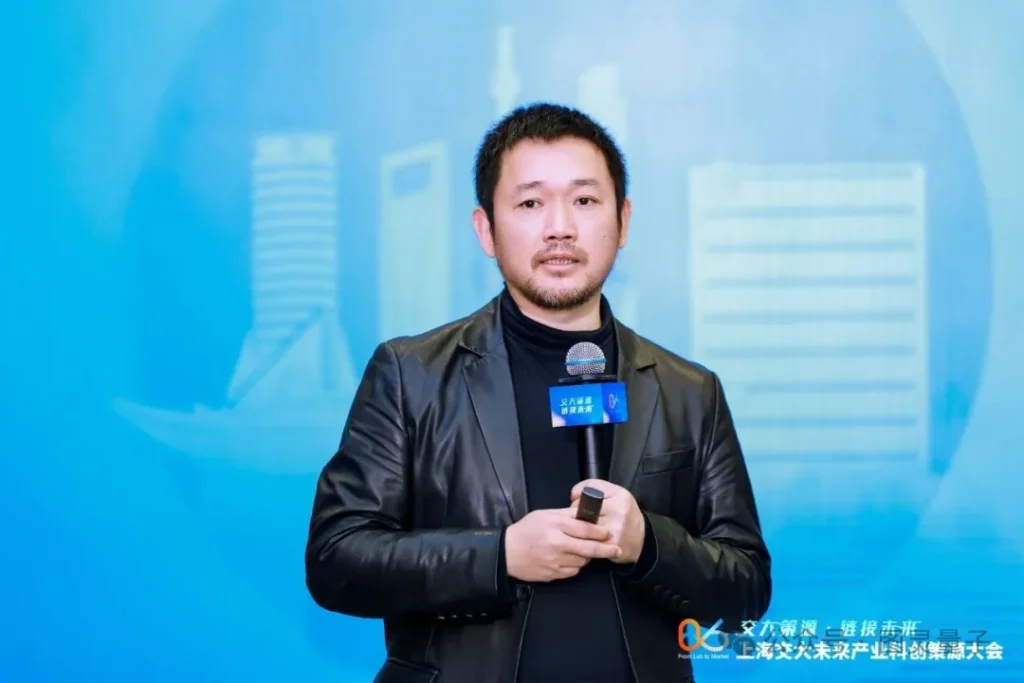
TuringQ was founded by Jin Xianmin (金贤敏), a professor at Shanghai Jiao Tong University whose research originated from the university’s Center for Integrated Quantum Information Technology.
Jin returned to China from the University of Oxford in 2014 and was among the early researchers globally to pursue the industrialization of photonic quantum computing. He is a former student of renowned Chinese quantum expert Pan Jianwei (潘建伟).
The company has completed eight funding rounds totaling more than 1 billion yuan ($150 million).
Its latest Series C financing in 2026 was jointly led by the National Venture Capital Guidance Fund’s Yangtze River Delta fund and Shanghai Pudong state-owned capital, pushing its valuation above 7 billion yuan ($1 billion).
Its TuringQ Gen2 photonic quantum computer can handle optimization problems involving more than 100,000 variables, while the company said its annual order volume exceeded 100 million yuan in 2025, with revenue growing at a compound annual rate of more than 200%.
Building a full-stack quantum ecosystem
Unlike many early quantum startups focused primarily on hardware demonstrations, TuringQ has built a broader technology stack covering photonic quantum chip design, complete machine integration and quantum algorithm development.
In June 2025, the company participated in the construction of China’s first pilot production line for photonic chips, reducing development cycles from years to months.
During the 2026 World Artificial Intelligence Conference (WAIC), TuringQ introduced QAgent, an industry-oriented quantum-classical hybrid agent platform that allows AI agents to access photonic quantum computing resources.

The platform has already been tested in areas including drug discovery, financial technology and power-grid optimization, where quantum computing is expected to provide advantages for complex computational tasks.
Ready to meet capital-market scrutiny
TuringQ’s IPO move signals that competition in China’s quantum sector is expanding beyond technology development into capital markets.
Earlier this year, fellow quantum startup Ciqtek received regulatory approval for its STAR Market IPO and completed subscription in July, while Origin Quantum and QBosoN also completed IPO tutoring registration. Ciqtek is due to go public on August 11.
According to CVSource, a market data provider, China’s quantum technology sector disclosed 47 financing deals in the first half of 2026, including 41 focused on quantum computing — already surpassing the total number of quantum computing financings in 2025.
Policy support is also accelerating. In June 2026, China Securities Regulatory Commission Chairman Wu Qing said regulators would support more deep-tech companies, including quantum technology firms, listing on the STAR Market.
The Shanghai Stock Exchange has also proposed adding quantum technology as a dedicated industry category under next-generation information technology, removing previous uncertainty over how quantum companies should be classified for IPO applications.
Why it matters globally
The global quantum computing race is entering a new phase of capital competition.
Internationally, photonic quantum computing company Xanadu listed simultaneously on Nasdaq and the Toronto Stock Exchange in March 2026, while U.S. startup PsiQuantum raised roughly $1 billion with backing from major technology investors.
China’s quantum startups are now moving into the same global capital arena.
TuringQ’s focus on photonic quantum computing represents one of the major technical paths alongside superconducting quantum systems.

Photonic approaches are attractive because they can operate at room temperature and potentially leverage existing optical communication infrastructure.
If TuringQ reaches the STAR Market ahead of its peers, China’s quantum industry would have listed companies representing both superconducting and photonic approaches — providing global investors with a rare market-based view of competing quantum technologies.
However, the industry remains in an early commercialization stage. TuringQ’s valuation has surpassed 7 billion yuan, while annual orders had just surpassed 100 million yuan in 2025.
Its long-term success will depend on whether quantum products can move beyond technical showcases and deliver measurable commercial value for customers.

