

- Maniformer pays people to collect robot-training data in real-world settings
- The platform is designed to serve multiple robot and AI companies
Chinese physical-AI company Maniformer (觅蜂科技) has launched a crowdsourcing platform that pays people to collect robot-training data in real-world environments.
This rollout comes as the robotics industry looks for ways to overcome a shortage of physical-AI training data.
Maniformer unveiled Maniformer Pai (觅蜂派) in Shanghai on September 23, calling it the world’s first crowdsourced platform for physical-AI data across multiple categories.
Users can claim or rent the company’s MEgo data-collection device through an app and complete tasks in settings including logistics, warehouses, retail stores, restaurants and homes.
Payment rates vary
For now, Maniformer has only disclosed task payments and equipment policies, rather than a full pricing structure.

Users are paid based on the duration of approved data: 0.67 yuan ($0.1) to 30 yuan for 2- to 90-minute package-loading tasks at sorting centers, and 0.67 yuan to 6.67 yuan for 2- to 20-minute parcel-clearance tasks at delivery stations.
That works out to roughly 0.33 yuan per minute, with no payment for data that fails review.
Real-world videos for training
After the data passes review, users are paid based on the amount of valid data collected.
The model has been compared with Index, a crowdsourcing platform launched by U.S. humanoid-robot maker Figure in August to collect real-world videos for robot training.
The two platforms, however, have different targets. Index is designed to support Figure’s own robot models, while Maniformer Pai plans to produce and supply data for different robot and AI companies as standardized products.
From operators to crowdsourcing
Traditional robot data collection often relies on trained operators using teleoperation systems, making large-scale collection expensive and difficult to expand.
Spun out of AgiBot as a physical data affiliate, Maniformer instead connects a network of data collectors with real-world settings such as factories, stores and homes, creating a distributed system for gathering robot-training data.
Maniformer Chairman and CEO Yao Maoqing (姚卯青) said Maniformer Pai aims to turn real-world experience from everyday life and a wide range of industries into data that robots can learn from, train on and reuse.
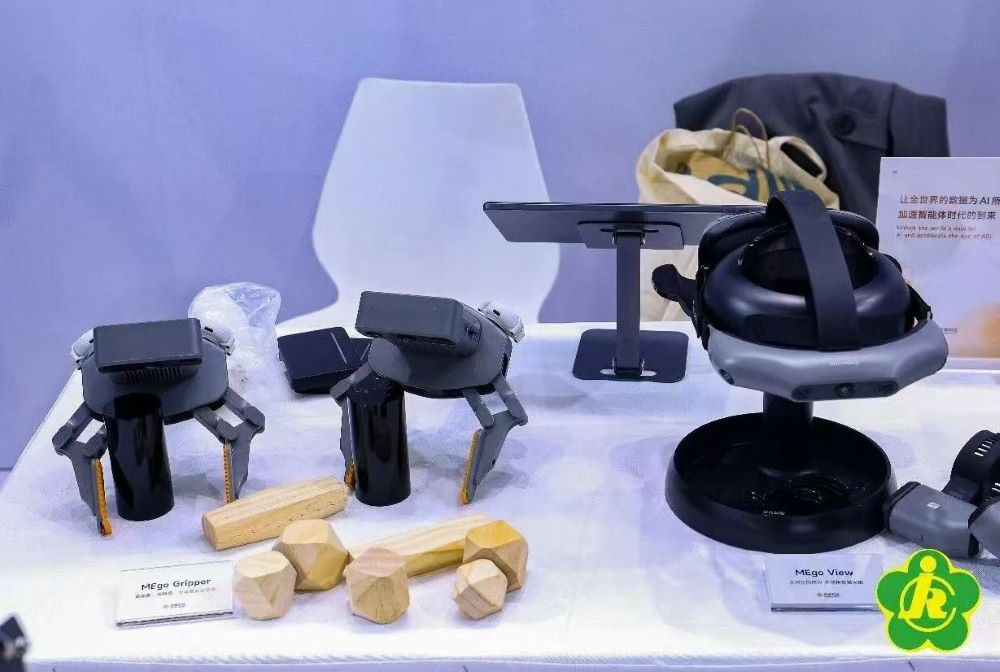
The company said that during a one-month trial, the platform registered 20,000 users and collected 13,000 task submissions.
It now covers 22 categories, more than 5,000 tasks and over 50,000 real-world environments.
Parallels to Figure’s Index
Figure’s Index has offered an early example of the potential of crowdsourced data.
Figure said its Index pretraining helped raise the zero-shot success rate of its Helix 2.5 robot from 9% to 56% in tests across 30 unfamiliar homes.
Zero-shot means a robot performs a task it has never been specifically trained to do before.
Maniformer is applying the same crowdsourcing concept to a broader range of industries, signaling a shift in physical-AI data production from centralized collection toward distributed, real-world data gathering.
Header image credit: Maniformer’s official WeChat

.jpg)