- The milestone comes just six months after Maniformer was founded, as China races to solve the data shortage holding back embodied AI
- The company says its wearable devices have already generated more than 1 million hours of data across 10,000 real-world environments
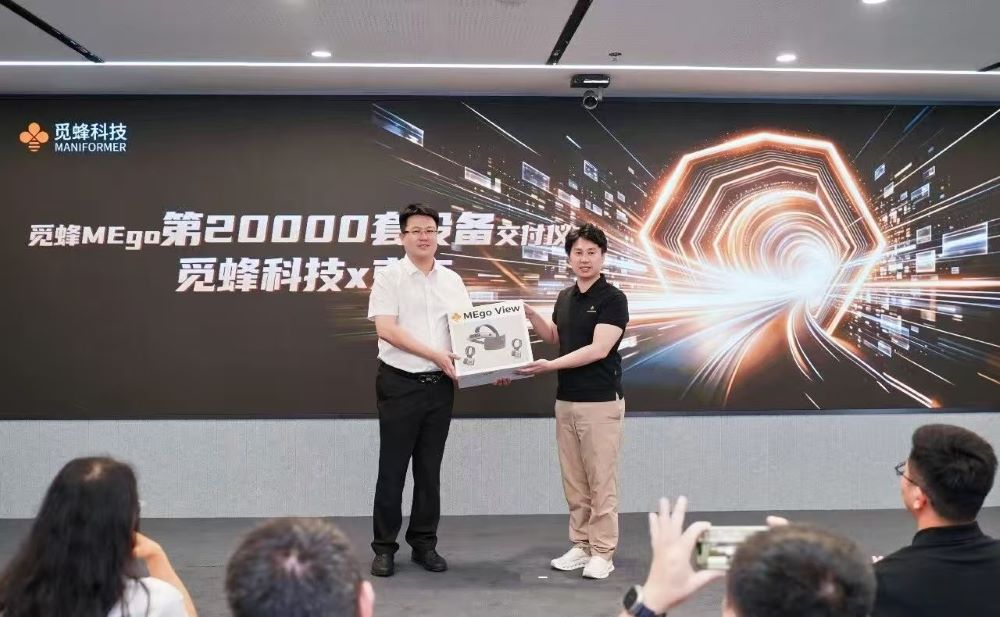
Physical AI data-service provider Maniformer (觅蜂科技) has shipped its 20,000th data-collection device to JD.com, marking what it calls the industry’s first large-scale production of robot-free data-collection hardware.
Maniformer Chairman and CEO Yao Maoqing (姚卯青) handed the device to He He (何贺), vice president of JD Technology Group, at a ceremony in Shanghai on August 31. The device will be deployed in JD’s real-world operations.
The delivery comes as JD is ramping up a large-scale physical-AI data-collection initiative launched this year to gather real-world data for training robots.
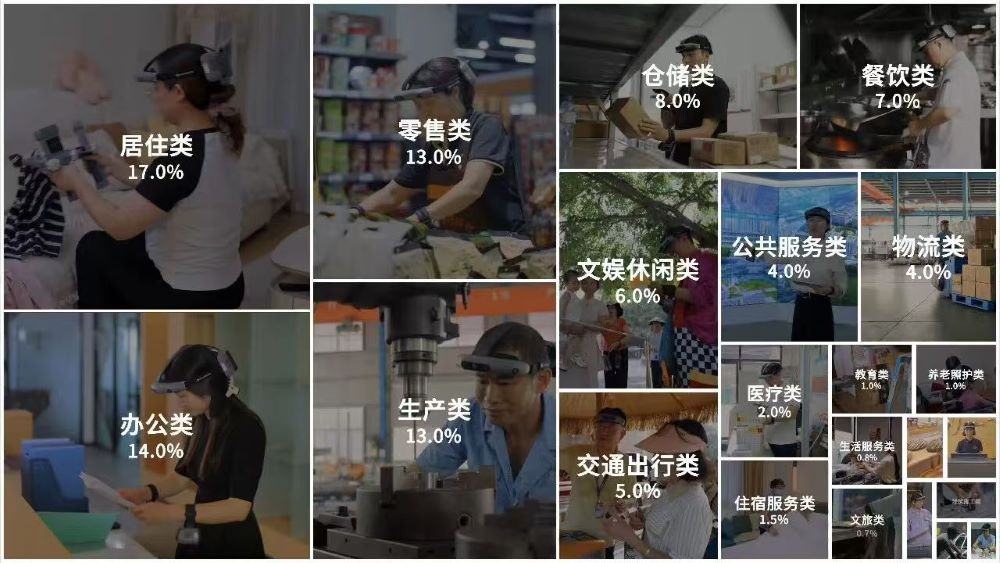
Maniformer said it has produced more than 1 million hours of high-quality robot-free data, spanning 22 categories, more than 10,000 real-world environments, 50,000 types of objects and over 500 tasks.
It claims to be the first data provider in the sector with million-hour-scale datasets available for commercial sale.
‘The arrival of IoT infrastructure’
Yao compared the milestones to the arrival of infrastructure in the IoT era, saying they mark “the first utility pole” for a data grid for physical AI, allowing training data to be produced at scale.
Founded in February 2026 as an ecosystem company of humanoid-robot maker AgiBot (智元机器人), Maniformer went from product development to 20,000 devices in six months.
About half are retained by Maniformer for crowdsourced data collection, while the rest have been sold to users in China and overseas, the startup said.
The company also announced a partnership with Tencent’s Robotics X laboratory to provide training data for its embodied AI models.
The underlying bet is that physical AI needs a radically different data-collection model.
The industry’s high-quality embodied-AI datasets currently total only about 500,000 hours, according to industry estimates, while conventional teleoperation requires expensive robot hardware and tends to produce narrow datasets.
MEgo takes a lighter approach, combining a panoramic head-mounted camera with close-up wrist cameras so workers can record their movements during ordinary tasks. Maniformer says the system can collect data at five times the efficiency of real-robot teleoperation.
Why it matters globally
The 20,000-device milestone points to a potentially important shift: training data could move from a lab-bound resource to a distributed, crowdsourced infrastructure.
As Chinese robot makers increasingly build dedicated data operations, China is also developing a large-scale ecosystem around physical-AI data collection.
For the global embodied-AI race, the competitive question is therefore expanding beyond who can build the best robot to who can generate the data needed to teach robots how to work.
Header image credit: Maniformer’s official WeChat