- The Chinese quadruped maker expects revenue to jump as much as 118% in the first nine months of 2026
- But heavier R&D spending and lower-margin deliveries are widening the financial gap with rival Unitree
DEEP Robotics (云深处科技), a leading quadrupedal robotics developer, expects its revenue to nearly double in the first nine months of 2026, but the Chinese quadruped robot maker has slipped back into losses as it ramps up R&D and expands lower-margin product deliveries.
The company, known in China as one of Hangzhou’s “Six Little Dragons,” disclosed the figures in an updated prospectus for its planned listing on Shanghai’s STAR Market on September 28.
It forecasts January-September revenue to rise 97.52% to 117.76% from a year earlier, while non-GAAP net profit attributable to shareholders is expected to turn negative.
The reversal comes just a year after DEEP Robotics returned to profitability. In 2025, the company generated 337 million yuan ($50 million) in revenue and net profit of 28.68 million yuan.
A widening gap with Unitree
DEEP Robotics and Unitree, another of Hangzhou’s “dragons,” are both major Chinese developers of quadruped robots, but their financial trajectories have increasingly diverged.
Unitree reported about 1.7 billion yuan in revenue and 278 million yuan in net profit in 2025, roughly five times and nearly 10 times DEEP Robotics’ figures, respectively.

The gap widened further in the first half of 2026. Unitree generated 1.152 billion yuan in revenue and 355 million yuan in net profit, already surpassing its full-year 2025 results. DEEP Robotics, meanwhile, reported 259 million yuan in revenue and a net loss of 8.81 million yuan.
Unitree also shipped about 7,000 quadruped robots in the first half, compared with roughly 2,900 for DEEP Robotics. Unitree has also begun mass deliveries of humanoid robots including the G1 and H1, while DEEP Robotics’ humanoid products remain in development and have yet to generate revenue.
R&D comes at a cost
DEEP Robotics’ prospectus points to three factors behind the return to losses: higher R&D spending, increased deliveries of lower-margin models and rapid expansion of its workforce.
The company spent about 126 million yuan on R&D in the first nine months, up more than 140% from 52 million yuan a year earlier.
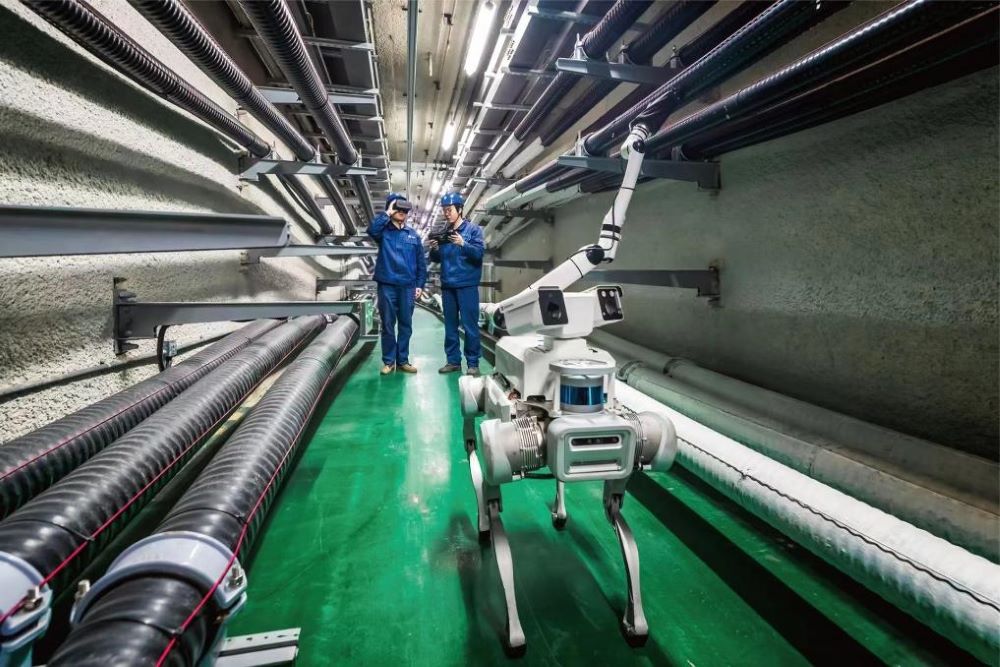
Its product mix has also shifted. DEEP Robotics’ flagship, industry-oriented X-series quadrupeds had an average selling price of 287,500 yuan in 2025, with 681 units sold accounting for 58% of annual revenue.
This year, however, the company began mass deliveries of lower-margin models aimed at a wider range of applications, trading margins for greater market penetration, according to the updated prospectus.
The strategy reflects the challenge facing the broader embodied-AI industry as companies move from project-based deployments toward standardized products.
Customization weighs on margins
DEEP Robotics ranked first globally in revenue from quadruped robots for industrial applications in 2025 and had deployed its robots in more than 1,200 scenarios, including projects for State Grid and China Southern Power Grid.
But expanding into industrial applications often requires customization and lengthy validation, making it harder to replicate the economics of standardized consumer products.
Unitree has taken a different route, using relatively low prices and an open-source ecosystem to drive volume in consumer and entertainment markets.
Higher sales can spread development costs across a larger installed base while a growing developer ecosystem creates additional demand.

Lingering questions about viability
DEEP Robotics’ heavier industrial focus could give it access to a broader range of commercial applications, but it also requires more upfront investment and customization.
For DEEP Robotics, the key question as it pursues a STAR Market listing is whether its latest losses are a temporary cost of scaling up or evidence that its business model has yet to reach sustainable profitability.
Header image credit: DEEP Robotics