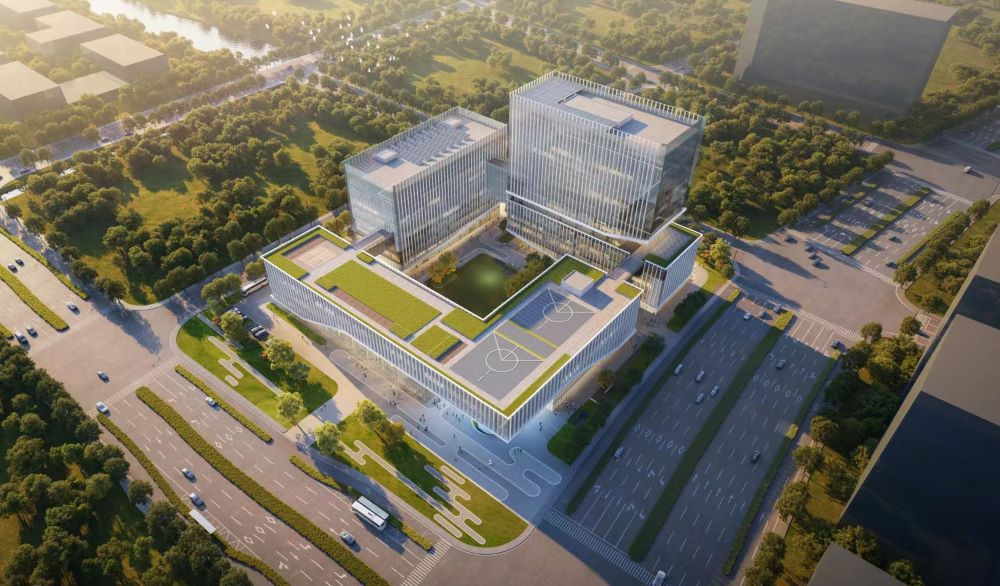
- The Hangzhou robotics maker is investing in production capacity as it prepares to scale up its embodied-AI business
- The new facility will combine R&D, testing, pilot production and large-scale manufacturing, marking a key step toward mass deployment
DEEP Robotics (云深处科技), one of Hangzhou’s best-known robotics startups alongside Unitree, is building a new 110,000-square-meter base for embodied robots, adding production capacity as China’s robotics industry moves toward large-scale commercialization.
The Hangzhou Municipal Bureau of Planning and Natural Resources on September 9 released the construction plan for the project in the city’s Xihu District.
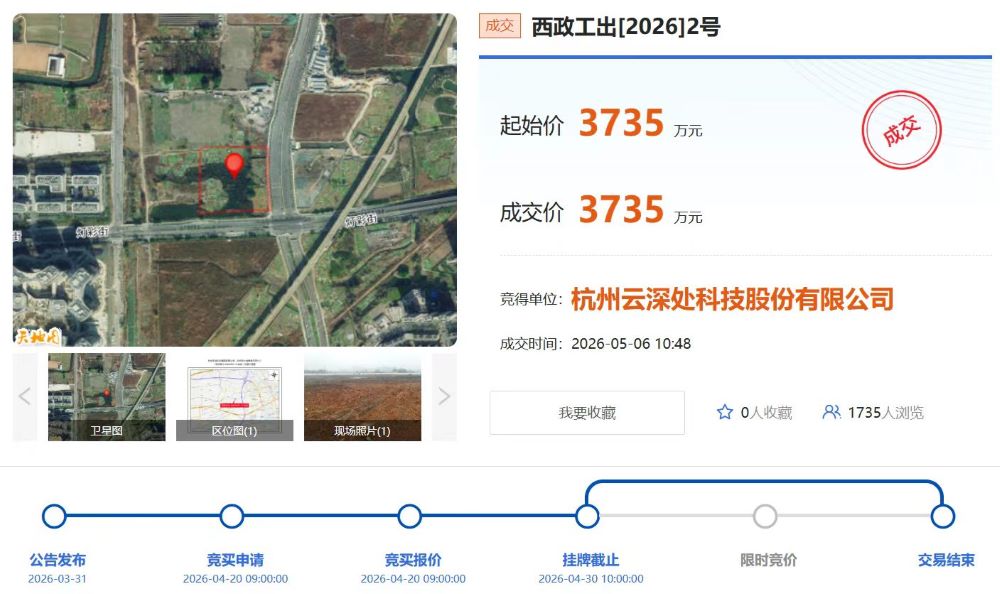
DEEP Robotics acquired the 27,422-square-meter site in May for 37.35 million yuan ($5.57 million).
The project has a total floor area of 109,704 square meters, including 75,182 square meters above ground and 34,522 square meters underground.
Located in the Wulian Industrial Park in Hangzhou’s Yungu area, the site is home to a cluster of tech companies and research institutions including Alibaba Cloud, Cainiao and Westlake University.
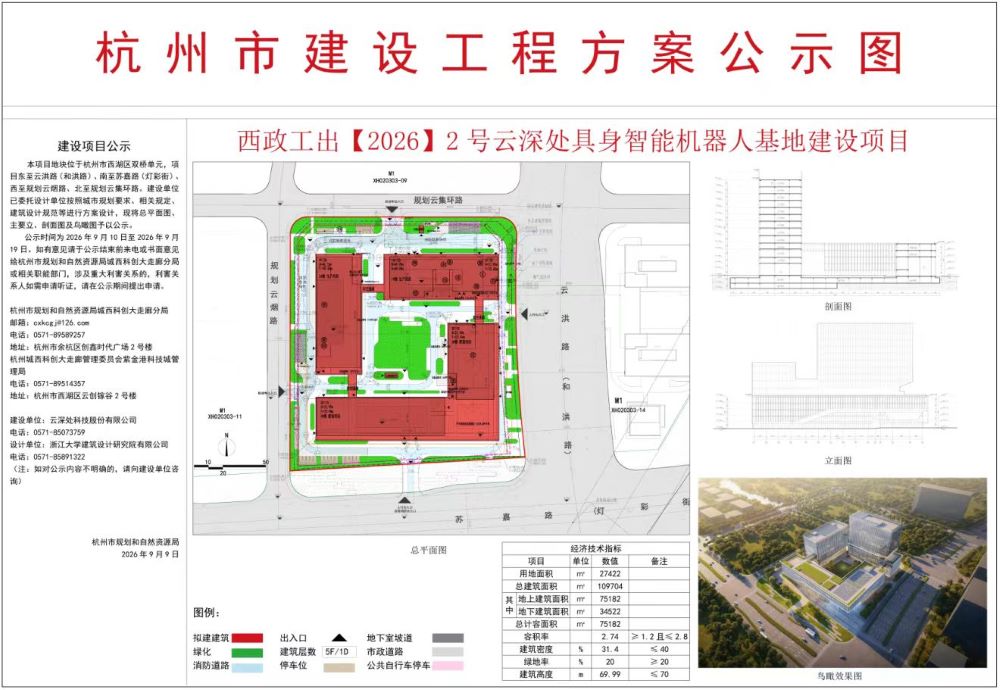
Construction on DEEP Robotics’ new facility got underway in October 2025. Designed to integrate R&D and testing, pilot-scale validation and full-scale production, the project’s completion timeline has yet to be disclosed.
A crucial move ahead of listing
The investment comes as DEEP Robotics prepares for a planned Shanghai STAR Market listing.
The company filed its IPO prospectus in May, seeking to raise 2.503 billion yuan, including 552 million yuan earmarked for the new robot manufacturing base.

Founded in 2017 by Zhejiang University associate professor Zhu Qiuguo (朱秋国) and alumnus Li Chao (李超), the startup focuses on four-legged and wheeled-legged robots.
Unlike its cross-town rival Unitree, which has primarily targeted consumer and research markets with relatively low-cost robots, DEEP Robotics has focused on business applications such as power-grid inspection and emergency response since its inception.
Its customers include State Grid and China Southern Power Grid, among others.
More than additional space
That business-to-business strategy has begun to show up in its financials. Revenue rose from 50.11 million yuan in 2023 to 337 million yuan in 2025, according to its prospectus.
The company turned profitable for the first time last year, posting a net income of 28.68 million yuan.

Frost & Sullivan data cited by the company shows DEEP Robotics ranked first globally in revenue from four-legged robots used in industrial applications in 2025 and second in total four-legged robot revenue.
For DEEP Robotics, the new facility represents more than additional factory space.
The new base will help DEEP Robotics scale up production of robots already proven in business-oriented applications.
The project is another sign that China’s embodied-AI industry is moving beyond lab demonstrations toward mass production and commercial deployment, with Hangzhou leading the charge.
Header image: A 3D rendering of DEEP Robotics’ new manufacturing base. Image credit: DEEP Robotics