- The “Yuchuang Plan” will offer early-stage funding, hardware, supply-chain and engineering support
- Unitree is opening its robotics platform and ecosystem to embodied-AI entrepreneurs worldwide
Unitree has launched a new program to support embodied-AI startups worldwide, offering early-stage investment alongside access to its robot hardware, supply chain and open-source ecosystem.
Released on September 14 and called the “Yuchuang Plan” (宇创计划), the initiative targets companies or teams with core technologies, products or industry resources aimed at commercializing embodied AI.
Recruitment focuses on industry applications and solutions, developer tools and software, data and simulation platforms, robot hardware and components, embodied-AI models, global markets and channels, and other related fields.
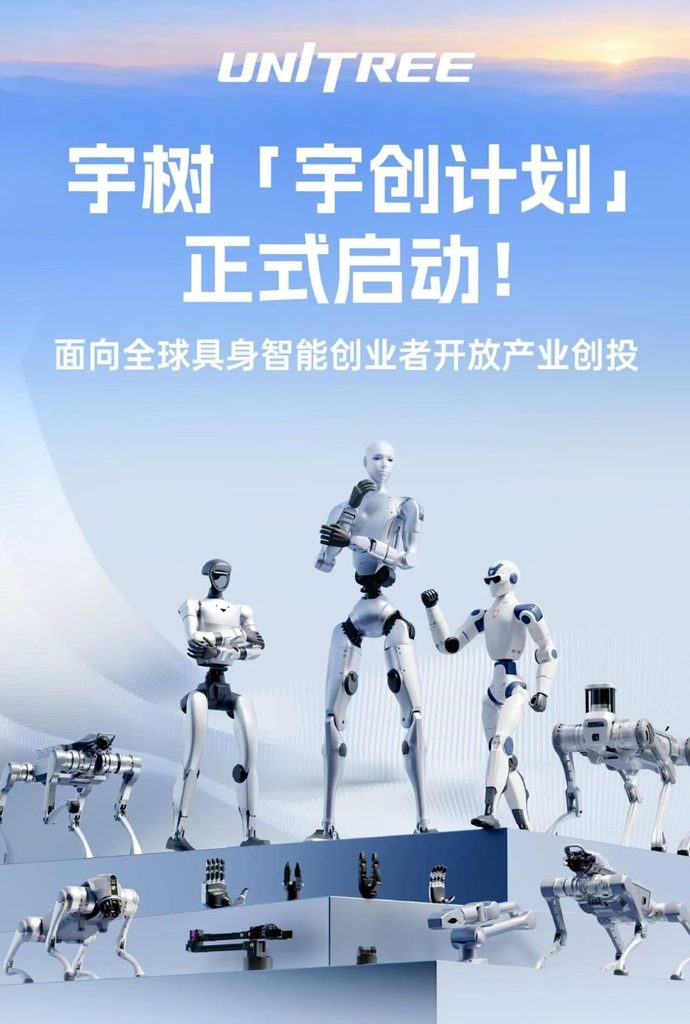
According to a poster published by one of the company’s official WeChat accounts, applicants need to submit their team background, startup direction, core technology and products, market and business progress, financing stage and plans, and potential areas of cooperation with Unitree.
Applications can be sent to ecosystem@unitree.com with the subject line “Unitree Yuchuang Plan-company name-entrepreneurial focus” by October 10, 2026. Shortlisted applicants will be invited to a final pitch event on October 22.
More than funding
Unitree is seeking startups across seven areas, including industry applications, developer tools and software, data and simulation platforms, robot hardware and components, embodied-AI models, and global markets and channels.
Support will cover four areas: early-stage investment and connections to investors; access to Unitree robots, development kits, SDKs and testing environments; engineering assistance spanning design, motion control, supply chains and mass production; and connections to real-world application scenarios, customers and global industry partners.
Applicants are asked to provide information on their team, technology and products, business progress, financing plans and potential areas of cooperation with Unitree.
From products to ecosystem
The move comes less than a month after Unitree’s August 19 listing on Shanghai’s STAR Market, which made it the first publicly traded Chinese humanoid-robot maker.
Before its IPO, Unitree had built an open-source ecosystem spanning motion control, simulation and embodied-AI models, with 47 projects on GitHub and 66 real-robot datasets on Hugging Face, according to the company.
Unitree founder Wang Xingxing has repeatedly said that limited generalization remains one of the biggest obstacles facing embodied AI and that the industry needs to work together to overcome it.
The “Yuchuang Plan” extends that philosophy beyond open-source code by opening up parts of Unitree’s industrial capabilities to outside entrepreneurs.
What it means for devs globally
For global startups, the appeal could be significant. Embodied-AI developers face high hardware costs, fragmented supply chains and limited access to real-robot data.
Unitree’s platform seeks to give overseas teams a cheaper entry point into China’s robotics manufacturing and data ecosystem.
The strategy also marks a potential shift for China’s leading robotics companies from exporting products to exporting ecosystems.
As arguably an anchor company (链主) in the domestic humanoid-robot supply chain, Unitree could use its hardware, software, capital and manufacturing network to encourage developers to build around its platform — potentially positioning it as an “Android for embodied AI.”
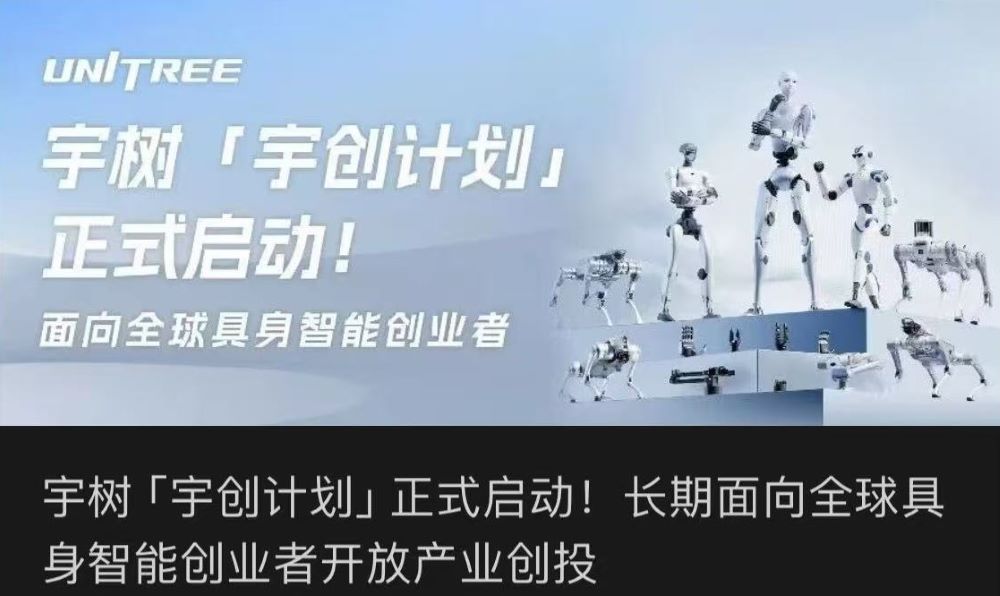
The header image is a screenshot of the post about the “Yuchuang Plan” from Unitree Ecosystem Collaboration, one of the company’s official WeChat accounts.