

- The Shanghai-based robot maker shipped more than 8,600 units in the first half, according to its latest operating data
- IDC estimates global shipments nearly tripled to 25,000 units, with Chinese manufacturers accounting for more than 95% of the market
AgiBot (智元机器人), a leading Chinese humanoid robot developer, shipped more than 8,600 humanoid robots in the first half of 2026, accounting for about 35% of the global market and more than 45% of China’s market, according to an IDC survey.
The figures come as the global humanoid robot industry moves from technology validation toward commercial deployment.
-1024x574.jpg)
IDC’s latest global humanoid robot tracking report estimated that nearly 25,000 units were shipped worldwide in the first half, up 432.1% from a year earlier, with AgiBot holding a clear lead in global shipments.
China dominates shipments
China accounted for more than 19,000 units, or about 77.9% of global shipments, while Chinese manufacturers together represented more than 95% of the market, according to IDC.

Unitree ranked second, according to IDC, with around 5,000 humanoid robots shipped in the first half.
However, an earlier Counterpoint study put Unitree at more than 7,000 units, giving it a 31% global share.
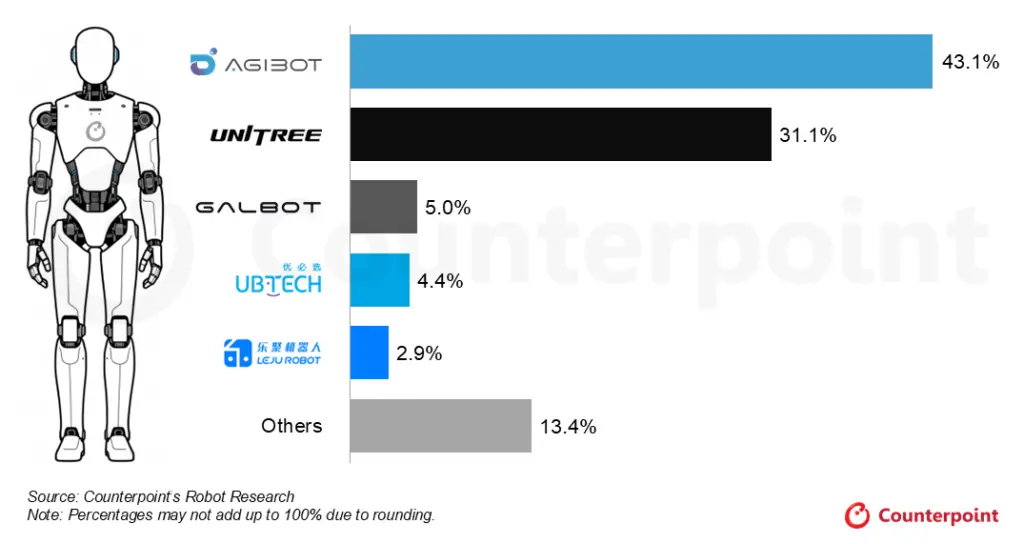
The wide discrepancy reflects differences in the two research firms’ methodologies and market definitions.
AgiBot ranked first with about 9,700 units and more than 43% of the market, according to the same Counterpoint report.
Rounding out the top five
Galbot (银河通用), UBTech (优必选) and Leju Robotics (乐聚机器人) ranked third through fifth, respectively, giving Chinese companies all five of the top spots and a combined 86% share of global shipments.

Galbot shipped more than 1,100 units in the first half, while its wheeled dual-arm Galbot S1 completed testing on a production line operated by CATL.
UBTech delivered more than 1,000 units, with management raising its 2026 shipment guidance for its Walker S series to 5,000 units from 2,000 to 3,000.
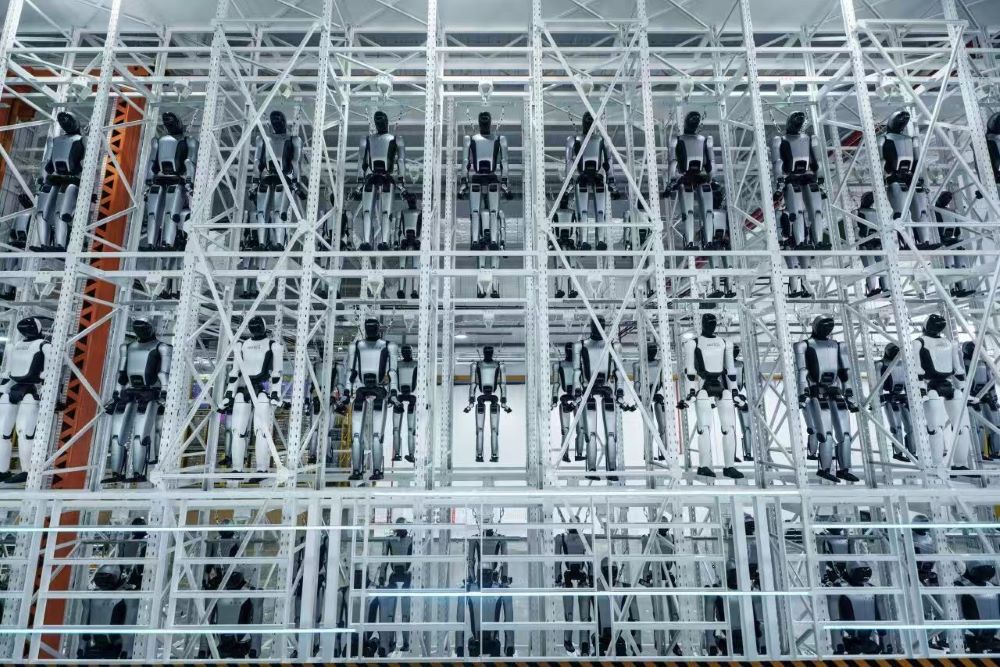
Despite inconsistencies between the IDC and Counterpoint estimates, they both point to rapid growth in the global market and the dominant position of Chinese manufacturers.
From hardware to intelligence
Nevertheless, IDC said the industry is entering a new phase in which competition is shifting from hardware capabilities to broader embodied-intelligence performance.
Advances in large models, world models, vision-language-action models and robot data loops are moving the focus toward how well robots understand physical environments, plan tasks, execute actions and learn continuously.
Counterpoint expects global humanoid robot shipments to exceed 50,000 units in 2026, up 210%, with industrial and service applications increasingly driving demand alongside entertainment and education.
Separately, IDC forecasts global shipments will exceed 750,000 units by 2030, with industrial, commercial-service and consumer markets providing multiple sources of growth.
Expanding rollout
AgiBot is already expanding across factories, tourism and retail.
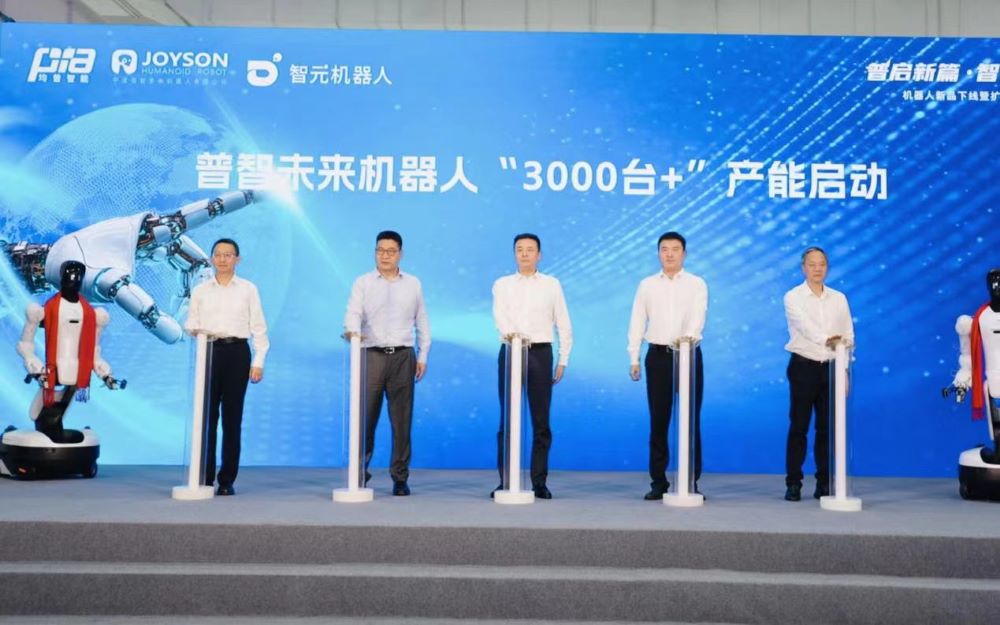
Its G2 robots have entered clustered operations on production lines operated by companies including Longcheer (龙旗科技) and Joyson Electronics (均胜电子).
Meanwhile, its A3 Ultra robots are deployed at the Chimelong Spaceship theme park in Zhuhai’s Hengqin, where more than 300 units operate across seven scenarios including entertainment, education and visitor services.
The company plans to expand the park deployment to 1,000 robots by the end of the year, putting the focus increasingly on whether shipment growth can translate into sustained commercial use.
Header image credit: AgiBot

