- The three-day pilot put AgiBot’s Lingxi X2 robots in 100 ASD stores as AI sales assistants
- The robots handled product introductions and customer inquiries, while human staff focused on pricing and closing deals
One hundred humanoid robots from AgiBot (智元机器人) helped sell cookware at 100 of cookware maker ASD’s stores across China over three days, generating about 2.23 million yuan ($332,607) in sales and lifting average store sales by 39%, according to the companies.
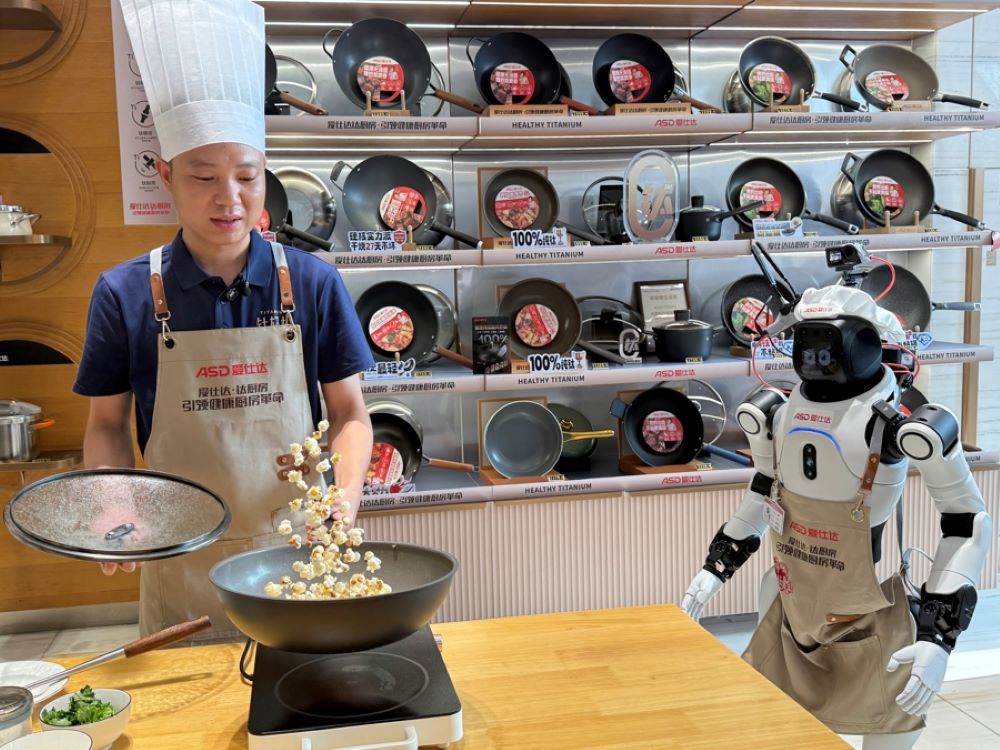
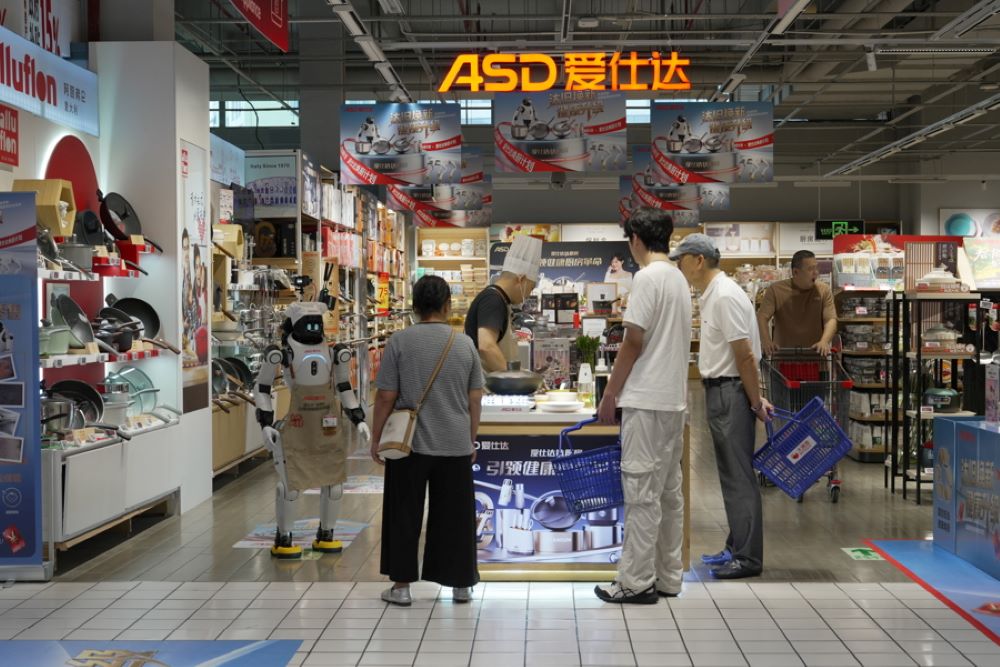
Starting September 28, AgiBot’s Lingxi X2 humanoid robots worked for about 10 hours a day as sales assistants at ASD’s outlets, handling customer greetings, product introductions, recommendations and in-store navigation.
At an ASD counter in a Shanghai supermarket, a 1.3-meter-tall robot wearing a chef’s hat and apron asked customers about household size, cooking habits and stove type before recommending products.
When customers asked about discounts, the robot handed them over to human sales staff rather than attempting to complete the transaction itself.
The robots also joined livestreamed cooking demonstrations, answering questions about cookware while interacting with chefs.
A real-world test for humanoids
For AgiBot, the pilot was less about selling cookware than testing whether humanoid robots can operate reliably in unpredictable retail environments.
“Laboratory and factory environments are controlled, with relatively fixed tasks. Retail stores are different because the environment, products and customers are constantly changing,” said Lyu Suhe (吕苏荷), vice president of the Lingxi product line at AgiBot.
The two companies had been preparing the deployment since March, refining the robots’ dialogue and movement logic and adapting them to individual store environments.
AgiBot said Lingxi X2 combines movement, interaction and task-related capabilities, allowing it to navigate around customers, initiate conversations without a wake word and identify products.
Robots draw customers, humans close deals
The pilot also points to a division of labor between robots and human sales staff rather than a direct replacement of retail workers.
The robots handled repetitive and standardized tasks such as product introductions and demonstrations, while human staff took over when customers needed detailed explanations of promotions, price negotiations or final purchasing decisions.
Real competition
ASD’s domestic online cookware revenue rose 40.93% year on year in the first half of 2026, while offline revenue grew 6.96%, giving the robot pilot an established retail network in which to test whether AI-assisted sales can generate additional value.
“Humanoid robots have long moved beyond competing on walking and movement,” said Chen Helin (陈合林), chairman of ASD. “The real competition now is who can first work reliably in real-world settings and create actual value.”
For AgiBot, the more important question may be whether the results can be reproduced beyond a three-day trial — and whether humanoid robots can turn customer attention into repeatable sales performance.
Header image credit: AgiBot