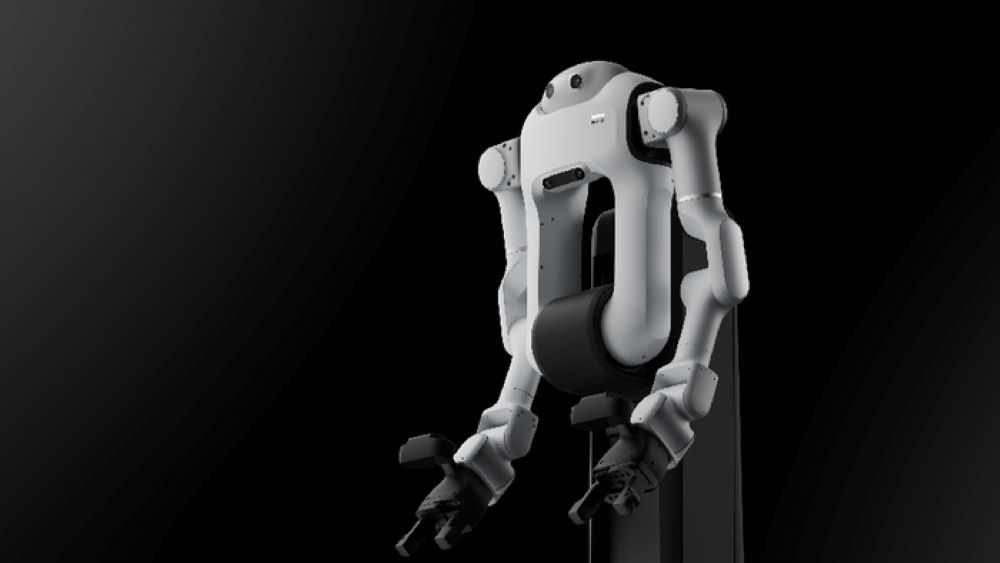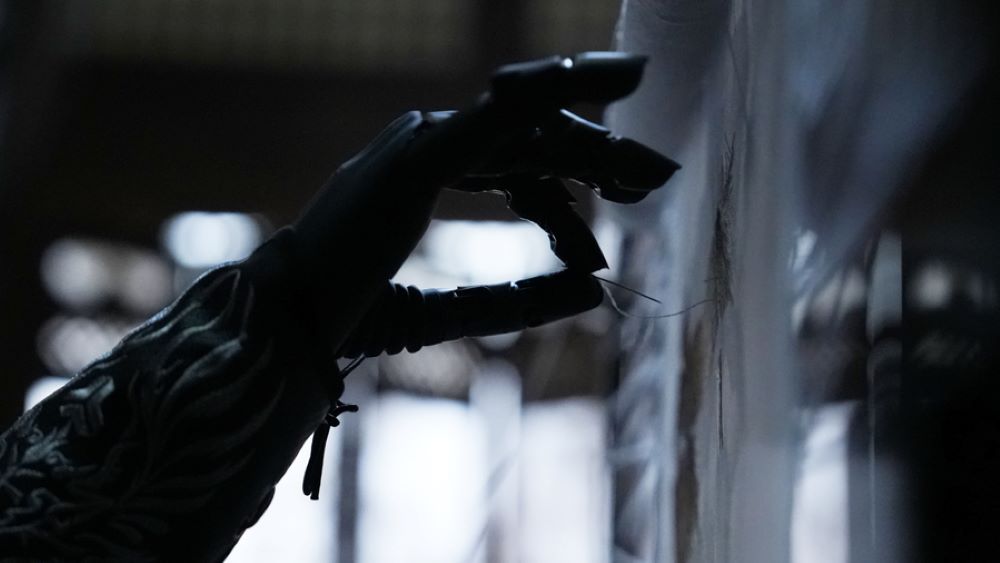
- Agilink’s latest dexterous hand performed threading, twisting and splitting silk under the guidance of a Suzhou embroidery master
- The company is using delicate traditional craft to demonstrate progress in fine-grained robotic manipulation
A Chinese robotics company is testing whether a robot hand can master one of the country’s most delicate traditional crafts, using Suzhou embroidery to demonstrate advances in precision manipulation.
Agilink (临界点), a Shanghai-based developer of robotic dexterous hands, recently released a video showing its latest flagship OmniHand 3 Ultra performing basic Suzhou embroidery techniques under the guidance of Fu Xianghong (府向红), a representative inheritor of the craft.
The hand completed a series of tasks including twisting silk thread, splitting silk into finer strands, threading a needle and cutting thread.
Precise force control
The company, spun off from AgiBot (智元机器人), described the demonstration as a test of its ability to handle soft, lightweight materials that require precise force control.
Suzhou embroidery, one of China’s four major embroidery traditions, is known for its fine stitching and intricate designs.
Splitting silk is particularly demanding: a single silk thread can be divided into strands as fine as a human hair, while the amount of force applied during twisting and splitting must be carefully controlled to prevent the thread from fraying or breaking.
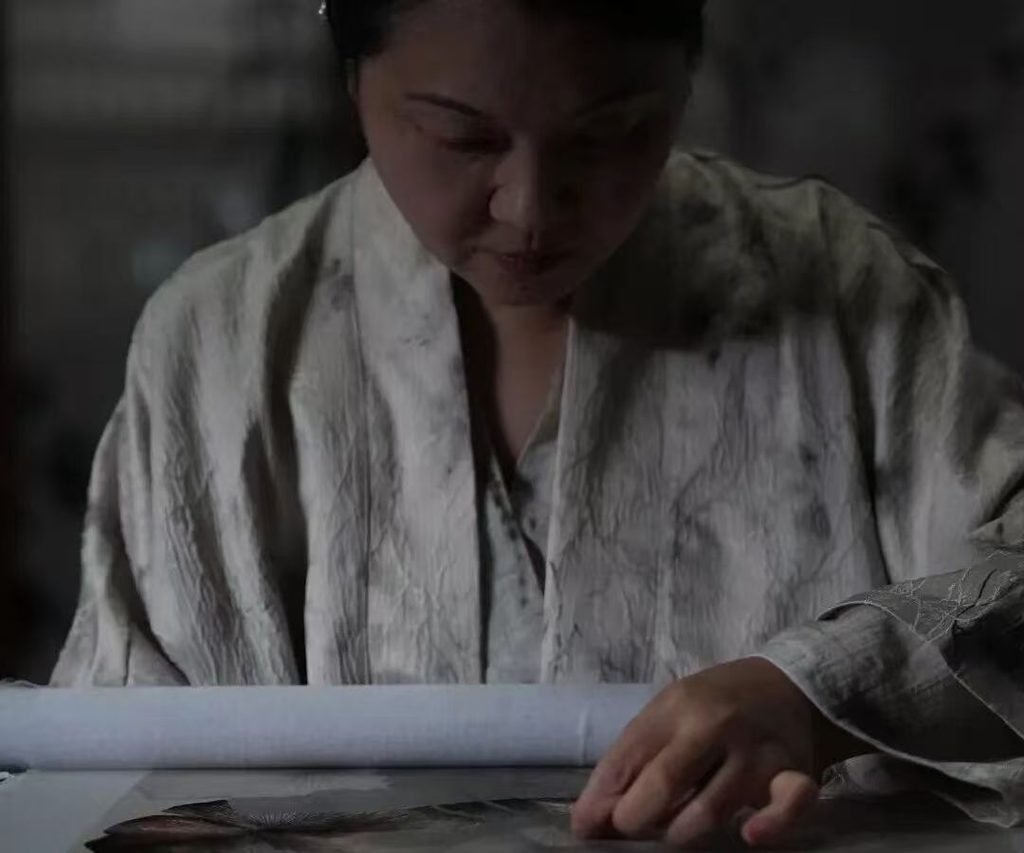
In the demonstration, Fu first taught the robot hand to twist and align the silk before splitting it into finer strands. The hand then picked up a needle, threaded it and completed other basic steps.
The most difficult tasks involved twisting and splitting the silk, according to Agilink. Because the thread is extremely light and flexible, the hand needs to coordinate its thumb and index finger while continuously adjusting the force applied to the material.
Beyond simple gripping
The OmniHand 3 Ultra uses a fully direct-drive architecture and integrates visual-tactile sensing at the fingertips, according to the company.
The sensors provide real-time information on contact force and position, while reinforcement learning is used to adjust movement based on what the hand senses.
That combination is important because fine manipulation requires more than simply moving fingers along a predefined trajectory. The robot must continuously respond to changes in the material and its contact with the fingers.
Most industrial applications for dexterous hands today remain focused on relatively basic tasks such as gripping and handling.
More demanding applications, including precision assembly, medical-device handling and flexible-material sorting, require robots to manipulate objects through sequences of coordinated movements.
From grasping to manipulation
Agilink was established as a spin-off of AgiBot‘s dexterous-hand business. The company says its production OmniHand model won seven gold, four silver and three bronze medals across eight events at the second World Humanoid Robot Games.
As of September 2026, more than 15,000 OmniHand dexterous hands, excluding gripper products, had been delivered, according to the company, for applications in industrial, logistics and service settings.
The Suzhou embroidery demonstration does not by itself establish that the hand is ready for commercial deployment in such delicate tasks.
But it highlights a broader challenge for dexterous robotics: moving from the ability to grasp an object to the ability to manipulate it through complex, continuously adjusted motions.
Header image courtesy of Agilink