- The Alibaba chairman says AI will fade from the spotlight as it becomes embedded across businesses and society
- He sees China’s manufacturing base and hardware supply chains as an advantage in the next phase of AI development
Alibaba Group Chairman Joe Tsai said AI will become so deeply embedded in businesses that people may stop talking about AI as a distinct technology within five years.
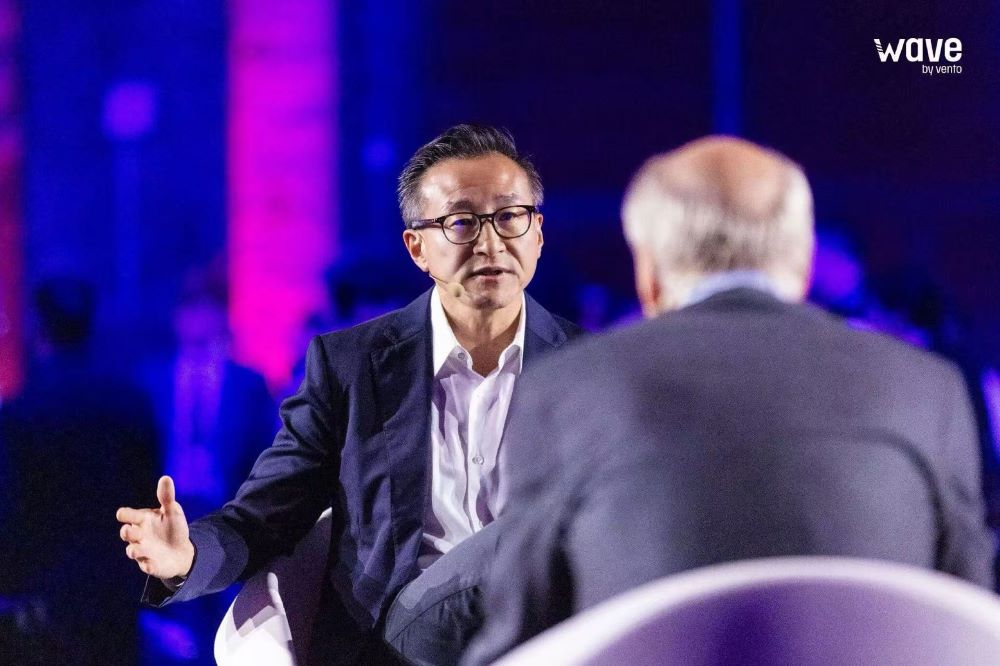
“Five years from now, we won’t be talking about AI per se, but AI will have been infused in every aspect of our business,” Tsai said on October 7 at Wave by Vento 2026, an international technology and investment event in Turin, Italy.
Tsai compared the shift to the rise of the internet, which has become the infrastructure underlying most businesses rather than a standalone technology.
Alibaba’s ‘AD’ era
Tsai divided Alibaba’s history into two periods, using 2023 as the dividing line.
He described the period from Alibaba’s founding in 1999 through 2023 as its “BC” era. Since 2023, the company has entered what he called its “AD” era, with e-commerce and full-stack AI as its two core businesses.
AI has opened a new era of development, and it has only just begun, Tsai said.
He described Alibaba’s AI strategy across three layers: computing power, models and applications.

Alibaba Cloud provides the computing infrastructure, building on 17 years of investment in cloud computing.
At the model layer, Alibaba is developing its own large language models and other AI systems. At the application layer, the company is integrating AI into products and services for consumers and businesses.
AI’s next frontier
Tsai said AI has already become effective at helping people “save time,” but has made less progress in helping people decide how to “spend time.”
He estimated the total potential market for improving the productivity of knowledge workers at about $50 trillion, calling it one of the most certain application areas for AI.
Tsai also pointed to China’s manufacturing base as a potential advantage in the next phase of AI development.
China accounts for about 30% of global industrial output, he said, giving its factories access to large amounts of valuable manufacturing-process data that could be used to train AI models.
China also has complete hardware supply chains in areas including electric vehicles and robotics. As AI moves closer to the physical world, Tsai said, that industrial base could become a significant competitive advantage.
Alibaba backs open source
Tsai also outlined what he sees as a Chinese approach to AI development, emphasizing open source.
“Just as a top university opens itself to the world and provides scholarships to students, AI should also open up its advances so that more people can benefit,” he said.
For Alibaba, the strategy reflects a broader effort to build an AI ecosystem that extends beyond its own products and services, even as the company continues to invest heavily in computing infrastructure, models and applications.
Tsai’s prediction also points to a shift in how AI may be measured: not by how often people talk about the technology, but by how deeply it becomes embedded in the ordinary operations of companies and the wider economy.
Header image credit: Wave by Vento