
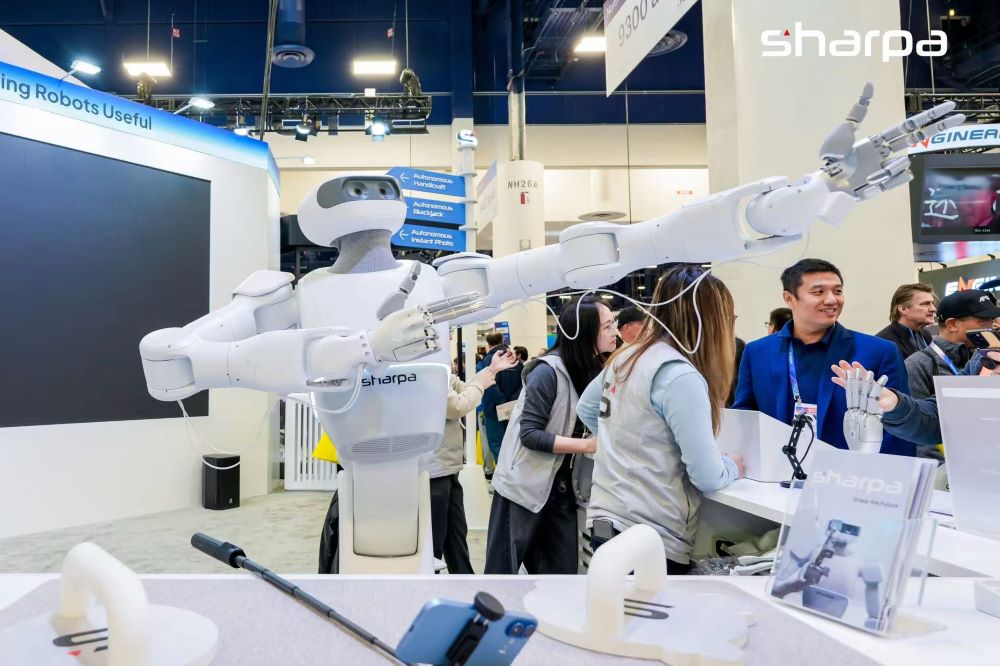
- The robotics startup plans to expand into three commercial sectors, with deployment timing yet to be disclosed
- Co-founder Xiang Shaoqing says robots must work in existing environments and operate continuously to scale beyond pilot projects
Sharpa, a Shanghai-based humanoid robot developer, plans to deploy 30,000 robots across restaurants, retail stores and hotels, a top executive has said.
Co-founder Xiang Shaoqing (向少卿) unveiled the company’s commercialization strategy for the first time on October 12 at a roundtable during the 26th China International Industry Fair in Shanghai.
Xiang identified two capabilities as prerequisites for large-scale deployment: robots must work in human environments without requiring modifications, and they must be able to operate continuously.

“Modifying an environment to accommodate robots is inherently at odds with generalization,” he said, arguing that robots should adapt to real-world settings rather than forcing businesses to redesign them.
In August, Sharpa partnered with ice cream chain Dairy Queen to deploy a robot at a Shanghai store on Wujiang Road that remained open to customers. The trial tested whether the robot could adapt to a working environment without any modifications.
Building for continuous operation
The second requirement is sustained, uninterrupted operation. Xiang said the capability sounds simple but is difficult to achieve.
It is also essential for continuously collecting data, improving AI models and enabling robots to evolve through experience.
Sharpa does not expect robots to handle every task from day one in a new setting. Instead, Xiang said he wants to equip business owners, even those without AI expertise, with tools to collect a small amount of data and train robots to perform specific jobs in their workplaces.
He outlined three layers of training data: human-operation data, simulation data and data collected by physical robots.
The layers build on one another, with human demonstrations providing an initial foundation, simulation expanding the range of scenarios, and real-world robot data closing the feedback loop.
A track record grounded in Lidar
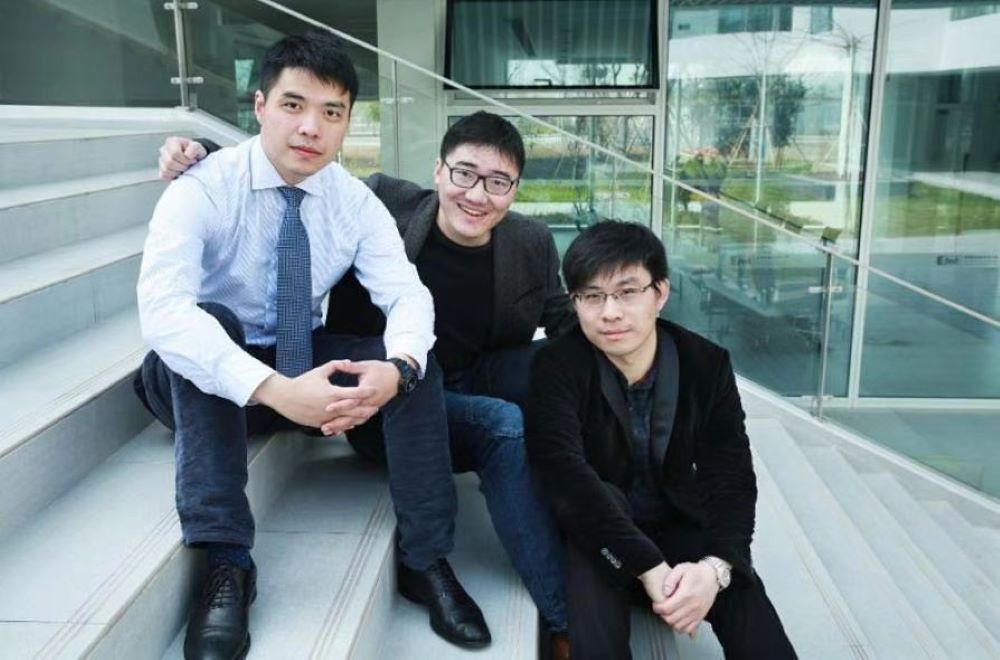
Founded in late 2024 by the world’s leading Lidar maker Hesai (禾赛科技) co-founders Li Yifan (李一帆), Xiang Shaoqing (向少卿) and Sun Kai (孙恺), Sharpa develops general-purpose robots and core components.
Its products include tactile dexterous hands, complete robots, data-collection equipment and AI models for dexterous manipulation.
In August 2026, Sharpa announced that it had raised more than 4.5 billion yuan, valuing the company at about 22 billion yuan after the investment.
Header image credit: Sharpa

.jpg)