- Chinese deep-tech startups spanning fusion, biotech, physical AI and space computing continued to attract major funding
- The latest rounds will fuel fusion reactors, cell therapies, autonomous logistics, satellite computing and humanoid robots
Fusion startup NovaFusionX raises $178 million in pre-Series A funding
Shanghai-based fusion energy startup NovaFusionX (诺瓦聚变) has completed a 1.2 billion yuan ($178 million) pre-Series A series financing, comprising its Pre-A and Pre-A+ rounds.
The company said it has now completed three financing rounds within 16 months of its founding: a 500 million yuan angel round, a 700 million yuan angel+ round and the latest 1.2 billion yuan pre-Series A round.
Its cumulative funding has reached 2.4 billion yuan, with a post-money valuation exceeding 10 billion yuan, making it a unicorn already.
The latest round was backed by existing investors including Meituan DragonBall Capital and GL Venture, while Lenovo Capital and Guozhong Capital joined as new strategic investors.
The proceeds will be used to build new experimental devices, advance key technologies and prepare for an industrialization base.
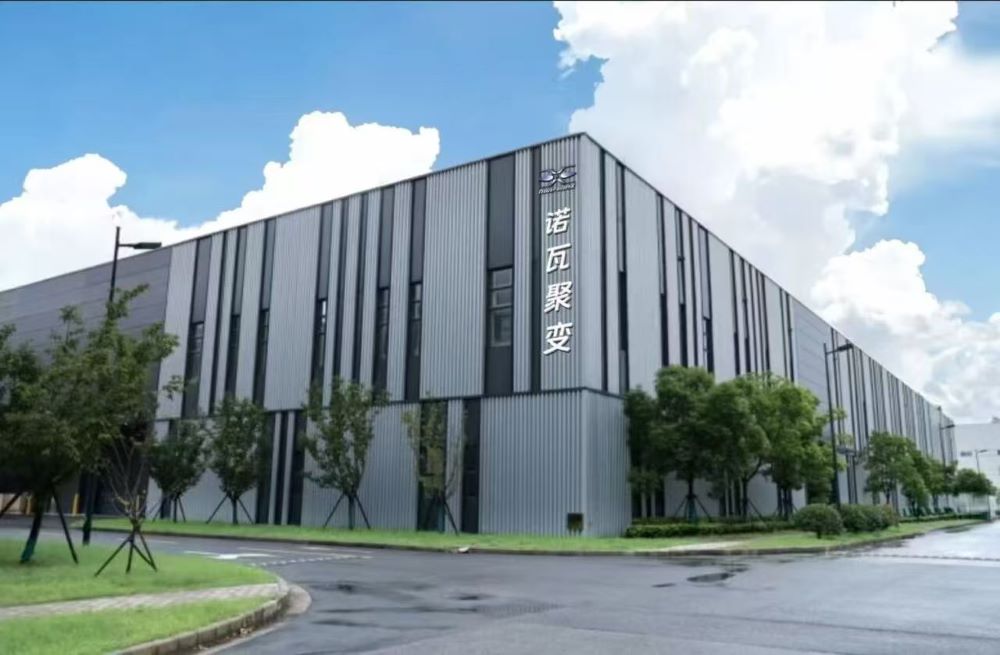
NovaFusionX is developing field-reversed configuration small modular fusion reactors, or FRC-SMRs, with a target output of 50 megawatts per reactor. The company is targeting high-density, continuous and low-carbon power demand, including AI data centers.
Its core device, Nova-1, has completed engineering design and development of key components and has entered the full assembly and integration stage.
The company is aiming for first plasma by the end of 2026 and says it hopes to become the first private Chinese fusion company to achieve a fusion temperature of 100 million degrees Celsius.
Biotech firm Simnova raises nearly $60 million in Series B round
Shanghai-based biotech company Simnova (先博生物) has raised nearly 400 million yuan ($60 million) in a Series B financing round led jointly by Fortera Capital, Cenova Capital and Pudong Venture Capital.
State-backed fund Zhangke Herun and Oriza Holdings also participated, while existing investor Youshan Capital followed on.
The proceeds will primarily accelerate confirmatory clinical studies for SNC103 and advance SNC116 into registration-stage clinical development. Simnova plans to launch a pivotal registration trial for SNC103 in 2027.
Founded in 2019 as the cell therapy business unit of Simcere Pharmaceutical, the company began operating independently in 2021.
It focuses on three technology platforms: off-the-shelf CAR-NK therapies, in vivo CAR-T therapies and multi-target CAR-T therapies for solid tumors.
Its lead candidate, SNC103, is an off-the-shelf CAR-NK therapy targeting moderate-to-severe systemic lupus erythematosus and has produced positive results in a Phase I clinical trial.
Its in vivo CAR-T platform, represented by SNC116, is designed to potentially generate CAR-T cells directly inside the patient’s body after a single administration.
Yaoxing Mobility bags shy of $36 million to power driverless logistics
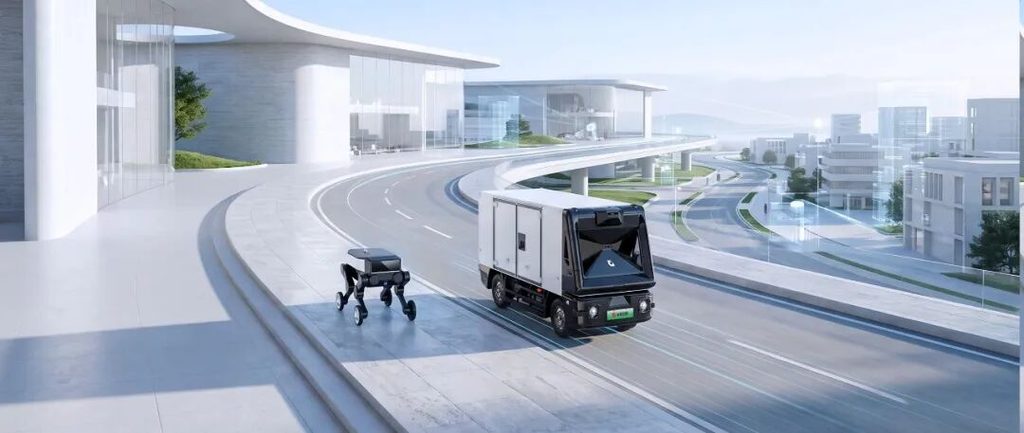
Hangzhou-based Yaoxing Mobility (曜行动力), a physical AI startup backed by autonomous-driving technology provider Minieye (佑驾创新), has completed a nearly 240 million yuan ($35.68) angel round.
Investors include Dongfeng Asset Management, CICC-Porsche Fund, Vision Plus Capital and Horizon Robotics. Following the financing, Minieye retains a 60.34% stake in Yaoxing Mobility, which is valued at approximately 1.74 billion yuan.
The financing will support physical AI tech development, upgrades to the company’s mobile robot portfolio, and mass production and commercial deployment of autonomous logistics vehicles in China and overseas markets.
Yaoxing Mobility has developed Combo, an end-to-end autonomous logistics solution that combines driverless vehicles and robots to cover the full logistics chain from campus collection and indoor transportation to last-mile delivery.
Its parent company Minieye generated 450 million yuan in revenue in the first half of 2026. Revenue from autonomous vehicle operation services reached 53 million yuan, up 423.4% from a year earlier.
Space computing pioneer Zhongke Miwei nets nearly $15 million in Series A
Hefei-based space computing and satellite intelligence company Zhongke Miwei (中科密位) has completed its Series A1 and A2 financing rounds, raising more than 100 million yuan ($14.87 million) in total.
Investors include Broad Vision Funds, Matrix Partners China, GL Venture, AstronStone, China-Singapore Suzhou Industrial Park Development Group and Baidu.venture.
The funding will support further development of in-orbit intelligent computing technologies and business expansion.
Incubated by the University of Science and Technology of China and the Shanghai Center for Processor Technologies, Zhongke Miwei’s core team has spent nearly a decade working on intelligent computing architectures and space engineering.
The company positions itself as a provider of space intelligent computing and satellite intelligence solutions.
Its products include the domestically developed heterogeneous computing system Hongshuang (洪塃) and the service-oriented operating system Xuánhuáng OS (玹黃OS), which together form a “satellite-island” collaborative computing architecture.
Zhongke Miwei says it is the only Chinese company capable of delivering fully domestically developed space computing products across low, medium and high orbits.
Its products have supported four satellites operating reliably in orbit for nearly five years, while systems under development are planned for more than 25 satellites.
Applications span commercial spaceflight, major national projects, human spaceflight and deep-space exploration.
Robotics startup UniX AI receives strategic investment from Keli Sensing
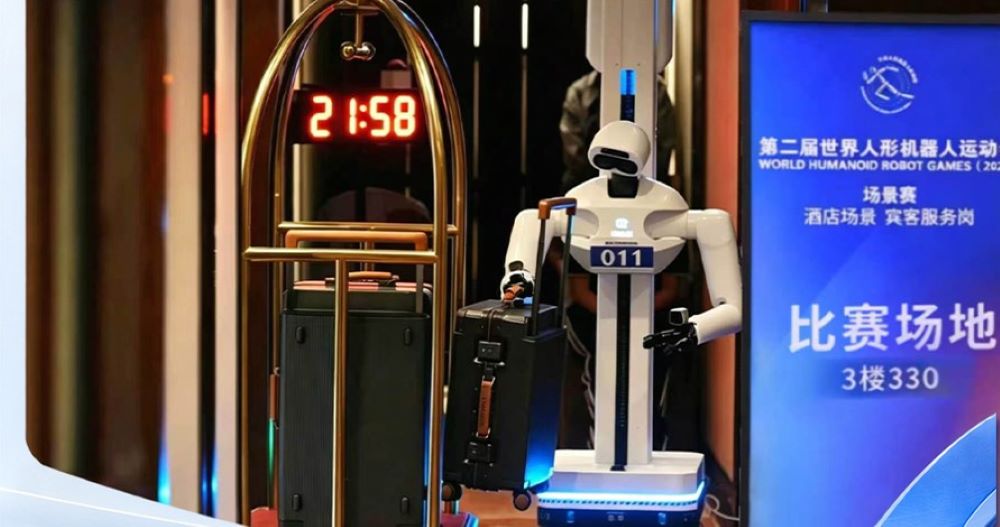
Shanghai-based full-stack embodied AI company UniX AI (优理奇机器人) has received a strategic investment worth tens of millions of yuan from Keli Sensing (柯力传感).
Keli Sensing, a leading Chinese supplier of force sensors and intelligent instrumentation, will work with UniX AI on technology and supply-chain integration, with a focus on six-axis force/torque sensing, supply-chain collaboration and joint development of application scenarios.
Founded in 2024 by Yale University PhD Yang Fengyu (杨丰瑜), with Shanghai Jiao Tong University professor Wang Hesheng (王贺升) serving as chief scientist, UniX AI develops embodied AI systems and robotic hardware.
The company has developed core technologies including its Unitouch vision-tactile foundation model.
Its full-size wheeled and bipedal general-purpose humanoid robots have entered batch production and delivery, with annual manufacturing capacity of around 1,000 units and monthly deliveries consistently exceeding 100 units.
UniX AI previously completed an equity financing of nearly 300 million yuan in March 2026. The latest strategic investment is expected to accelerate product development and scaled delivery while supporting expansion into household services and broader commercial inspection applications.