- The investments bring two major industrial players into China’s low-Earth-orbit satellite race, adding commercial weight to the country’s answer to Starlink
- Qianfan, China’s large-scale satellite internet constellation, now has 238 satellites in orbit and is targeting 324 by year-end
Alibaba and SAIC Group have taken stakes in Spacesail (垣信卫星), the operator of China’s Qianfan satellite constellation, as Beijing accelerates the commercialization of its low-Earth-orbit internet ambitions.
Corporate registry information showed on September 1 that Spacesail had added Hangzhou Alibaba Venture Capital and Shanghai Automotive Group Financial Holdings, a wholly owned SAIC subsidiary, as shareholders, raising its registered capital to 2.48 billion yuan ($369 million).
Spacesail was established by Shanghai United Investment under the Shanghai municipal government and serves as the dedicated builder and operator of Qianfan (千帆星座计划), also known as the Spacesail Constellation or G60 Starlink.
The constellation is designed to provide global broadband and multimedia connectivity.
A rare convergence
Alibaba brings expertise in cloud computing and data infrastructure, while SAIC could tap satellite connectivity and positioning capabilities for connected vehicles.
Their entry marks a rare convergence of internet and automotive capital around China’s commercial satellite industry.
Qianfan now has 238 satellites in orbit, with a target of 324 by the end of 2026. The system has achieved peak downlink speeds of 500 Mbps and average end-to-end latency of about 50 milliseconds, with deployments underway in more than 10 countries.
China’s low-Earth-orbit push
Spacesail is operating in an increasingly crowded global space race. SpaceX’s Starlink currently accounts for about 76% of satellites in orbit, compared with 9.4% for China.
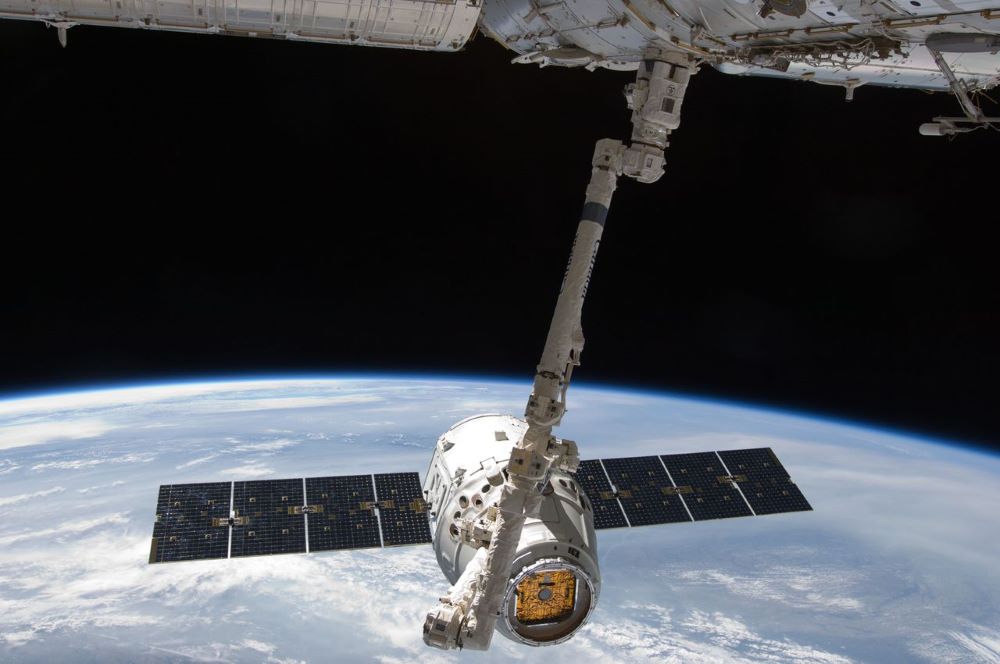
China has also sought spectrum and orbital resources for more than 200,000 satellites from the International Telecommunication Union, underscoring the scale of its ambitions.
Qianfan is becoming a key commercial vehicle for that strategy. In June, Spacesail launched its first direct-to-phone test satellite and subsequently completed what it described as China’s first satellite-based 5G voice and video calls using unmodified commercial smartphones.
It has also unveiled standard and aviation satellite terminals, with the latter designed to provide in-flight connectivity.
From constellation to business
Alibaba and SAIC’s investment points to a broader shift in China’s commercial space industry: industrial capital is beginning to follow technical validation.
With state-backed investors, tech companies and manufacturers now converging around Qianfan, China is trying to build a commercial model around satellite internet rather than simply deploying a competing constellation.
Starlink retains a formidable first-mover advantage. But Qianfan’s growing fleet, direct-to-phone technology and overseas deployments — including in Southeast Asia and South America — suggest China is moving from building satellites to making satellite connectivity commercially viable and exportable.
Header image credit: Paul Seling/Pexels