- Flagship corporate AI app becomes first to integrate new model as Alibaba pushes deeper into enterprise agents
- Stronger coding, autonomous task execution and lower usage costs aim to accelerate large-scale business adoption
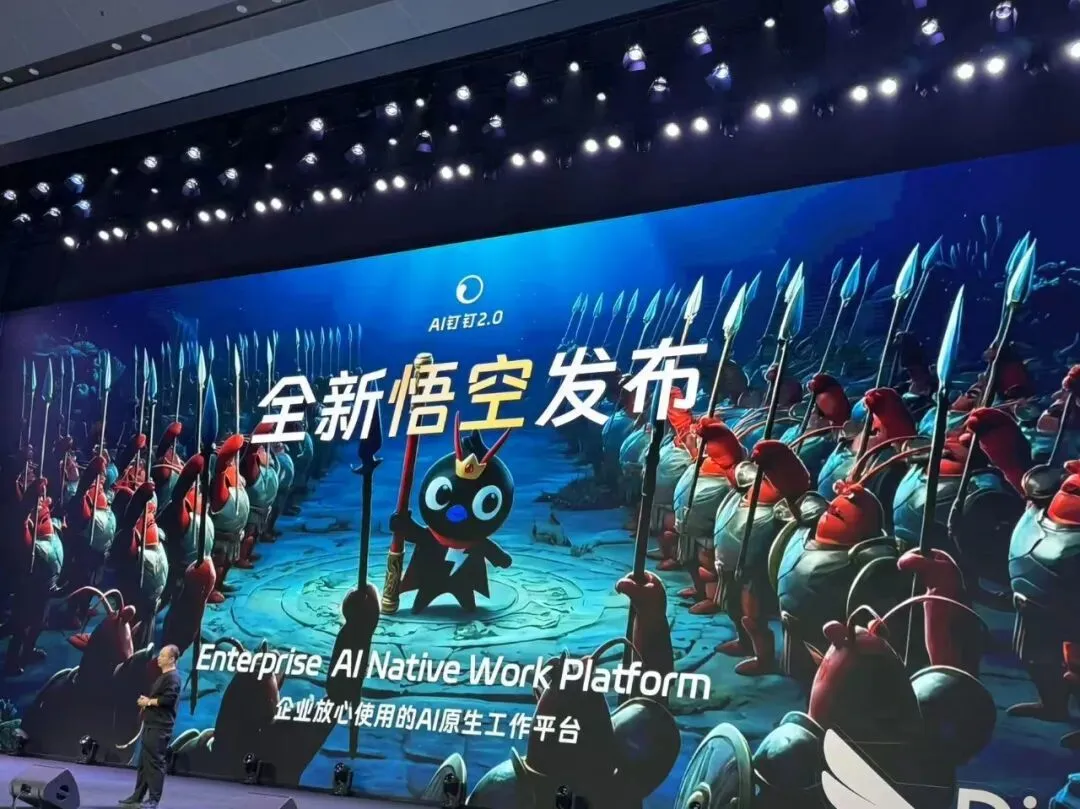
Alibaba Group has moved quickly to commercialize its latest AI breakthrough, integrating the newly released Qwen 3.6-Plus large language model (LLM) into its flagship enterprise AI platform Wukong just hours after the model’s debut.
This move underscores the company’s widening push to translate model advances into real business productivity.
Wukong, Alibaba’s enterprise-facing AI application, evolved from its workplace collaboration platform DingTalk. It now runs on Qwen 3.6-Plus, positioning the tool as an early showcase of how next-generation LLMs can function as autonomous workplace agents rather than simple chatbots.
The upgrade delivers three major improvements for enterprise users, according to Alibaba. The system demonstrates significantly stronger agent-based coding capabilities, allowing it to write multi-file programs, run tests and iteratively fix errors on its own.
Long-horizon planning and execution have also improved, enabling the AI to handle complex, multi-step assignments with minimal human supervision.
Meanwhile, pricing has dropped significantly, with input costs starting as low as 2 yuan (29 US cents) per million tokens, lowering barriers for large-scale corporate deployment.
In practical use cases, Alibaba says Wukong can now complete full development workflows in “one-person developer” scenarios: users describe requirements in natural language, and the system independently breaks down tasks, writes code, generates websites and performs testing and validation.
The platform is also being applied to knowledge-heavy functions such as legal operations, where it can extract key information across multiple documents, compare contractual changes, identify risks and generate decision recommendations.
In finance and manufacturing workflows, employees can issue a single instruction while the agent executes cross-system queries, filings and approvals automatically.
Alibaba attributed the improvements to Qwen 3.6-Plus’ broader gains in coding, reasoning, agent coordination and native multimodal understanding.
The model recently ranked second on LMArena’s Code Arena leaderboard, outperforming several larger-parameter rivals from OpenAI, Google and Elon Musk’s xAI, and placed just behind Anthropic’s Claude-Opus-4.6-Thinking.

The rapid integration reflects Alibaba’s strategy of pairing foundation models with deeply embedded enterprise scenarios, Wukong’s spokesperson said.
Competition in enterprise AI, the executive said, ultimately comes down to the result of “model capability multiplied by scenario understanding.”
“Breakthroughs in agent programming and long-task planning provided the technical foundation, while years of enterprise workflow experience accumulated through DingTalk enable Wukong to incorporate those capabilities directly into real corporate processes,” the spokesperson added.