

- The 67-gram device turns offline conversations into context for AI agents
- Priced at 1,199 yuan, A2 can transcribe conversations for up to 40 hours without a phone
Alibaba has launched QwenNote A2, an AI device designed to capture offline conversations and feed them directly into its QwenWork AI workplace platform.
This rollout comes as the Chinese tech giant looks to extend AI agents beyond the digital workplace.
QwenWork unveiled A2 on September 22 at the 2026 Apsara Conference in Hangzhou. Users can activate QwenWork with a single voice command and have the AI turn conversations into tasks, notes and follow-ups.
Priced at 1,199 yuan ($169), A2 went on sale the same day through QwenWork’s flagship store on Tmall. It is an upgraded version of DingTalk’s A1 recording card, launched in 2025 primarily for audio recording and transcription.
A2 adds direct access to QwenWork and its AI agents. For example, a lawyer could ask it to turn a client meeting into a case memo, identify missing evidence and schedule a team briefing.
QwenWork can then use the transcript to generate the memo and checklist and create tasks and meetings in DingTalk.
Weighing 67 grams, A2 has six microphones and can pick up sound from up to 8 meters away. It has a built-in 4G connection, allowing it to operate without a smartphone, and supports up to 40 hours of continuous transcription and 18 days of standby time.
The device also uses what Alibaba calls a “transcribe and delete” privacy design. Audio is encrypted and sent to the cloud for transcription, after which the original recording is physically deleted, leaving only the text and generated notes.
From recorder to AI agent
A2 is QwenWork’s first hardware product. QwenWork began public testing in August and has surpassed 30 million users, with enterprise users accounting for more than half, Alibaba said.
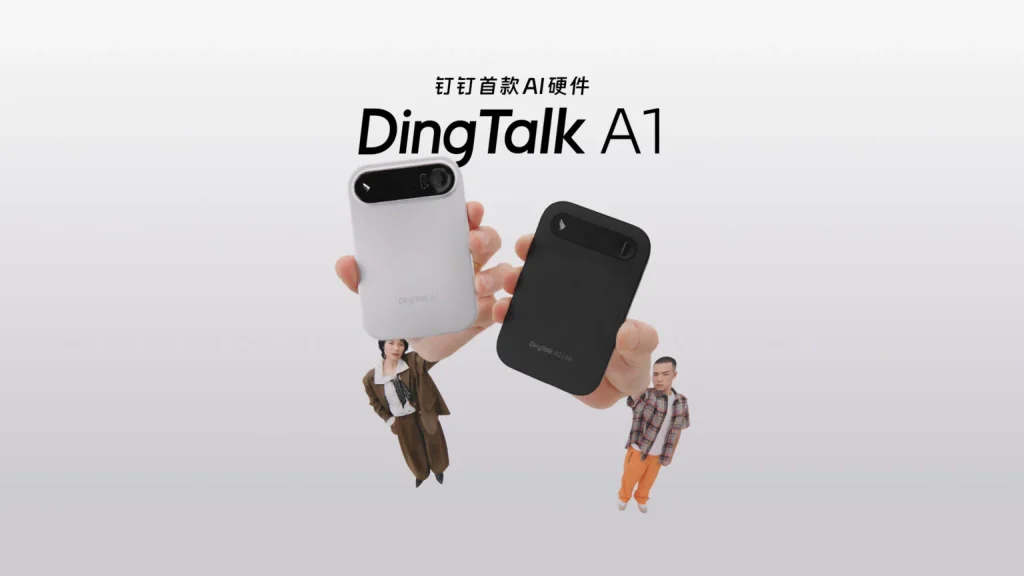
The DingTalk A1 series has sold more than 170,000 units through official channels and more than 500,000 across all channels, according to industry estimates.
The device reflects a broader shift in AI hardware from simply recording or assisting users to giving AI agents access to information generated in the physical world.
Meetings, client visits and interviews produce large amounts of information that often remain outside corporate software systems.
By capturing and transcribing those interactions and feeding them into an agent workflow, A2 gives QwenWork access to a layer of context that conventional workplace software cannot easily capture.
That makes the device less a standalone recorder than a hardware gateway between offline interactions and AI agents.
Header image credit: QwenNote A2

.jpg)