
- The pilot puts embodied AI to work in a 24/7 retail setting built around random demand and tight shelf space
- The project tests whether robots can handle picking, packing and other repetitive tasks without fixed scripts
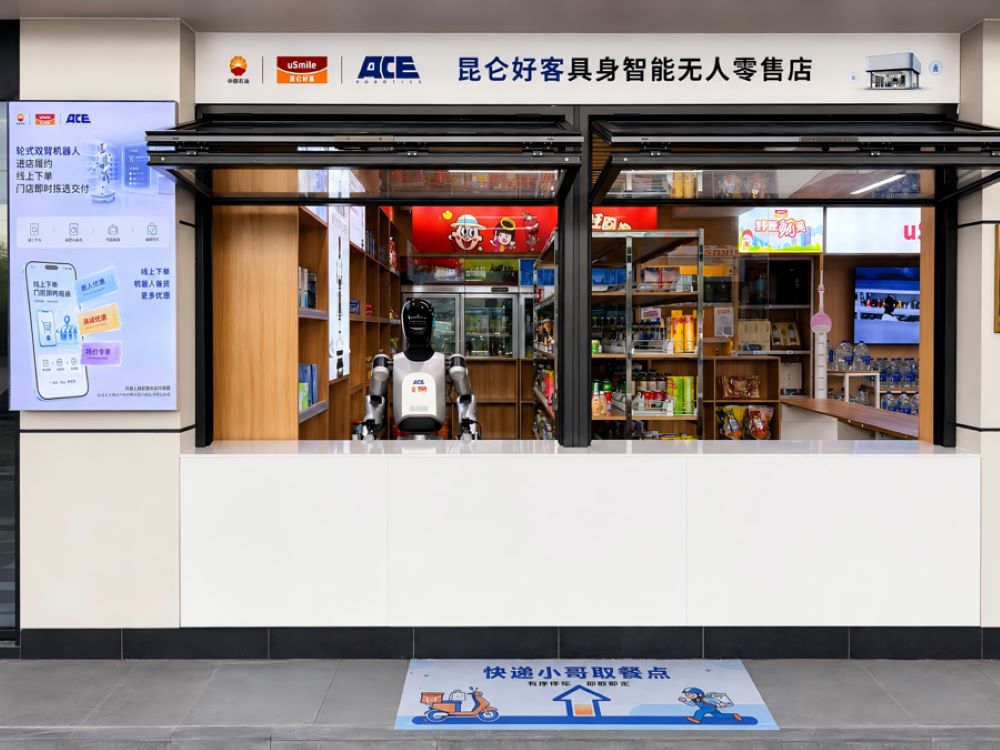
Ace Robotics (大晓机器人), a Shanghai-based humanoid robotics startup, has teamed up with PetroChina’s Shanghai sales unit to pilot an embodied AI robot at a gas station convenience store, in what the companies describe as a full-cycle test covering store operations from inventory picking to order packing.
The project will explore a retail model built around four elements — real-world scenarios, platform coordination, AI models and robotic hardware — with the aim of integrating back-room inventory and front-of-store operations, according to Shanghai-based Xinmin Evening News.
Gas station convenience stores are among the more demanding retail environments for robots.
Deployed to PetroChina’s network of convenience stores across Shanghai, they operate around the clock, face unpredictable customer traffic and carry a wide range of products in tightly packed spaces.
This routine requires robots to work continuously while adapting to changing conditions. Neither Ace Robotics nor PetroChina, however, disclosed how many units or stores will be involved in this pilot.
Spun out of SenseTime’s robotics unit, Ace Robotics is drawing on its Kairos (开悟) world model to train robots to understand store operations rather than simply follow predetermined action scripts.
A harder test
The pilot is part of a broader push to bring embodied AI into commercial settings in China.
A3 Ultra, a humanoid robot from AgiBot’s Expedition series, has demonstrated multi-robot collaboration at 4S dealerships, hotels and convenience stores, performing tasks including shelf organization, restocking, patrols and heavy-item handling.
In April, Galbot’s G1 entered the FamilyMart store in Beijing’s Zhongguancun as a regular service worker. It can autonomously handle tasks including picking up grilled sausages, chilled drinks and prepared food, as well as making coffee.
JD.com’s first batch of “intern” robots arrived at JD Mall stores in June, taking on roles including greeting customers, product guidance, shelf stocking and security.
The company said robots powered by its JoyAI-RA model achieved a stable success rate of more than 90% for placing individual products on shelves.
Day-to-day store operations
The common thread is a shift from robots performing demonstrations to robots becoming part of daily store operations, particularly in repetitive or labor-intensive tasks and overnight shifts.
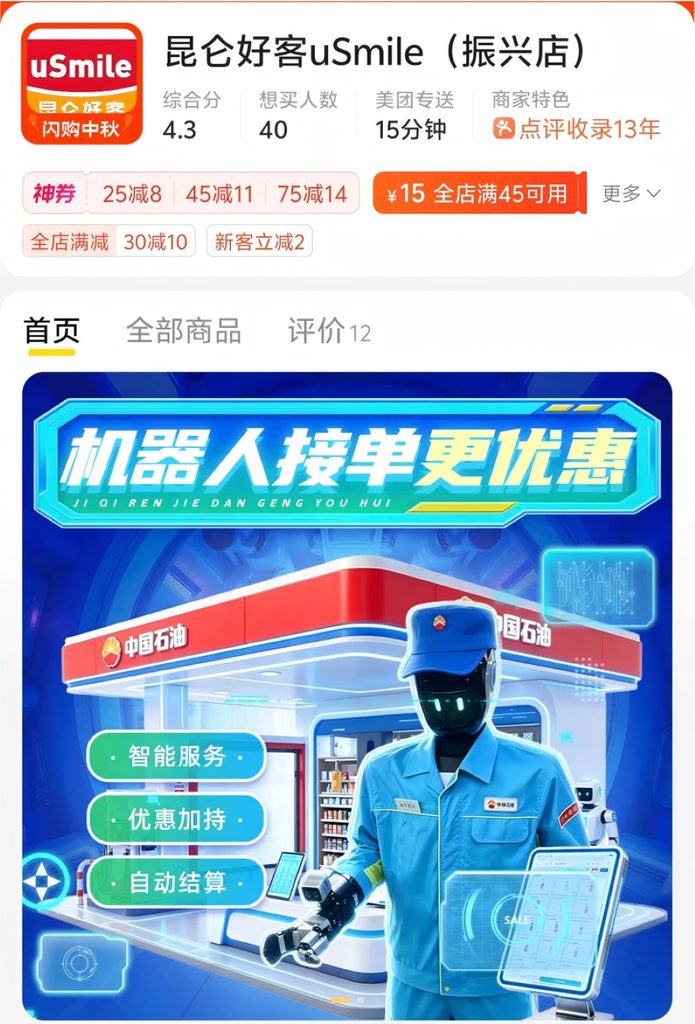
Gas station stores may be an especially relevant test. Their 24/7 operating model creates persistent demand for labor, while recruiting workers for overnight shifts can be difficult.
Robots, by contrast, can work continuously without fatigue, potentially making such environments an early commercial use case for embodied AI.
From flagship stores to retail networks
The significance of the PetroChina pilot extends beyond a single convenience store.
Gas station stores form a standardized retail network spanning highways, suburban areas and more remote locations.
Their relatively consistent layouts and operating models could make successful robotic deployments easier to replicate across large numbers of sites.
Why it matters globally
For the global retail industry, that points to a possible shift in the commercialization path for humanoid and other embodied-AI robots — from high-profile flagship demonstrations toward deployment across distributed retail networks.
China’s dense network of convenience stores and gas stations is becoming a large-scale testing ground for whether embodied AI can move from impressive demos to repeatable commercial operations.
Header image credit: Ace Robotics’ official WeChat

.jpg)