
- The new robotic hand matches the size of a human hand and starts at 39,900 yuan
- Unitree says its upgraded drive system and impact protection are designed for more demanding real-world use
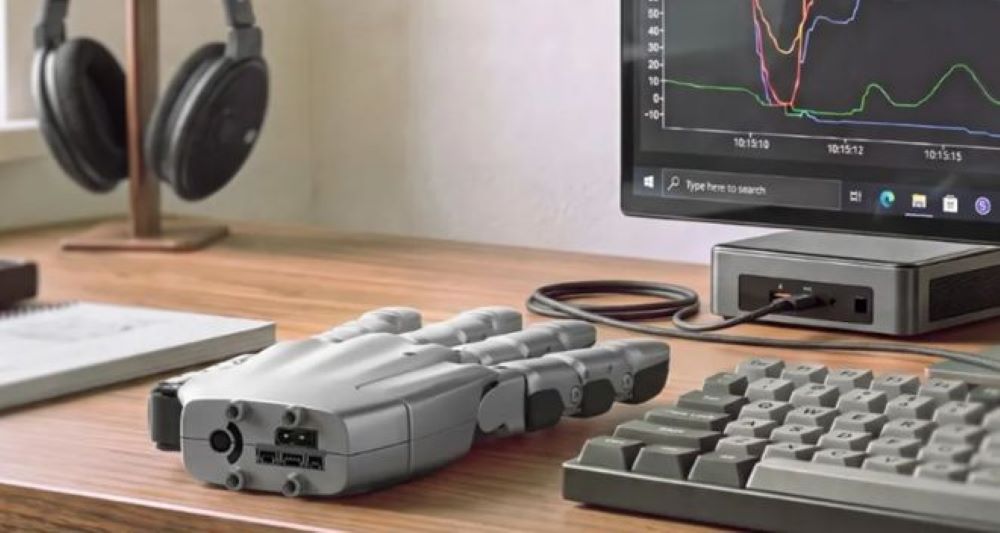
Unitree on September 21 launched its Dex5-S dexterous robotic hand, featuring 22 degrees of freedom and a form factor close to that of a human hand, with prices starting at 39,900 yuan ($5,957).
The Dex5-S measures 102 by 187 by 26 millimeters and weighs about 620 grams. Its aluminum-alloy housing reflects Unitree’s effort to balance compactness with dexterity, with the company positioning the hand for integration into humanoid robots and other robotic systems.
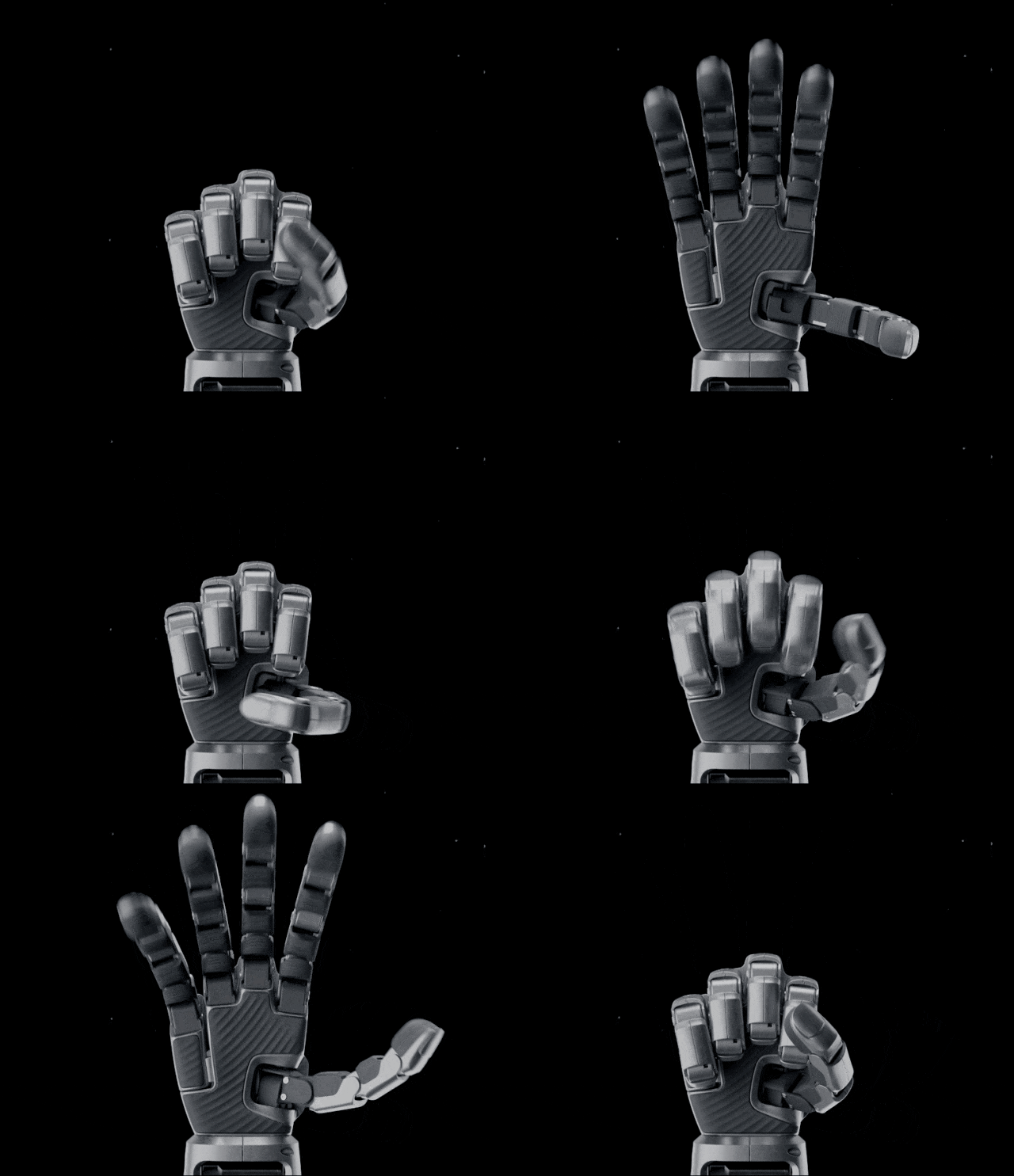
The 22 degrees of freedom are distributed across the fingers, with five in the thumb, four each in the index, middle and ring fingers, and five in the little finger.
The latter includes a new roll degree of freedom designed to improve overall grasping dexterity.
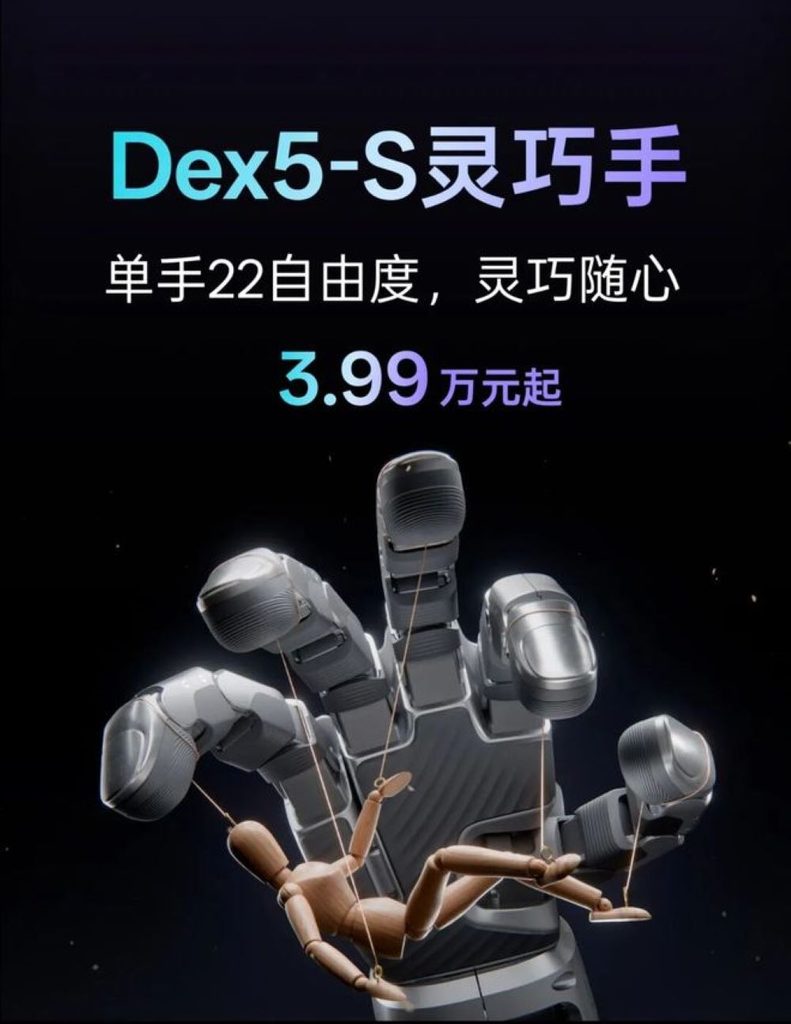
Each hand is driven by 22 motors, all supporting direct drive, backdrivability and dual-encoder control. The backdrivable design allows external forces to move the joints rather than forcing the motors to resist them, potentially improving safety and physical interaction.
Built for repeated use
Dex5-S also incorporates an impact-protection mechanism designed to protect its gears when joint motors encounter extreme external forces.
The hand can handle a payload of up to 2 kilograms, with a rated continuous load of 1 kilogram and peak power consumption of 200 watts.
It supports a wide 15V-to-65V input-voltage range and offers Gigabit Ethernet, USB and high-speed RS-485 interfaces, with communication speeds of up to 6 Mbps.
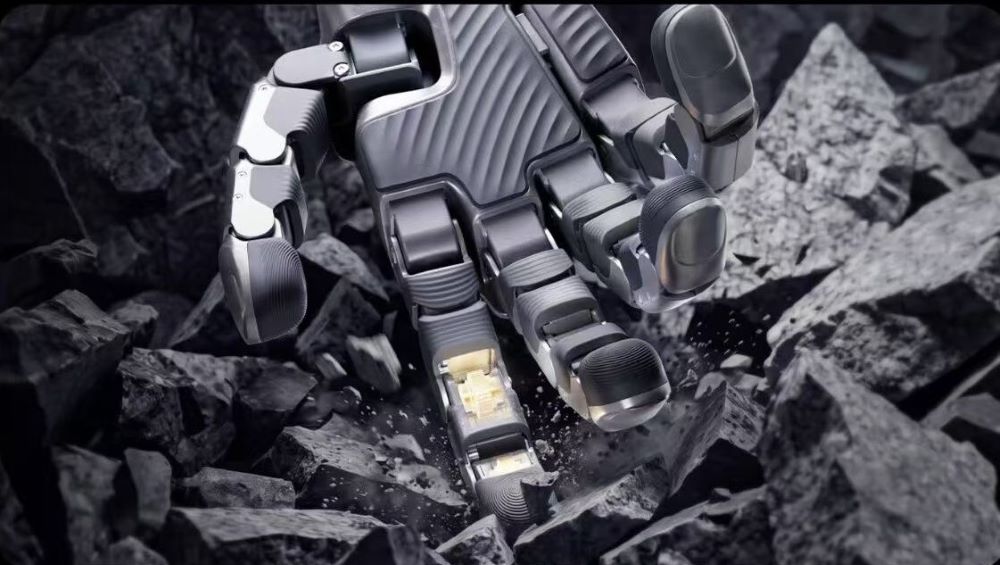
With a Gigabit Ethernet connection, a palm-mounted camera can connect directly to the hand without external cabling, simplifying system integration.
Unitree is offering standard and Pro versions. The main difference is that the Pro model adds tactile sensing to the dual-encoder system.
A new battleground
The Dex5-S follows Unitree’s Dex5, launched in April 2025 with 20 degrees of freedom, including 16 active and four passive degrees of freedom.
That model featured 94 sensitive contact points and demonstrated tasks such as playing cards, solving a Rubik’s Cube, turning pages and performing finger dances.
The new model increases the number of degrees of freedom while reducing the overall size and improving drive precision, according to Unitree.
Dexterous hands have become an increasingly important component of the humanoid-robot supply chain. Industry data cited by Chinese media puts their share of humanoid robot costs at around 17% to 18%, making them one of the most valuable individual components.
The sector has also attracted heavy investment. Funding for dexterous-hand companies in China exceeded 28.5 billion yuan in the first eight months of 2026, according to industry data cited by the company and Chinese media, as developers move from prototypes toward mass production.
Stiff competition
The market remains crowded, with Unitree competing with domestic players including Linkerbot, Inspire Robots, Sharpa and Xynova.
Unitree’s decision to develop its own dexterous hand also reflects a broader trend among humanoid robot makers to bring key components in-house as they seek tighter control over performance, integration and cost.
At 39,900 yuan, the Dex5-S puts pressure on the pricing of high-degree-of-freedom robotic hands, while its combination of compact size, backdrivability and impact protection targets one of the sector’s longstanding tradeoffs: hands that are highly dexterous are often less durable, while more robust designs tend to sacrifice flexibility.
Header image credit: Unitree’s official WeChat

.jpg)