
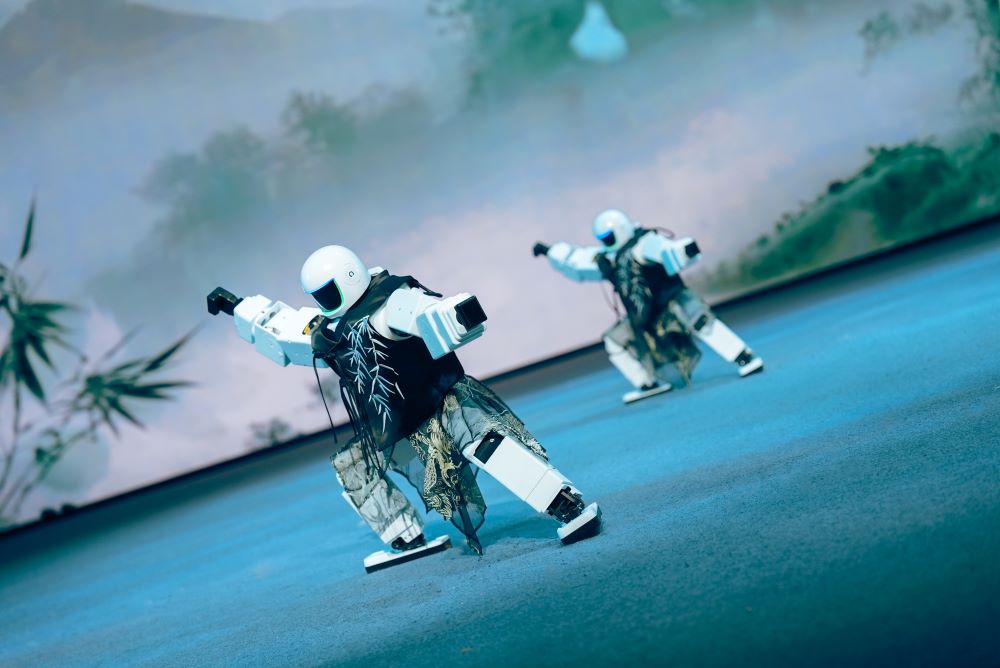
- The 45-minute show ran without remote controls, backstage operators or retakes
- Lumos sees entertainment as both a commercial outlet and a testing ground for embodied AI
No remote controls. No backstage operators. No chance to stop and start over.
Humanoid robot developer Lumos Robotics on September 19 staged what it described as the world’s first humanoid robot theater performance in Shenzhen, putting its robots through a 45-minute show designed to run autonomously from opening to curtain call.
Held at the Dream Theater of the Shenzhen Bao’an District Youth Palace, the show featured a robot host and six formats including dance, cross talk, sketch comedy, martial arts, a DJ set and magic.
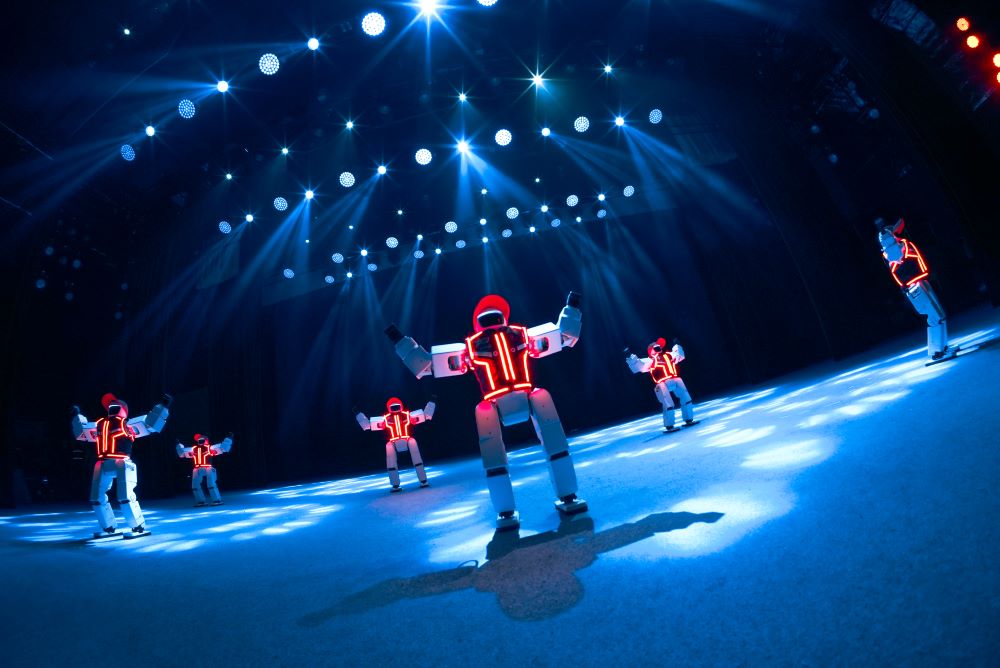
The performance opened with a robot band performing a group dance, followed by a cross-talk routine pairing Lumos’ smaller NIX robot with a child.

Other acts gave the Monkey King a cyberpunk twist, showcased robotic martial arts and featured DJ sets blending electronic and traditional Chinese music.
Multiple robots also performed alongside human actors, making coordination a central challenge.
Following the debut, the organizer Shenzhen Tourism and Culture Industry Development Co. will operate the theater regularly as Lumos explores applications for robots in entertainment, tourism and other offline commercial settings.
One take, no second chances
“The hardest part was not any individual movement, but making the entire performance fully autonomous,” said Thomas Zhang, head of R&D for NIX at Shenzhen-based Lumos.
The robots had to independently manage stage entrances, positioning, movement transitions, audience interaction and the final curtain call. The group dance required multiple robots to synchronize their movements, while the comedy routine required speech and gestures to line up in real time.
“Once you are on stage, it is one take,” Zhang said. “Every mistake is public.”
The 45-minute show also tested whether robots could execute a chain of tasks, rather than simply demonstrate individual movements.
Turning performances into training
That’s where Lumos’ NexCore skill-production system comes in. It integrates task definition, data input, model training, skill evaluation, deployment and continuous learning into a standardized workflow.
The system is designed to create a loop in which skills are produced, deployed and refined using data from real-world operations.
In the theater, individual robotic skills can be combined into complete performances and executed by multiple robots.
Data and feedback from live shows can then be used to refine the programs and underlying skills, creating a loop between performance and training.
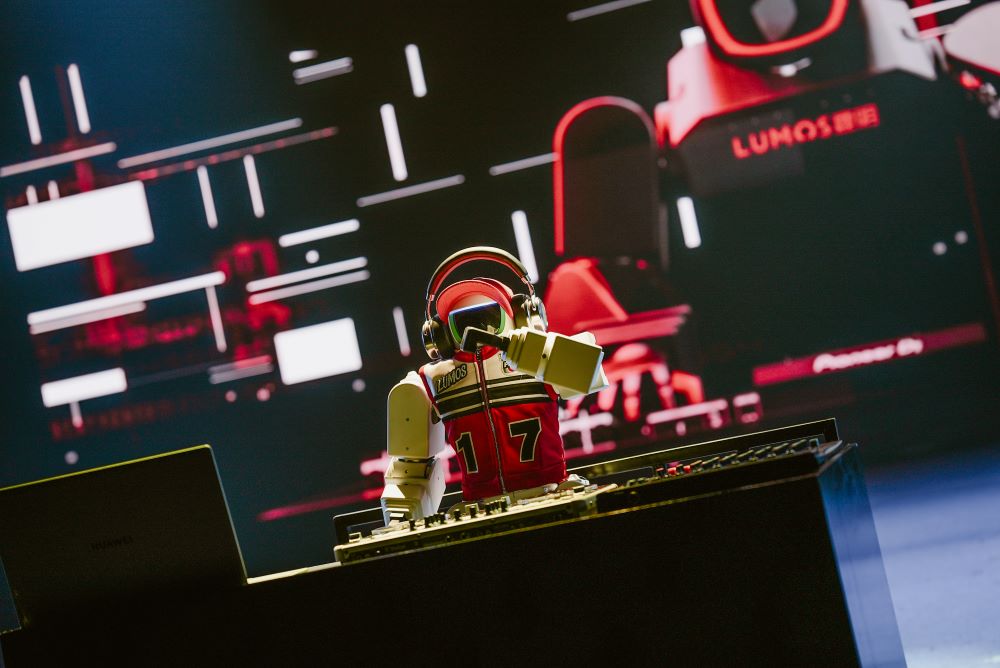
For Lumos, this makes entertainment more than an end market. It provides a controlled but demanding environment in which robots must repeatedly perform complex sequences, coordinate with other machines and humans, and respond to real audiences.
“Performance is not the destination, but a training ground,” Zhang said. “Entertainment and tourism are important ways to monetize the technology, but they are not the whole picture.”
From the stage to engineering education
Lumos also sees the theater as a potential gateway to science and engineering education. A child may first be drawn to a robot on stage, then become curious about how it moves, senses its surroundings and coordinates with other machines.
“While China has a strong foundation in science and math education, children also need opportunities to build, debug and iterate on physical systems,” Zhang said.
Robots offer a tangible way to do that, giving children immediate feedback that abstract programming exercises often lack.
Entertainment is already emerging as an early commercial use for humanoids, from performances in shopping malls to interactive roles at tourist attractions and corporate events.
According to a TrendForce study, a humanoid robot can take on about 10 paid performances a month, with payback periods of six to eight months in China.
For Lumos, the theater is a commercial outlet, technical test and educational platform. The company ultimately aims to make the format replicable across more cities and settings, using each performance to expose new problems and improve what its robots can do in the real world.
Header image credit: Lumos Robotics
*The article is based on a press release provided by Lumos Robotics.

.jpg)