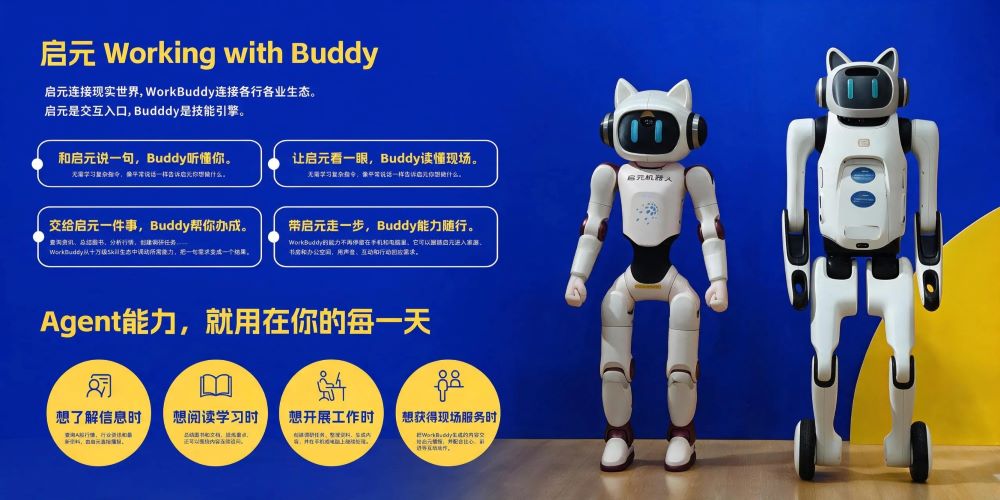
- Personal robots Q1 and T1 can access thousands of cloud-based skills
- The partnership links AI agents’ reasoning with robots’ physical actions
PrimeBot (启元机器人), a Chinese consumer robotics startup, has integrated its Q1 and T1 legged robots with Tencent’s AI productivity platform WorkBuddy, allowing them to access thousands of cloud-based skills and turn natural-language instructions into physical actions.
The partnership, announced September 20, makes the PrimeBot the first embodied-intelligence company to connect to WorkBuddy, Tencent’s AI productivity platform and agent ecosystem.
WorkBuddy serves as the robots’ “brain,” handling language understanding, reasoning, information retrieval and Skill invocation.
PrimeBot provides the “body,” with voice interaction, movement and more than 100 embodied AI capabilities.
The tie-up signals a shift from robots executing fixed commands to AI agents that can reason, call external skills and act in the physical world.
From commands to tasks
Under an Agent2Agent (A2A) connection, Q1 and T1, PrimeBot’s transformable quadrupedal models, can autonomously call WorkBuddy skills as needed.
Users can also connect their robots through a WorkBuddy connector and issue natural-language instructions.
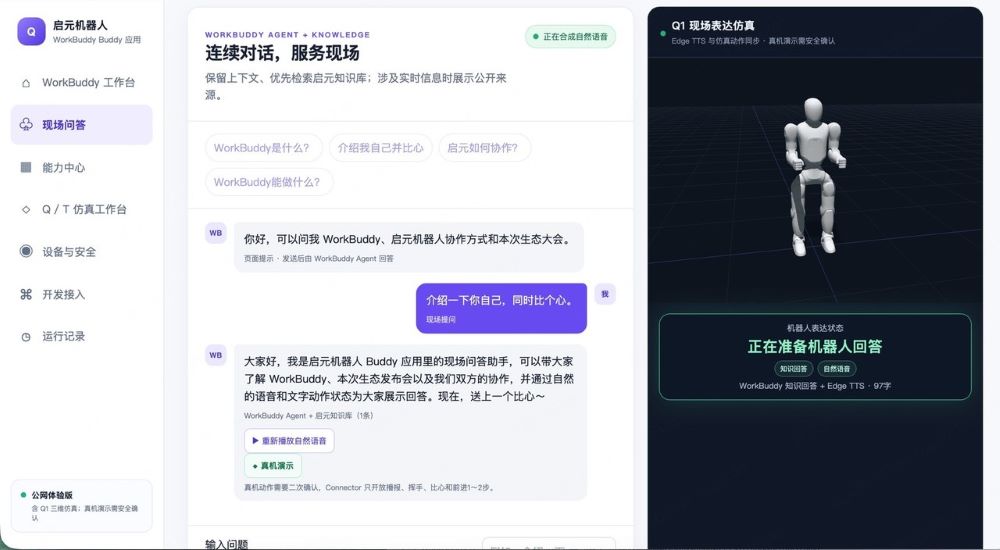
Third-party apps and AI agents can use WorkBuddy and PrimeBot plugins to dynamically generate skills for specific tasks.
For example, a user could ask a robot at an exhibition booth to greet visitors, walk forward two steps and wave when someone approaches.
WorkBuddy interprets the request and generates the skill, while PrimeBot validates the action, previews it in 3D simulation and executes it on the robot.
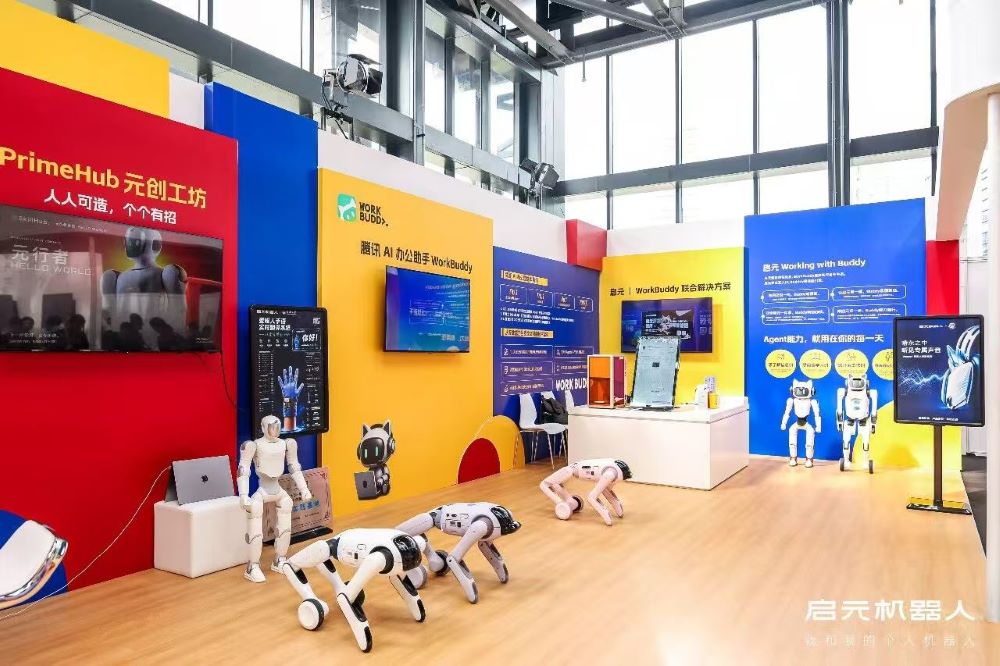
The system is already being used for booth reception, information broadcasting and interactive games.
AI agents meet robotics
The partnership comes shortly after WorkBuddy opened its platform to external developers on September 2, initially bringing more than 100 ecosystem partners onboard.
The model could allow robots to expand their capabilities through an external AI ecosystem rather than relying solely on their manufacturers’ software teams.
For embodied AI, this points to a future where a robot’s capabilities depend more on the skills it can access than on what its manufacturer builds.
Header image credit: PrimeBot’s official WeChat