- Yangtze River Delta startups in metal 3D printer, tactile robotics, photonic chips and aerospace automation raised fresh funding
- New capital will support AI manufacturing, tactile sensing, photonic chip production and the commercialization of aerospace assembly robots
Global Laser Box raises nearly $30 million for metal 3D printing
Yancheng, Jiangsu-based Global Laser Box (铬莱铂) has raised nearly 200 million yuan ($29.9 million) in a Series A round jointly invested by QF Capital, Changxing Financial Holdings and Create Century Group’s corporate venture capital arm.
Founded in 2023, the company provides large-scale production solutions for metal 3D printing and has developed and manufactured key components including lasers, control systems and supporting software in-house.
In June 2026, Global Laser Box launched what it describes as the world’s first desktop AI metal 3D printer.
Its products have been sold in more than 60 countries, with a focus on Europe, Southeast Asia and East Asia. The company serves applications across industries including low-altitude aviation, energy storage and consumer electronics.
The new funding will be used to develop SLM equipment, build an AI additive-manufacturing software ecosystem, expand production capacity and strengthen global marketing.
Tactile robotics startup Xense secures two strategic funding deals
Shanghai-based tactile-embodied AI company Xense Robotics (千觉机器人) has completed two consecutive strategic financing rounds worth hundreds of millions of yuan in total, with investors including Lanchi Ventures, CICC Capital and Eminence Ventures.
Founded in May 2024 by Shanghai Jiao Tong University professor Ma Daolin (马道林), the company develops high-precision visual-tactile sensing technologies.
Ma holds bachelor’s and master’s degrees from Peking University and completed postdoctoral research at MIT. He was the sole recipient of the Best Paper Award at ICRA 2021.
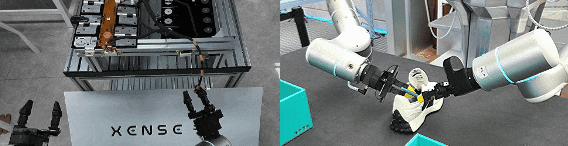
Xense’s self-developed high-precision three-color optical tactile sensors have reached mass production at the tens-of-thousands-of-units level. Its products include the Quark N1, Elf and Photon series.
The company has served more than 300 paying customers across robotics, industrial manufacturing, consumer brands and research institutions.
Its products have been used by embodied-AI companies including AgiBot, Google, X Square Robot and Galbot.
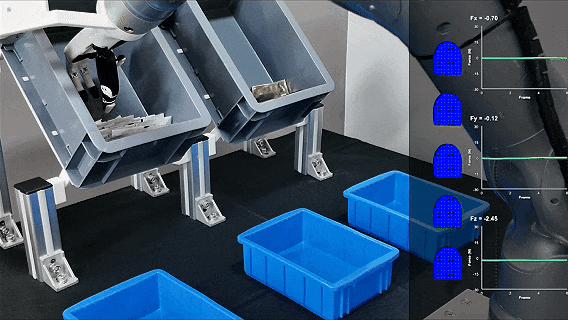
The new funding will support product upgrades, business expansion and commercialization, while accelerating sensor development and large-scale delivery.
It will also be used to build real-world interaction data-collection systems, tactile simulation and datasets, as well as develop tactile embodied models and tactile world models.
Photonic chipmaker Rhinoptix snags pre-Series A financing round
Hangzhou-based thin-film lithium niobate photonic chip maker Rhinoptix (犀里光电) has completed a pre-Series A financing round worth about 100 million yuan ($14.9 million).
The round was led by Fortera Capital, with Shanghai Engine Fund, Costone Capital, Guangdong-Hong Kong-Macao Greater Bay Area Innovation Fund, FutureX Capital, Shenzhen Capital and listed company JWIPC Technology also participating.
Founded in 2025, Rhinoptix was established by Wang Cheng (王骋), who holds a bachelor’s degree in microelectronics from Tsinghua University and a PhD in electrical engineering from Harvard University.
Wang studied under Professor Marko Lončar and was also involved in founding HyperLight, making him one of the pioneers of thin-film lithium niobate photonics.
The company is building a platform covering wafer-level processes, photonic chip design, device engineering and on-chip photonic engines.
Its products target Scale Up, Scale Out and Scale Across interconnect applications in AI data centers, supporting single-wavelength speeds of 400G as well as 1.6T and 3.2T.
The latest funding will support continued R&D in thin-film lithium niobate photonic chips and on-chip system integration, product upgrades, wafer-level process development and mass-production validation.
Rhinoptix also plans to deepen cooperation with AI data centers, optical-module makers and communications equipment companies.
Feat Intelligent closes new funding for aerospace robots
Shaoxing, Zhejiang-based aerospace assembly robotics company Feat Intelligent (飞钛智造) has raised tens of millions of yuan in a round led by Goldport Capital and Zhejiang University Holding Group, with Zhongfu Investment Group, Shaoxing’s Jinke Tongchuang Ventures and Nantong’s Jianghai Talent Angel Fund also participating.
Founder Zhang Yilian (章易镰) holds a PhD from Shanghai Jiao Tong University and has more than 15 years of experience in aerospace robotics R&D and manufacturing. More than 60% of the company’s team is focused on technology.
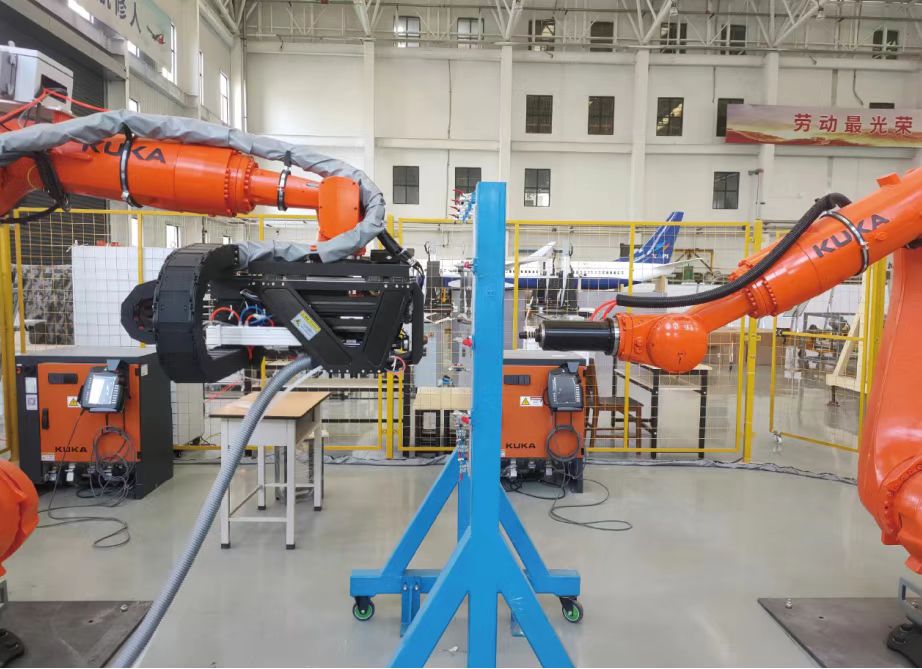
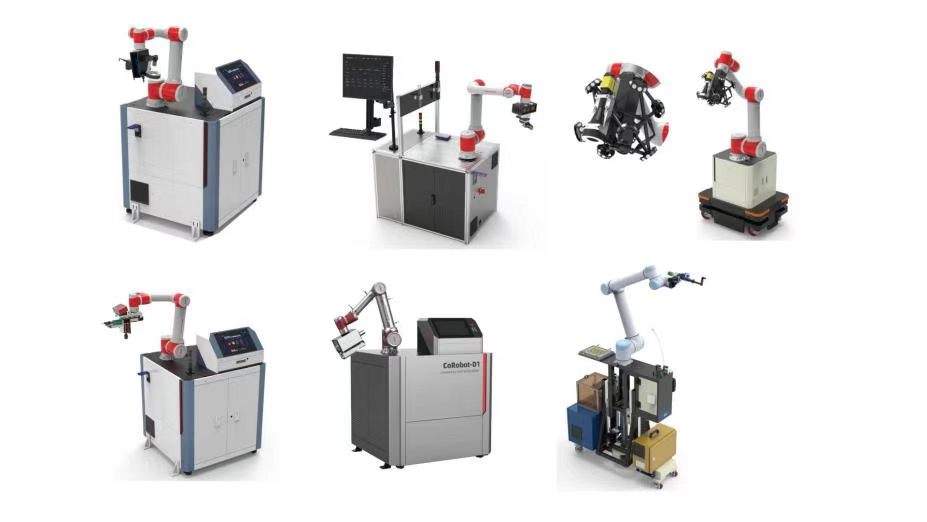
Feat Intelligent’s robot product line covers key aerospace assembly processes including drilling, riveting, adhesive application, grinding and inspection.
Its compact collaborative-arm solutions are priced at roughly one-eighth to one-tenth the level of comparable products from Europe and the United States.
The company has become a core equipment supplier for the first phase of C919 mass production and accounts for nearly 70% of automation deployments among China’s major aircraft manufacturers, according to the company.
It has also developed the LHVA lightweight AI model and secured what it describes as the first embodied-AI order in aerospace assembly.
The latest funding will support technology development and market expansion. Feat Intelligent has also begun expanding into commercial space manufacturing, exploring standardized production of rocket and satellite components.