- The luxury brand says no customers have reported the brake-pedal bracket failure seen in a media test
- The incident adds pressure on JAC as it tries to build Maextro into a premium auto brand
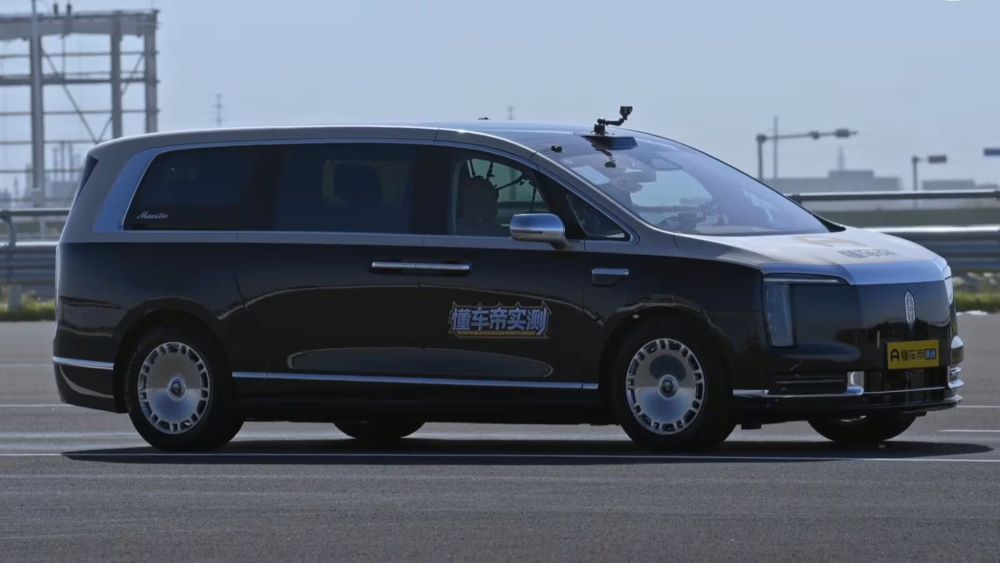
Chinese luxury car brand Maextro (尊界) said it will redesign a brake-pedal bracket and offer free upgrades to vehicles already delivered after a media test showed the component breaking, putting fresh scrutiny on its flagship V800 developed by JAC Motors (江淮汽车) and Huawei.
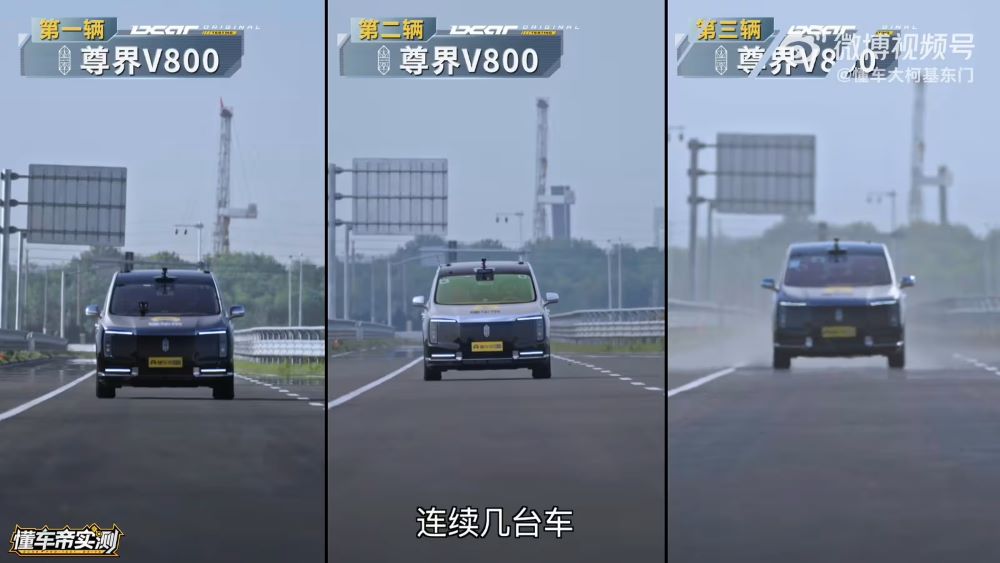
The response came after Chinese auto media outlet Dongchedi published a video of a Maextro V800 undergoing a brake test in which the vehicle’s brake-pedal bracket broke.
The Maextro V800 is priced at 766,000 yuan ($114,290) to 1.016 million yuan across three versions.
The incident quickly became a trending topic on Chinese social media and sent shares of JAC Motors, Maextro’s manufacturing partner, to their 10% daily trading limit, wiping out 6.2 billion yuan ($925 million) in market value.
Maextro, the luxury marque jointly developed by Hefei-based JAC and Huawei, said in a statement that braking systems are directly related to driving safety and that it takes the concerns raised by the video seriously.
Defending the quality
The company said its braking system had gone through full development and validation under requirements exceeding both national and industry standards.
It added that no brake-pedal bracket base failures had been reported in customers’ actual use since the first vehicles were delivered.
Still, Maextro said it would further optimize the component’s design and give existing owners the option of a free upgrade, even though the test represented a non-standard extreme condition.
The company also said it would conduct a systematic review and strengthen its design validation, testing limits and production quality management for the affected components.
The cost of faster development
The incident comes as China’s electric-vehicle industry faces growing scrutiny over development and quality-control practices.
In July, Beijing Hyundai General Manager Li Fenggang (李凤刚) warned that some automakers were compressing or combining design and production validation stages to meet launch schedules, potentially turning consumers into “test drivers.”
The debate over so-called “fast-track cars” or “prefabricated cars” centers on automakers cutting development cycles from more than 36 months for traditional gasoline cars to 18 months or less, with greater reliance on AI simulation and less real-world durability testing.
Quality problems have become more visible as China’s EV market expands.
In the first half of 2026, recalls by Chinese domestic brands jumped 681.2% from a year earlier, while complaints tracked by Autohome, a leading auto news website, rose 58.3% quarter-on-quarter in the second quarter, according to the figures cited in the Chinese report.
In August, China’s market regulator announced what was described as the country’s largest recall campaign of the year, covering more than 4.27 million new-energy vehicles from nine automakers over a design defect involving emergency mechanical door handles.
Insufficient testing
The Ministry of Industry and Information Technology has also said products that have not undergone sufficient testing and validation must not enter the market.
For JAC, the V800 incident comes at a difficult time. Maextro is central to the automaker’s push upmarket, with the S800 sedan having ranked first among luxury vehicles priced above 1 million yuan for 10 consecutive months after deliveries began in August 2025.
But sales have tanked sharply in 2026, falling from a peak of 4,223 units to 367 in July, a decline of more than 90%.
JAC reported a net loss attributable to shareholders of 749 million yuan in the first half, while its full-year sales target was less than 40% complete at the halfway point.
The brake-pedal failure was seen under an extreme test rather than ordinary customer use case. But for a brand built around premium positioning and safety, the incident puts another spotlight on whether Maextro can maintain confidence as JAC races to turn its high-end strategy into a sustainable business.
Header image credit: Dongchedi