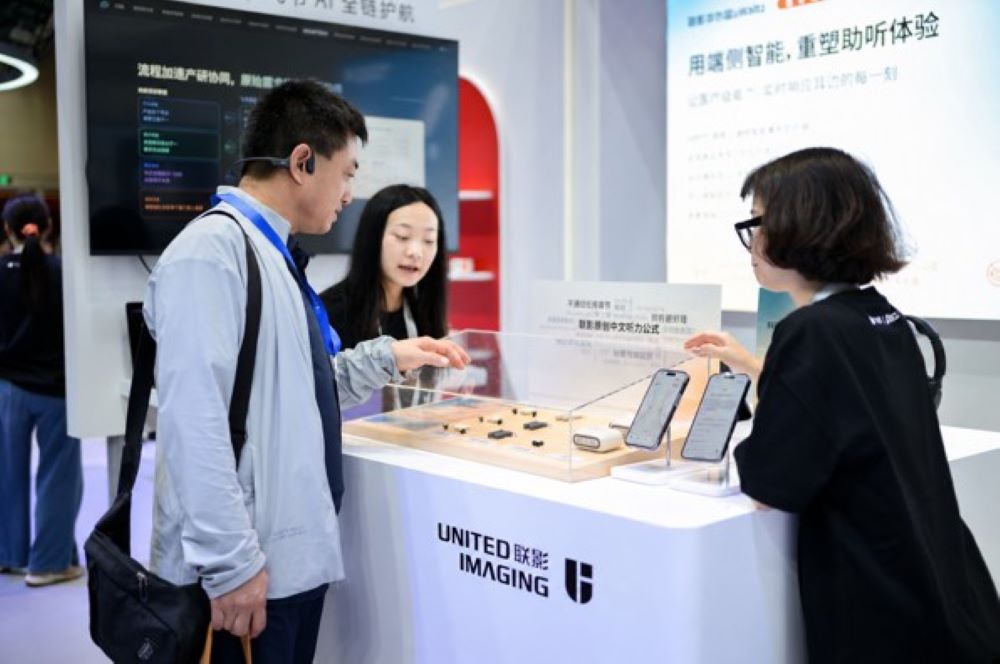
- The uWaltz device combines neural-network noise reduction with AI-guided hearing tests and personalized fitting at home
- Priced at 2,899 to 3,899 yuan per pair after platform subsidies, it targets the gap between expensive medical-grade devices and basic sound amplifiers
The microelectronics subsidiary of medical technology company United Imaging Group has launched uWaltz, its first medical-grade smart hearing aid, targeting people with mild to moderately severe hearing loss.
The device combines a proprietary chip with an AI-powered noise-reduction system trained on 28 million samples of domestic audio.
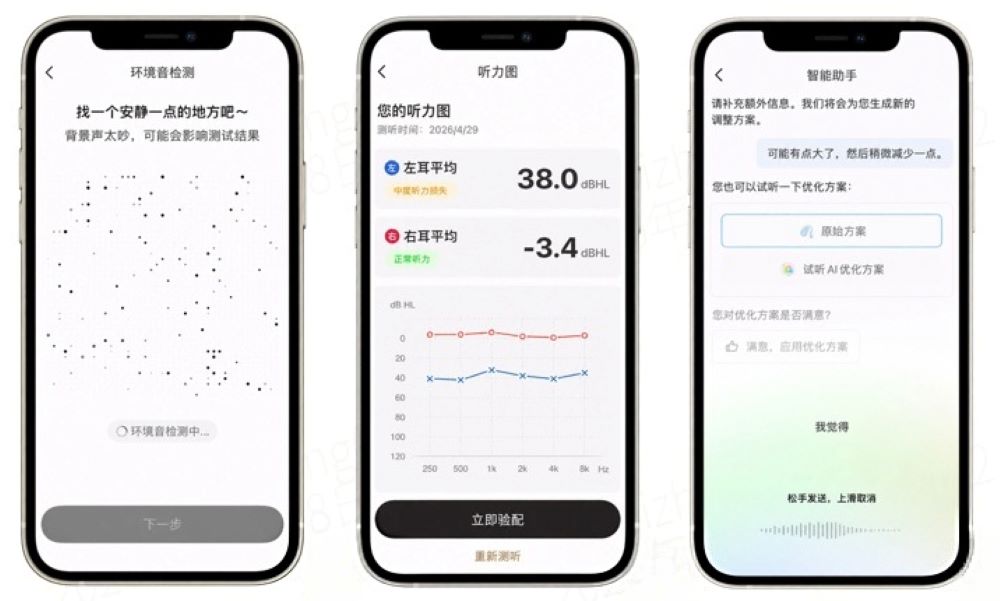
A companion AI agent, called Hearing Assistant Xiao U, enables users to conduct hearing tests and adjust their devices through a smartphone, without repeated visits to a hearing-care provider.
Traditional hearing aids can amplify speech and background noise together, making conversations louder without necessarily making them clearer.
United Imaging says its deep neural network can improve the signal-to-noise ratio by up to 10 decibels and raise speech-recognition rates in noisy environments by 17% compared with similar products.
Fitting at home
The Shanghai-based company is also using AI to change how hearing aids are fitted. Under the traditional model, users often need multiple in-person appointments for hearing tests, adjustments and trial wear.
United Imaging says its Hearing Assistant Xiao U (听觉管家小U) can complete an at-home hearing test in five minutes and generate personalized fitting parameters within one minute.
Users can then fine-tune the settings based on how they hear in daily life, allowing adjustments throughout the day rather than relying on a one-time fitting.
Liu Yue, CEO of United Imaging’s microelectronics subsidiary, said AI offered an opportunity to fill what she called a “professional vacuum” between medical-grade hearing aids costing tens of thousands of yuan and low-end sound amplifiers.
The uWaltz devices are being sold through online platforms including JD.com and Tmall, at prices of 2,899 to 3,899 yuan ($433-$583) per pair after subsidies.
A large unmet need
The launch addresses a substantial gap in China’s hearing-care market. By the end of 2025, China had 323 million people aged 60 or older, while about 220 million people were estimated to have some degree of hearing loss.
Yet only around 10% of people with hearing loss used hearing-assistance devices, according to the China Hearing Health Report 2025.
The market has long been split between premium medical-grade hearing aids, which can cost tens of thousands of yuan and typically require in-person fitting, and cheaper online products that mainly amplify sound.
The latter may struggle to improve speech comprehension in complex environments and can pose risks if used improperly.
By combining noise reduction with remote testing and ongoing personalized fitting, United Imaging is aiming to make more sophisticated hearing care accessible at a lower price.
Whether users can achieve consistent results at home, however, will be central to the product’s appeal.
Header image credit: United Imaging