- The autonomous-delivery company says its nearly 15,000-chip cluster is the first of its kind built by an L4 autonomous-driving company
- The system supports its APEX foundation model, which is being trained on data from more than 30,000 vehicles worldwide
Zelos (九识智能), a robovan pioneer in China, has built what it describes as the world’s first 10,000-chip computing cluster dedicated to L4 autonomous driving, with nearly 15,000 AI chips supporting model training, scene reconstruction, data labeling and online inference.
Zhuang Li (庄立), the company’s chief technology officer, disclosed the cluster on September 17, saying it makes Zelos the first L4 autonomous-driving company globally to build a computing cluster at the 10,000-chip scale.
A 15,000-chip bet
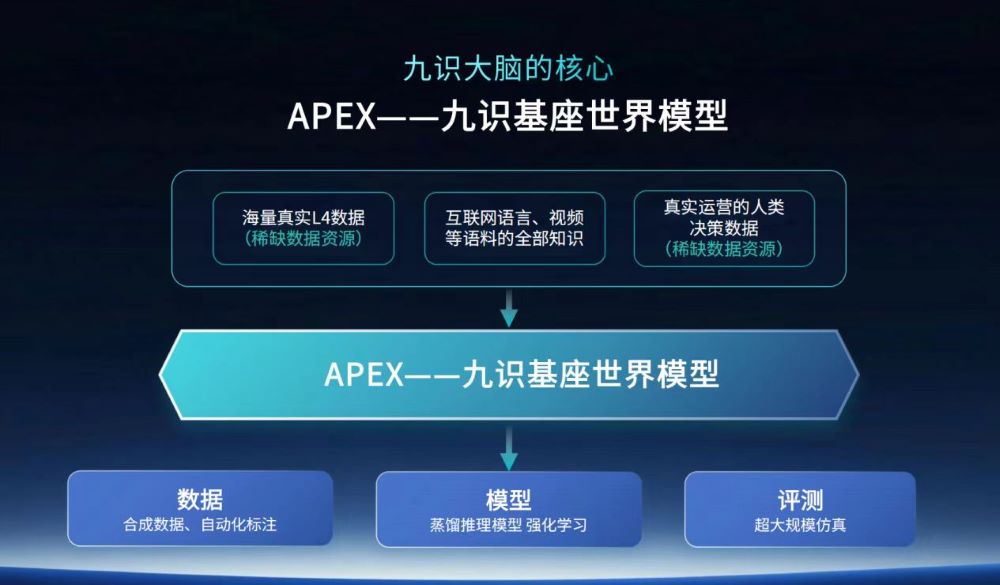
The infrastructure supports Zelos’ APEX multimodal foundation model, which combines real-world L4 driving data with internet-based training data and data generated from human decisions during vehicle operations.
The model is being scaled from tens of billions of parameters toward hundreds of billions, the company said.
Zelos’s global fleet has grown to more than 30,000 vehicles operating in more than 300 cities across 20 countries, with cumulative L4 mileage exceeding 270 million kilometers.
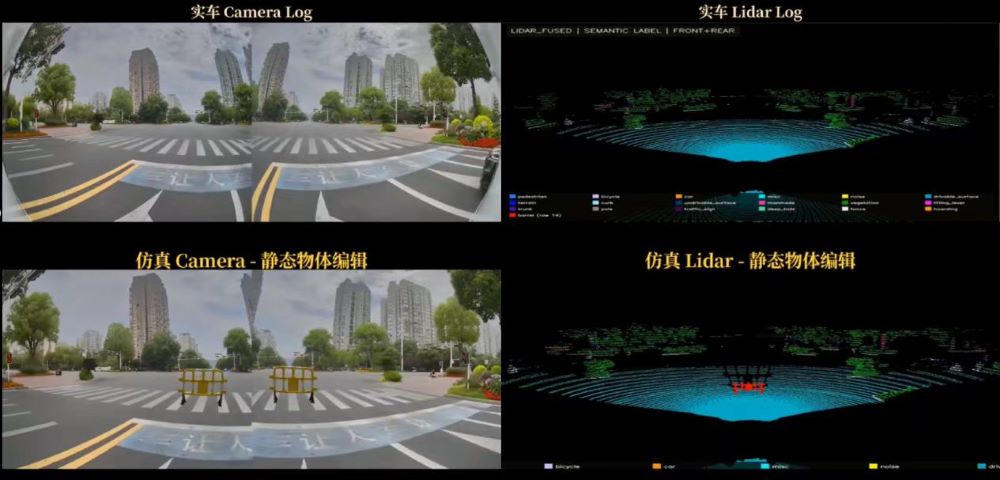
Data collected from public roads — including traffic-police gestures, construction barriers, temporary traffic controls and mixed traffic involving vehicles and pedestrians — is fed back into APEX for model training.
The company says this creates a cycle in which greater computing power accelerates model development, better models reduce operating costs and expanded operations generate more training data.
Nvidia chips? Not exactly
However, Zelos has not disclosed which companies are supplying the GPUs and servers for its cluster.
A February 2026 report by the Economic Observer newspaper said Zelos still mainly used Nvidia’s Orin chips for its vehicles while evaluating alternatives to reduce hardware costs and potentially develop its own chips.
That revelation, however, pointed to vehicle-side chips, not the AI accelerators used in the 15,000-chip cluster. Zelos has not said whether Nvidia or domestic GPUs also power the cluster.
From rules to models
According to Zhuang, Zelos uses a vehicle-cloud architecture in which a vehicle-side vision-language-action (VLA) model handles real-time inference, while a cloud-based model provides additional perception and reasoning support.
The system is deployed in different configurations according to vehicle speed.
The Suzhou-based company said a key difference between its L4 approach and conventional L2 driver-assistance systems is how the vehicle responds when its onboard capabilities are insufficient.
Rather than waiting for a human driver to take over, the L4 system can slow down or stop and call on cloud-based computing resources for assistance.
That distinction reflects a broader shift in autonomous driving from manually written rules toward large multimodal models.
Urban delivery vehicles encounter countless unusual situations on the road, Zhuang told the audience.
Temporary road closures, traffic-police gestures and unpredictable interactions between pedestrians and vehicles are difficult to anticipate with conventional rule-based systems, he explained.

Data fuels the flywheel
For Zelos, the nearly 15,000-chip cluster is intended to provide the computing infrastructure needed to train increasingly large models while processing data generated by its growing autonomous fleet.
The approach also illustrates how the competitive equation in L4 driving is expanding beyond vehicle hardware and software.
Fleet size, real-world operating data and access to large-scale computing are becoming increasingly intertwined.
Zelos’ model creates a self-reinforcing cycle: operations generate data, data improves the models, and better models feed back into operations.
That cycle also shows why computing capacity is becoming an increasingly important part of the L4 autonomous-driving race — but also where chip constraints continue to bite.
Header image courtesy of Zelos