
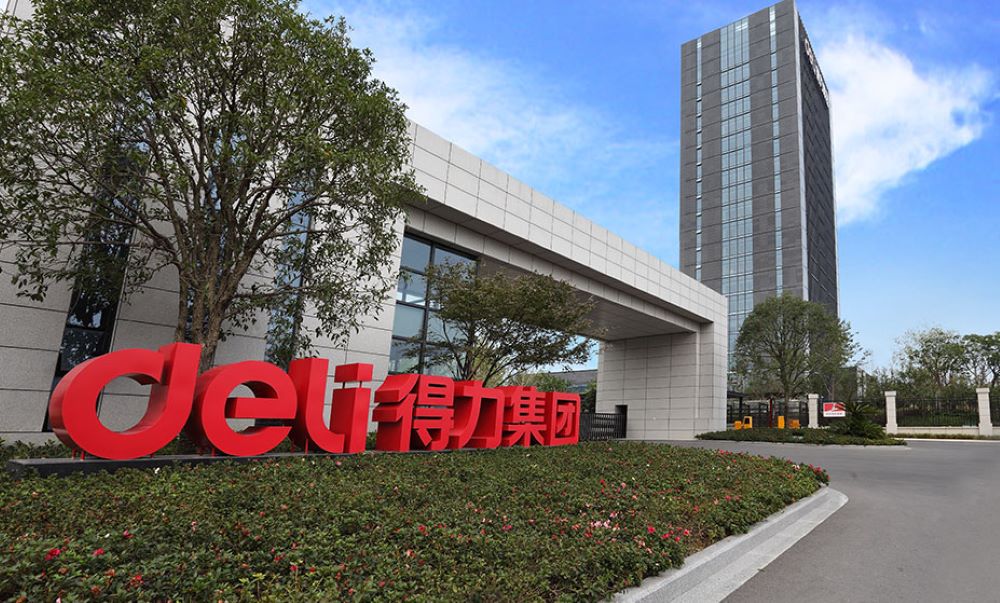
- The Chinese stationery giant is recruiting across the full R&D chain for desktop 3D printers
- Its move comes as Shenzhen-based rivals dominate a fast-growing market where distribution and education could give a new entrant an edge
Chinese stationery and office-supplies giant Deli Group (得力集团) is making a major foray into consumer 3D printing, recruiting product, software, hardware and slicing-algorithm engineers in Shenzhen.
This move comes as the Ningbo-based heavyweight, with revenue of 46.01 billion yuan ($6.86 billion) in 2025, reportedly prepares to develop desktop fused deposition modeling (FDM) 3D printers.
Recent job postings show Deli is hiring for roles ranging from product and software leads to hardware and slicing-algorithm engineers.
Salaries generally range from 15,000 yuan to 40,000 yuan a month and up to 60,000 yuan for key positions, according to listings from recruitment platforms like Boss Zhipin.
The company has already tested the market with 3D printing pens for children, including panda-themed and Eggy Party collaboration models that have sold hundreds of thousands of units on JD.com.
The latest recruitment signals a move into full-size desktop FDM printers. FDM is a 3D-printing method that builds objects layer by layer by extruding melted plastic through a heated nozzle.
Deli Group has yet to confirm or deny Chinese media claims about its entry into the space.
Shaking up the domination?
That puts Deli up against an increasingly concentrated market led by Shenzhen companies including Bambu Lab (拓竹科技), Creality (创想三维) and Anycubic (纵维立方).
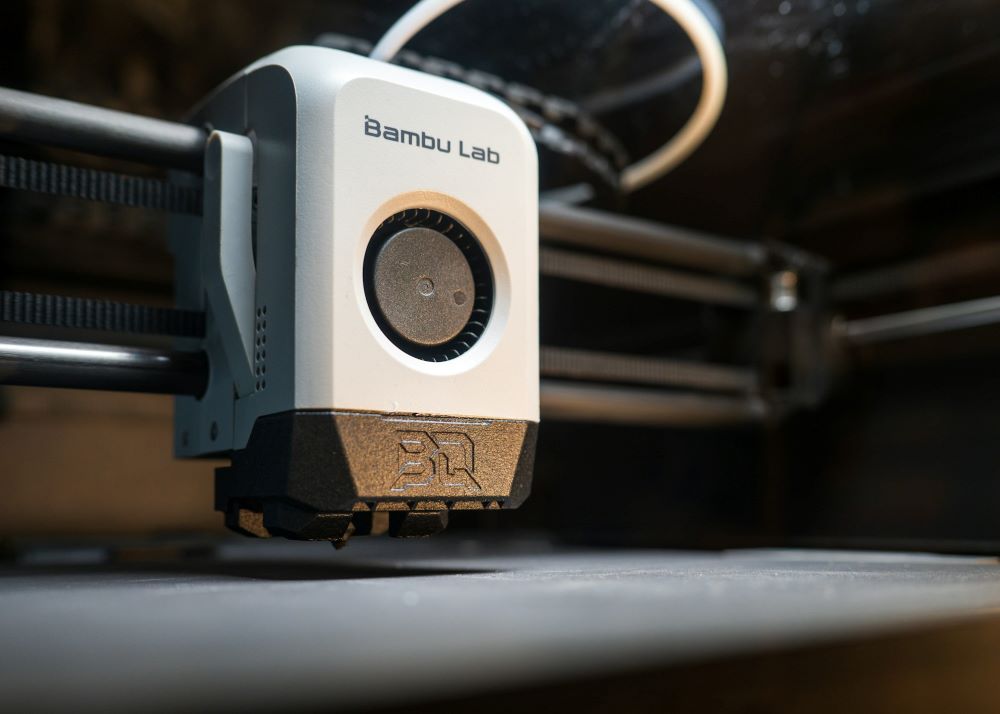
Four Chinese companies together account for roughly 90% of global consumer 3D-printer shipments, according to industry estimates.
The challenge for Deli is that much of the core technology — printer precision, slicing software, materials and model libraries — has already matured, making it difficult for a newcomer to compete simply by offering better hardware specifications.
Strengths in distribution networks
Deli’s advantage may instead lie in distribution and use cases. The company has 156 branches and more than 70,000 retail outlets across China, while its sales network covers more than 130 countries and regions.
Education could be an especially important entry point. 3D printing is increasingly being introduced into schools as a creative teaching tool, while Deli has spent decades building relationships and distribution channels in the education market.
The company also has experience in conventional printers. It says it is the first Chinese company to master and mass-produce laser, inkjet, thermal and dot-matrix printing technologies across a full product range, with key components including control SoCs and laser scanning units developed and manufactured in-house.
China already dominates the global consumer 3D-printing supply chain, accounting for more than 90% of entry-level 3D-printer shipments in 2025, according to industry data.
Fast-growing adjacent market
Deli’s move therefore looks less like a leap into an unfamiliar industry than an attempt to extend its existing manufacturing and distribution capabilities into a fast-growing adjacent market.
According to China Insights Consultancy, the global consumer 3D-printing market is expected to grow at an compound annual growth rate of roughly 33% from 2025 to 2030.
The arrival of a major stationery brand could be another sign that the market is expanding beyond its early specialist base.
Header image credit: Deli Group’s official website

