- A new open-source guide estimates that regular AI use could save students more than 3,000 hours over a four-year degree
- The guide shows how AI is moving from a study aid to an all-in-one tool for college life
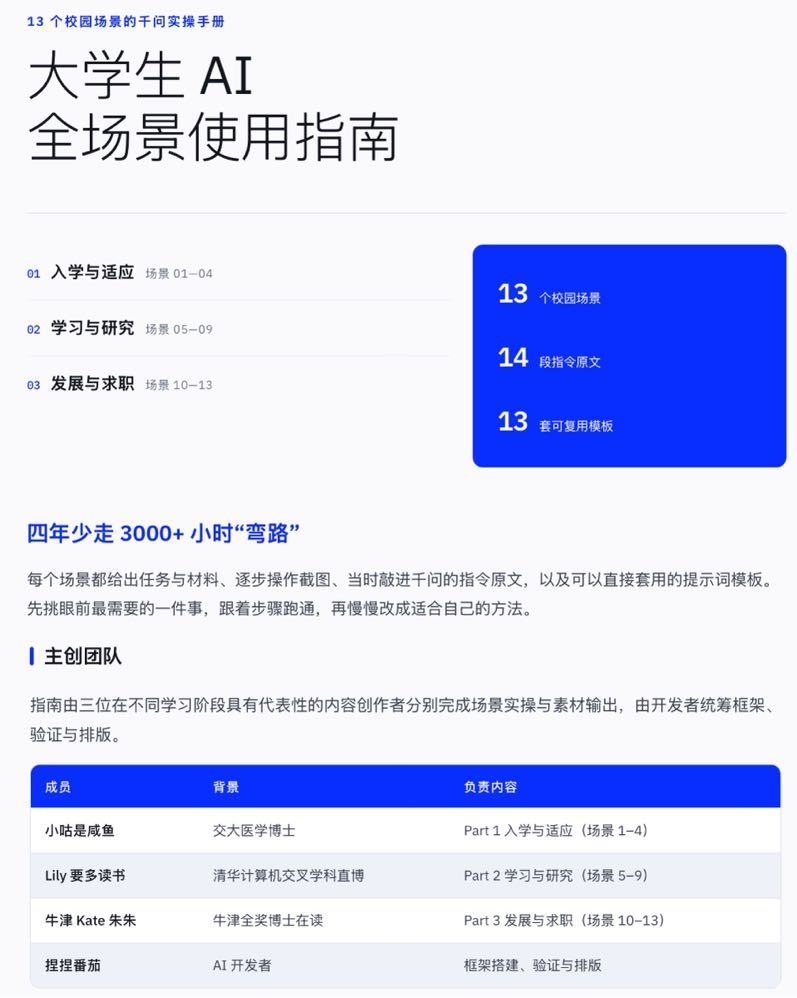
A new open-source guide created by students from Oxford University, Tsinghua University and Shanghai Jiao Tong University, together with independent AI developers, has put a number on how much time generative AI could save college students.
Using Alibaba’s Qwen app as an example, the AI Guide for College Students breaks down 13 common university tasks and estimates that students who use AI consistently from freshman year could save more than 3,000 hours over four years.
10,000 yuan saved
That translates into nearly three extra hours a day, while cutting related expenses by about 10,000 yuan ($1,490) per student, the guide shows.
The guide offers a detailed breakdown of the savings. For final exams, students can upload lecture slides, notes and past exam papers to Qwen, which organizes the material, generates practice questions and creates targeted exercises based on mistakes.
The guide estimates that this can save about five hours per course, or 160 hours over four years based on four courses per semester.
Overseas applications are another major time sink. From researching universities to refining application essays, AI can save about 13 hours per application process while reducing consulting costs by roughly 520 yuan, according to the guide.
AI’s new campus role
Rather than simply discussing AI in theory, the guide provides step-by-step instructions and ready-made prompts for each scenario.
The figures also offer a glimpse into AI adoption among Chinese college students, which the guide puts at more than 98%, with nearly half using AI almost every day.
Qwen’s appeal goes beyond being free. Its app combines tools for tasks such as presentation generation, translation and information retrieval in a single interface, reducing the need to juggle multiple AI services.
For education technology companies worldwide, this points to a shift from single-purpose tools toward all-in-one AI platforms covering the full student journey, from coursework to job hunting.
Helping students save time and money is just one of the many ways Qwen is transforming education. The Yangtzeer reported earlier that Alibaba’s Qwen is reshaping China’s college admissions market as millions of students and parents turn to AI for application advice.
Not without a caveat
But the efficiency gains come with a caveat: universities worldwide are still catching up with AI adoption.
China has issued national guidelines on AI use in graduate theses, while universities including Fudan University and Hefei University of Technology have introduced their own rules, including restrictions on using AI to generate core content.
With policies still evolving and some uses remaining in a gray area, students may need to learn not only how to use AI efficiently, but also where their universities draw the line.
Header image generated by Tencent Yuanbao