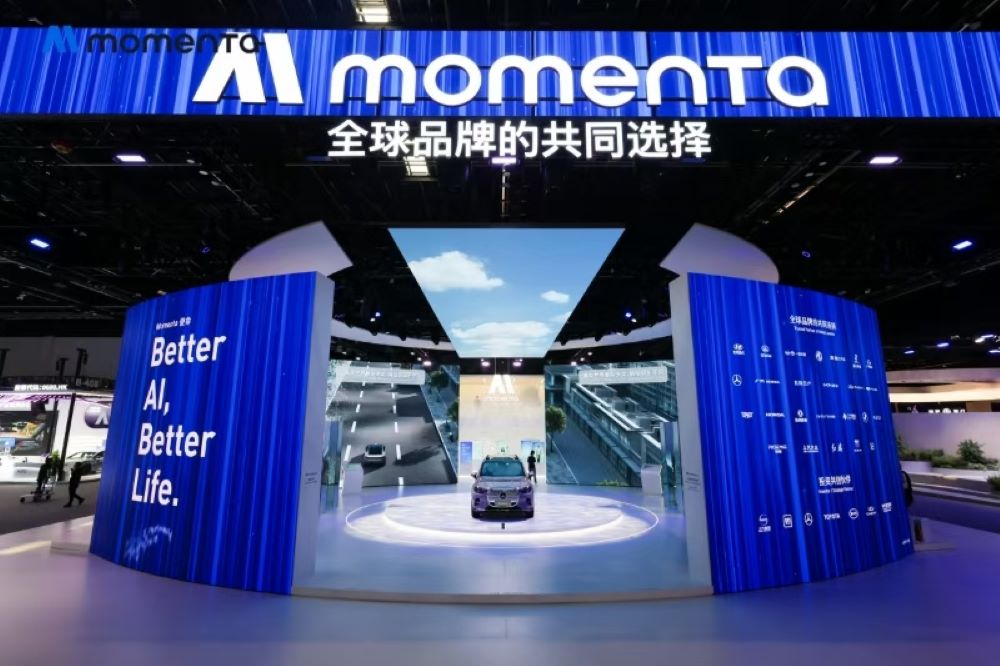
- Momenta is nearing profitability as software licensing drives faster growth and expanding margins
- Horizon’s heavier hardware and R&D costs are widening the gap between the two autonomous-driving players
The autonomous-driving race in China is starting to produce a less flattering metric than tech demos: how much money can the business make when the technology hits the road?
That question looks particularly revealing after Horizon Robotics (地平线) and Momenta (魔门塔), the country’s two leading autonomous driving tech providers, released their first-half results on August 31.
Their revenue is broadly comparable, but their financial trajectories could hardly be more different: Momenta is closing in on break-even. Horizon is still burning through cash and widening its underlying losses.
Horizon reported 2.055 billion yuan ($306 million) in first-half revenue, compared with 1.6 billion yuan at Momenta.
The accounting gap
Yet Horizon’s reported 3.784 billion yuan net profit is not what it appears to be. Most of it came from a 5.24 billion yuan fair-value gain on convertible loans issued to Volkswagen subsidiary Cariad as Horizon’s share price changed.
In other words, there was NO corresponding cash windfall.
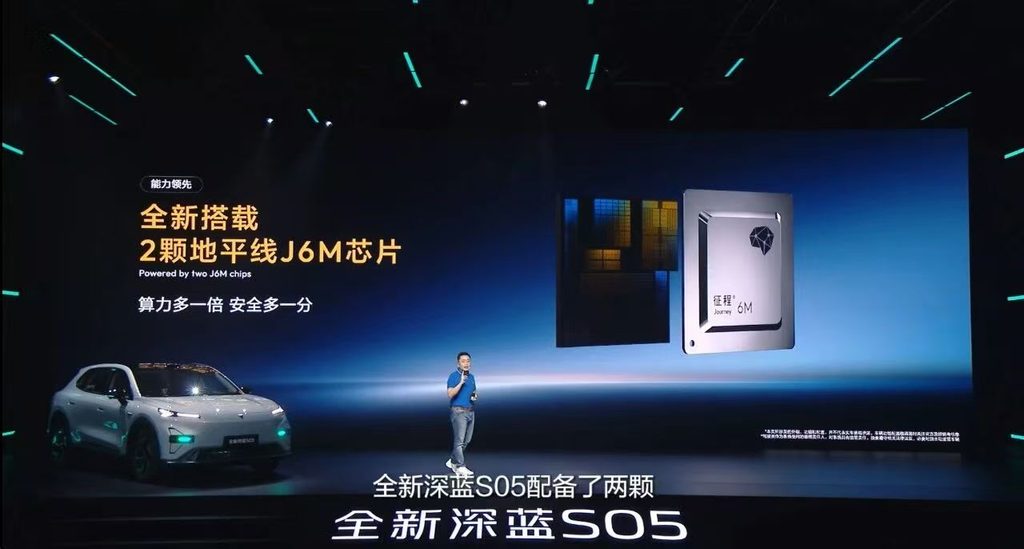
On an adjusted basis, Horizon lost 1.671 billion yuan in the first half, with its loss widening 25.4% from a year earlier. R&D spending alone reached 2.755 billion yuan, more than the company’s total revenue.
Momenta, meanwhile, lost just 14.1 million yuan on an adjusted basis, down 96.6% year-on-year. Operating cash outflow fell 47%.
With revenue growing 76% and gross margin reaching 75%, the company is now close enough to profitability. The question is no longer whether its business model can make money, but how quickly.
That is a much bigger distinction than the headline revenue numbers suggest.
The two companies represent two different ways of building an autonomous-driving business.
Where economies of scale don’t apply
Horizon came up through chips and computing platforms. Its advantage is clear: hardware gives it a foothold across vehicle programs and creates a standardized platform that automakers can build on.
But hardware also carries structural costs. Chip tape-outs, packaging and testing do not become free simply because shipment volumes rise.
The pressure is showing up in its margins. Gross margin for Horizon’s product solutions fell to 36.2% from 44.2%.
The company has been pushing further into software, with licensing and services now accounting for more than 55% of revenue, but hardware still makes up 45%.
Software economics take hold
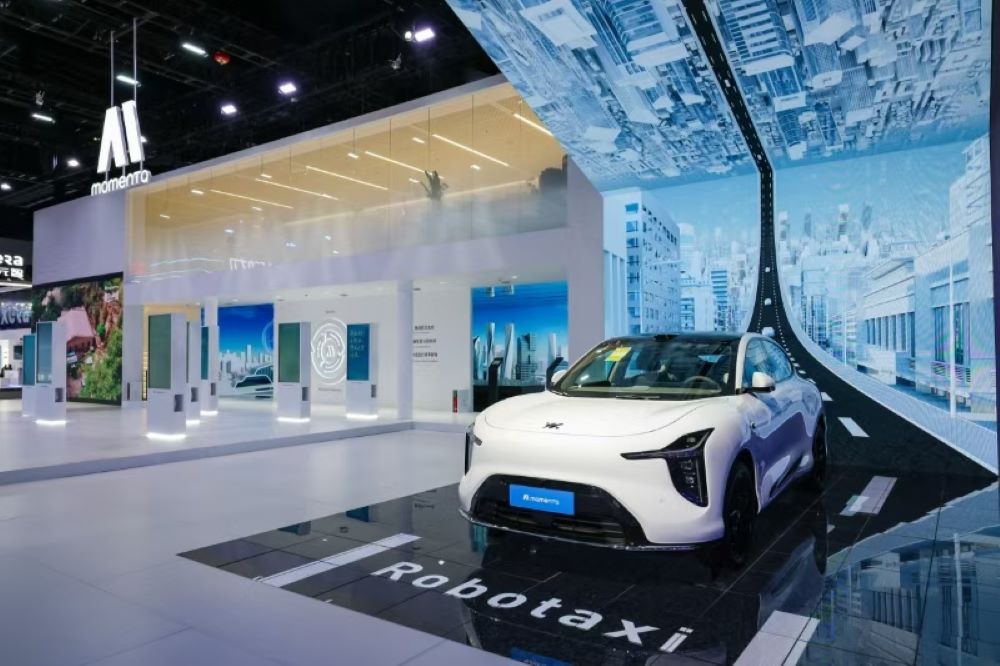
Momenta has a different economic engine. It started with algorithms and data, and is increasingly monetizing them through software licensing.
It doesn’t take a rocket scientist to see that the marginal cost of putting software on another vehicle is far lower than producing another piece of silicon.
That operating leverage is already visible. Momenta’s gross margin has risen from 17.5% in 2023 to 75% in the first half of this year. Licensing and services revenue jumped 67.5%.
More importantly, deployment is accelerating. Momenta’s solutions were installed in about 321,000 new vehicles during the first half, up 83.7% year-on-year. Its cumulative vehicle installations surpassed 1 million by the end of June.
This is where the autonomous-driving business starts to look less like a traditional automotive supplier and more like a software platform.
Once a software stack has been developed and validated, every additional vehicle can add revenue without proportionally increasing development costs. That creates a level of profit leverage that is difficult for a hardware-heavy model to match.
None of this, however, means Momenta has won. The company still faces the biggest structural challenge in autonomous driving: automakers increasingly want to develop more of the technology themselves.
And it now has to prove that its emerging “physical AI” strategy can turn technological advances into durable commercial expansion.
Horizon faces a different test. It needs its enormous R&D expenditure to translate into sufficient design wins and vehicle volume to overcome the economics of hardware.
That may ultimately be the defining divide between the two.
The road to profitability
For years, the autonomous-driving industry has argued over whose algorithms are smarter, whose chips are faster and whose systems can handle more complex roads.
But at the end of the day, investors will increasingly care about something more basic: which business can turn technical capability into recurring revenue — and recurring revenue into profit.
On that score, Momenta has clearly put Horizon in its rear-view mirror.
Header image credit: Momenta