- A battle over chips versus software is reshaping China’s autonomous driving industry
- As automakers build more technology in-house, both companies face the same question: where will their moat lie?
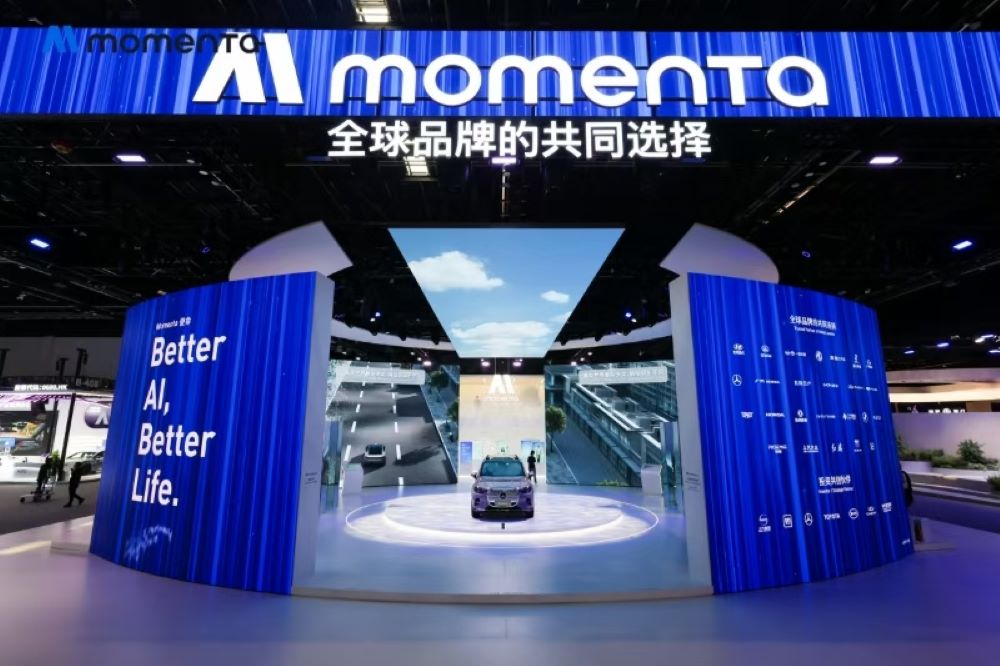
In July 2026, Momenta debuted on the Hong Kong Stock Exchange under the lofty label of the world’s “first Physical AI company,” with an IPO valuation of around HK$70 billion ($8.93 billion)—just edging past longtime rival Horizon Robotics (地平线).
Two weeks before the listing, Horizon founder Yu Kai (余凯) posted a cryptic message on social media.
“Horizon has never been very good at playing the game,” he wrote. “We’ve never chased labels like the first autonomous driving chip company, the first autonomous driving company, or the first Physical AI company. We’re just a rather boring company.”
The target of the apparent dig was hard to miss.
Behind the exchange lies a broader contest over technology, customers and valuation.
Chips or software?
Both companies supply autonomous driving technology, but Horizon sells AI chips and computing platforms while Momenta sells software, algorithms and data-driven development platforms. That difference is reflected in their financials.

In 2025, Horizon shipped 4.01 million Journey-series (征程) chips, generating 1.62 billion yuan ($2.07 billion) in product solution revenue—equivalent to roughly 400 yuan per hardware platform.
Momenta, by contrast, generated nearly 1 billion yuan in software licensing revenue from about 510,000 newly deployed systems, translating into roughly 1,900 yuan per vehicle.
The economics are clear: fewer deployments but much higher revenue per unit.
Chips, however, offer scale and customer stickiness. Horizon’s revenue rose 57.7% year on year to 3.76 billion yuan in 2025, while cumulative Journey shipments surpassed 10 million units, making it the first Chinese intelligent driving technology company to reach that milestone.
It also ranked among the leaders in China’s mid- to high-end assisted driving market with a 14.4% share.
The BYD triangle
The fiercest competition between Horizon and Momenta centers on one customer: BYD.
Momenta is the core algorithm supplier behind BYD’s “God’s Eye” (天神之眼) intelligent driving platform and one of its cornerstone investors, contributing US$15 million before the IPO.
Horizon, meanwhile, also counts BYD among its biggest customers through its Journey chip business.
But BYD is also becoming one of Horizon’s biggest strategic risks.
In May 2026, BYD unveiled Xuanji A3, China’s first mass-produced 4-nanometer automotive-grade intelligent driving chip, delivering more than 700 TOPS of computing performance.
Investors interpreted the launch as another sign that automakers are accelerating in-house chip development. Horizon shares fell 4.69% the following day and 27% over the month, its worst monthly decline since listing.
Yu has previously disclosed that Horizon’s three largest customers contribute more than 60% of company revenue. Ironically, those same customers also possess the resources to become future competitors.
Li Auto has already begun replacing Horizon chips with in-house alternatives in some models, while BYD’s higher-end God’s Eye systems do not use Horizon chips.
Responding to concerns over the share price, Yu remained characteristically blunt.
“We’re not losing momentum,” he said. “We’re busy winning customers, not managing the stock price. Customers are the cause; the stock price is the result. We just landed a particularly big one.”

Days later, Yu appeared publicly alongside BYD chairman Wang Chuanfu (王传福), fueling speculation that the partnership remained intact.
A changing valuation story
The market has already begun reassessing the two business models.
When Horizon listed in October 2024 as China’s first publicly traded autonomous driving chip company, its market capitalization briefly exceeded HK$160 billion.


By mid-July 2026, however, that figure had fallen roughly 60% to around HK$63.1 billion, including a 49% decline since the beginning of the year.
Momenta’s IPO valuation of HK$69.6 billion temporarily overtook its rival, but market cap has taken a hit since listing as well. As of July 17, its shares slid 10.42%, giving it a valuation of HK$60.77 billion.
The reversal reflects a broader reassessment of chip suppliers. As urban NOA moves from premium vehicles into the mass market, intelligent driving is becoming a standard feature, making automakers increasingly sensitive to chip costs while accelerating in-house development.
Nio, Li Auto, XPeng, Xiaomi and BYD have all joined the trend, threatening suppliers whose economics depend on shipment volume.
The pressure is evident in Horizon’s finances. R&D spending rose 63.3% to 5.15 billion yuan in 2025—137.1% of revenue—contributing to an annual loss of 10.47 billion yuan. Investors are becoming less patient with stories whose profitability remains distant.
But Momenta faces its own challenges. It commands a 65% share of China’s third-party urban NOA market. But that figure excludes Huawei’s highly integrated Harmony Intelligent Mobility Alliance ecosystem, where Huawei supplies both hardware and software rather than operating as a conventional Tier-1 vendor.
Industry-wide implications
More importantly, Momenta faces the same structural trend confronting Horizon. As automakers increasingly develop their own chips, algorithms and software stacks, the market for independent suppliers is likely to shrink.

Ultimately, the Horizon-Momenta rivalry comes down to one question: what is your competitive moat when your biggest customers can become your biggest competitors?
That question extends well beyond these two companies. China’s independent autonomous driving suppliers face no immediate existential threat, but as more automakers bring chips, software and data capabilities in-house, the space left for third-party vendors may steadily narrow.